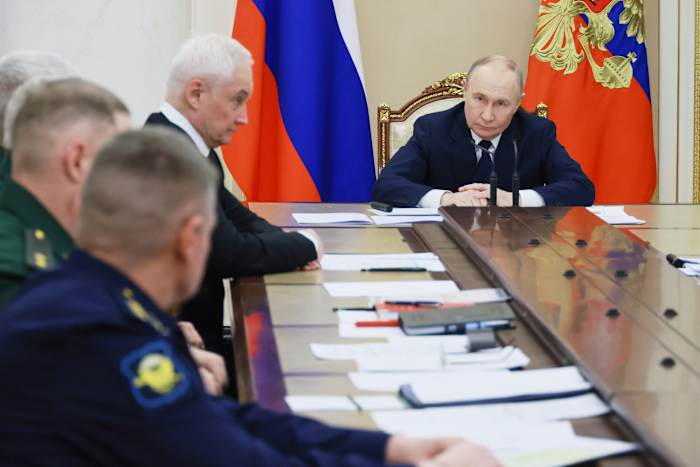
The sanctions were supposed to paralyze the Kremlin war machine. Instead, European intelligence officials are sounding the alarm on a massive, highly aggressive surge in technological espionage.
Russia's intelligence agencies are hunting for Western defense secrets, high-end software, and industrial machinery. They aren't just looking for weapon blueprints. They need the foundational tools to keep their wartime economy from collapsing. According to security chiefs in Sweden, Finland, and Estonia, Moscow's operatives have shifted tactics. They are taking massive risks, setting up complex shell companies, and using cyber operations with total disregard for getting caught.
If you think export controls locked down the Kremlin's access to high-tech gear, you are missing the real story.
The Desperate Hunt for Dual-Use Tech
A massive chunk of Russia's gross domestic product—roughly one-third—goes straight into the war effort. This extreme militarization created a glaring vulnerability. The Russian domestic industry cannot manufacture the precision tools, advanced software updates, or specialized electronics required to keep its military hardware functional.
Moscow knows exactly what it needs. Operatives don't just target missile components; they are aggressively hunting for advanced machine tools, factory equipment, and dual-use technologies. These are items built for civilian manufacturing that can easily pivot to military production.
In Sweden, the focus is on cutting-edge research regarding advanced weaponry, including the Gripen fighter jet program. But Russian spies also want ordinary civilian tech. They are targeting high-end laser and camera equipment. Why? Because those optical components can be stripped out and integrated directly into military drone platforms and targeting systems.
Finland's Security and Intelligence Service notes a sudden spike in demand for space tech, marine engineering systems, and quantum Arctic research. Space technology is an urgent priority for Moscow right now. They desperately need the hardware to maintain satellite imaging, navigation, and military communications over the front lines.
Shell Companies and Third-Country Intermediaries
The Kremlin doesn't send agents in trench coats to buy factory equipment. They use front companies, shady middlemen, and intricate supply chains that snake through nations eager to profit from the friction.
Consider what happened in Sweden. Police arrested two individuals accused of violating strict international sanctions. The operation ran through a middleman entity registered in Turkey, which quietly managed dozens of shipments of metalworking and metal-turning machine tools directly to Russian buyers.
A separate cross-border journalism investigation called Russian Secrets exposed how a Cypriot entity masked a decade-long procurement pipeline. The operation secured more than $50 million worth of sonars, underwater robots, and fiber-optic cables from unsuspecting European and American suppliers. This gear was ultimately deployed in the Arctic Ocean to protect Russia's nuclear submarine fleet under the secretive "Harmony" military program.
The strategy relies entirely on hiding the end-user. Operatives establish layers of corporate entities across global jurisdictions like Belize, the Seychelles, and the British Virgin Islands. By the time a piece of Western hardware changes hands four or five times, the original manufacturer has no idea their product is bound for a military facility in Murmansk.
The Careless Spy and Infrastructure Sabotage
The most alarming shift isn't the corporate deception. It is the sudden, reckless aggression of Russian cyber operations.
Historically, foreign intelligence agencies favored stealth. They gathered data quietly to avoid detection and political blowback. That era is over. Christoffer Wedelin, deputy head of operations at the Swedish Security Service, warns that Russian actors no longer care about attribution. They are taking extreme risks because the economic squeeze at home leaves them no choice.
Look at the numbers and recent security incidents. Last year, Russia-linked hackers attempted a destructive cyberattack against a Swedish power plant. The goal wasn't just data theft. They actively tried to destroy the facility's operational systems to undermine Western public support for Ukraine. The attack failed only because internal network defenses detected the intrusion in time.
Anne Keast-Butler, director of the U.K. signals intelligence agency GCHQ, confirmed this pattern. She openly accused Moscow of relentlessly targeting the U.K. and its European allies with a dangerous mix of technology theft, digital sabotage, and covert operations.
How Private Companies Unwittingly Join the War Supply Chain
Many Western businesses assume that if they aren't selling radar parts to the Russian Ministry of Defense, they are safe. That is a dangerous mistake. You could be selling mundane components to a logistics firm in Istanbul or an electronics distributor in Dubai, only to discover your hardware ended up inside a Russian cruise missile.
The U.S. Department of the Treasury and the Department of Justice's KleptoCapture Task Force are heavily targeting these third-country networks. Recent enforcement actions have blacklisted hundreds of entities across China, Turkey, and the UAE for acting as illicit conduits.
To protect your organization from becoming an accidental accessory to international sanctions evasion, you need to alter your compliance protocol immediately.
- Audit Beyond the Immediate Buyer: Traditional "Know Your Customer" checks are useless against professional spies. You must implement "Know Your Customer's Customer" protocols for high-risk regions.
- Track Serial Numbers and Software Updates: Russian operatives are hunting for software patches for banned Western machine tools. Lock down your digital distribution networks and verify the physical location of every device requesting an update.
- Flag Unusual Transaction Patterns: Watch out for new buyers offering full cash payments via unusual routing structures, or companies founded within the last 12 months requesting high-volume orders of dual-use goods.
The economic pressure on Moscow will keep rising, and their espionage tactics will only get dirtier. If you manage a technology or manufacturing firm, the security of your supply chain is no longer just a legal issue. It is a matter of international security. Take a hard look at your distribution channels today before an enforcement agency does it for you.