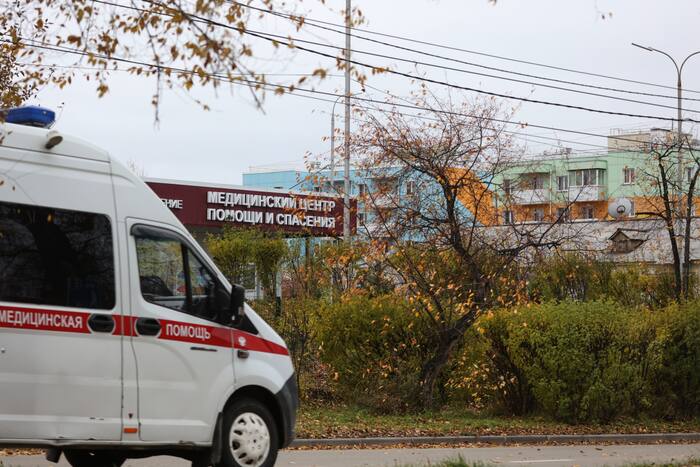
Fear has a very specific sound. It is not the shattering of glass or the roar of a crowd. It is the muffled squeak of rubber soles on freshly waxed linoleum at three in the morning, moving too fast toward a closed door.
When a nation hears the word plague, the mind unspools a terrible film reel. We picture medieval streets choked with fog, plague doctors wearing grotesque bird masks stuffed with dried herbs, and cartloads of the fallen rumbling through cobblestone alleys under a pale, indifferent moon. We believe that chapter of human history was bound, sealed, and shelved centuries ago in the damp archives of the past. We assume our modern armor—stainless steel, antibiotics, isolated negative-pressure wards, and biohazard containment protocols—makes us untouchable titans guarding the gates of civilization.
Then a single patient walks into a clinic with a cough that sounds too wet, a fever that burns too hot, and a history that makes veteran epidemiologists swallow hard.
Consider the quiet panic that ripple-fractures through a hospital when a suspected case of pneumonic plague hits the intake desk. This is not the slow-moving bubonic strain carried by fleas in the dust of old granaries, the one that makes lymph nodes swell into agonizing buboes. This is the air-born ghost. Pneumonic plague passes directly from lung to lung on the invisible moisture of an ordinary breath, a casual conversation in a crowded grocery store aisle, or a sigh in a waiting room. It moves with terrifying speed. Without rapid intervention, it destroys pulmonary tissue in hours, turning the simple, involuntary act of breathing into a suffocating struggle for oxygen.
When rumors began circulating that a second infection had bloomed from a suspected case in Russia, the global nervous system twitched.
Public health watchdogs moved quickly. The state watchdog agency issued a firm, unambiguous denial. No second infection. The ring of containment held. The perimeter was secure.
Yet, for anyone who has ever watched an infectious disease specialist trace a contact tree on a white board with a black marker, a denial is never just a period at the end of a sentence. It is a comma. It is a breath held in the dark while listening for footsteps in the hallway.
Let us step inside the containment zone for a moment. This is a hypothetical scenario, rendered to illustrate the raw mechanics of how modern containment actually functions when tested against an ancient pathogen. Imagine Dr. Elena Voronova. She is an epidemiologist with tired eyes behind fogged plastic goggles, standing in a staging area just outside an isolation room. Her clothes are drenched in sweat beneath a heavy Tyvek suit. She has not slept in thirty-six hours. Her job is not to panic; her job is to hunt invisible threads.
Every cough from the room beyond the reinforced glass sends a sharp vibration through the air filtration system. Elena holds a clipboard, tracking the movements of the primary patient—a traveler who crossed paths with the wrong vector in a remote region where wild rodents still harbor Yersinia pestis in their burrows. She is looking for the elusive "patient zero plus one." Who did he sit next to on the regional bus? Which pharmacist handed him cough syrup without a mask? Who checked his passport at the border checkpoint?
When the watchdog agency declares that no second infection has occurred, it is because Elena and hundreds of analysts like her have spent sleepless nights drawing concentric circles around every person who crossed paths with the original suspect, testing them, isolating them, and waiting out the incubation period with bated breath.
The incubation period for pneumonic plague is mercilessly short. It is typically measured in hours to a few days, which is both a blessing and a curse. It is a curse because the disease explodes through a population before symptoms are even fully recognized. It is a blessing because if a person survives those critical few days without falling ill, the ring of containment has held. The fire has burned out for lack of dry wood.
We live in an era where information travels faster than any virus. A whisper on a local messaging app in a Siberian province can transform into a global panic on social media feeds within minutes. We read headlines about watchdog denials with a profound, bone-deep skepticism. We have been burned by institutional secrecy before. We have seen how bureaucratic machinery can prioritize calm over candor, smoothing over jagged edges of reality until the public loses its footing.
This breeds a toxic psychological climate. On one side stands the official apparatus, insisting that the situation is under absolute control. On the other side stands our collective historical trauma, whispering that the authorities never tell us the whole truth until it is far too late.
To navigate this modern landscape of uncertainty, we have to look past the political posturing and examine the pure biology of the threat. Yersinia pestis is not a sentient monster hunting humanity; it is a bacterium simply executing its evolutionary program. It lives inside rodent populations as an endemic reservoir. When ecological shifts occur—when weather patterns alter rodent migration, when human encroachment brings settlements closer to wild burrows—the pathogen occasionally bridges the gap.
It is an ecological collision.
When the Russian public health watchdog denied the existence of a secondary infection, they were relying on molecular surveillance. Modern containment is no longer just about locking doors and quarantining towns; it is about genomic sequencing. Within hours of a suspected sample reaching a reference laboratory, technicians run polymerase chain reaction tests and genetic sequencing to map the exact strain, its antibiotic resistance profile, and its lineage.
They do not guess. They read the genetic code letter by letter.
If the watchdog says the secondary test came back negative, it means the genetic signatures of the bacterium have not been found in any secondary contacts. It means the safety nets woven over decades of modern epidemiological science actually worked.
And yet, the unease lingers. Why? Because we intuitively understand how thin the margin of error is.
Think of a tightrope walker crossing a canyon in a hurricane. Every gust of wind represents an environmental variable: an unmasked traveler, a delayed diagnostic test, a mutated strain that slips past routine screening. The fact that the walker makes it across safely does not mean the wind was gentle. It means the skill, vigilance, and sheer grit of the performer matched the fury of the storm.
When we read about suspected plague cases being neutralized by swift bureaucratic and medical intervention, we should not respond with naive complacency. Nor should we retreat into cynical panic. Instead, we should recognize the immense, invisible labor required to keep the dark ages at bay.
The walls holding back these ancient microbial forces are built by scientists working in sterile labs, local clinic doctors taking extra precautions with a wheezing patient, and public health officers refusing to cut corners even when tired. They are the silent guardians of our collective health, standing watch in the quiet corridors of the world while the rest of us sleep.
The shadow of the plague still stretches across the edges of our modern map, dwelling quietly in the wild burrows of the earth. But as long as we meet that shadow with rigorous science, radical transparency, and unrelenting vigilance, the whisper in the dark remains just a whisper.
The door stays closed. The air stays clear. The night passes.