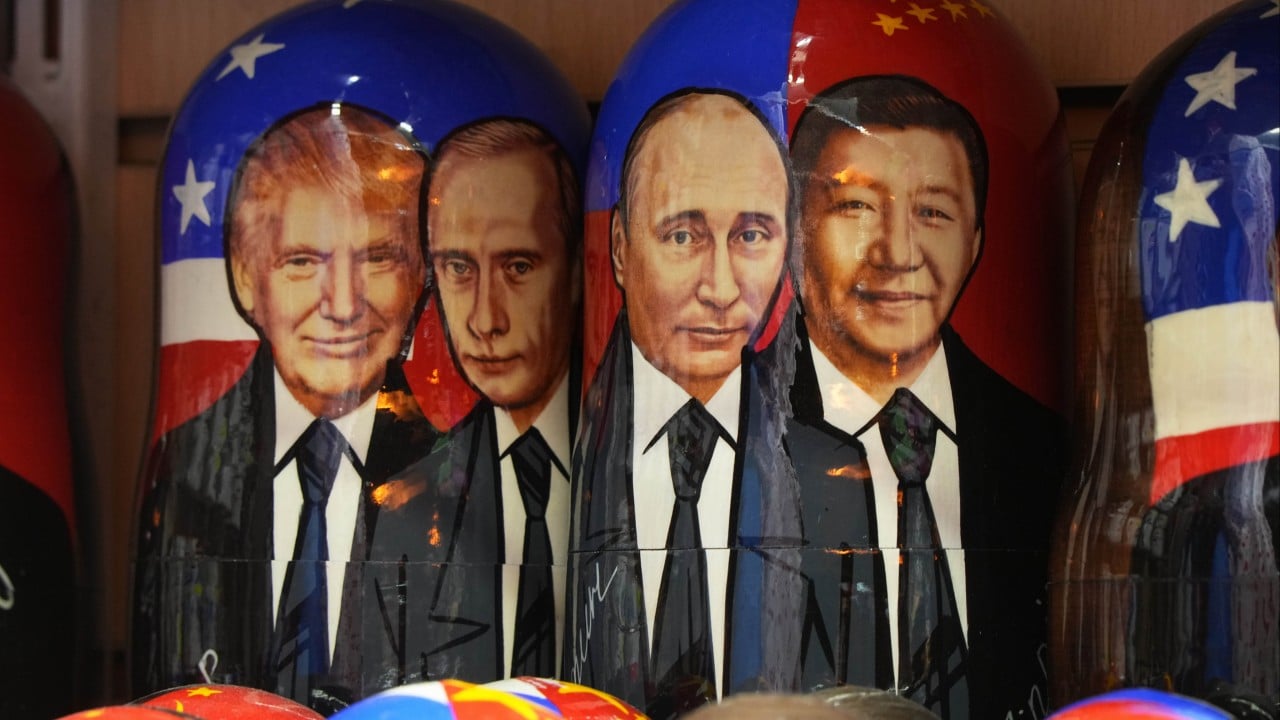
Talk of a three-way summit bringing Donald Trump, Xi Jinping, and Vladimir Putin to the same table is circulating through diplomatic backchannels, and the prospect alone is sending quiet shockwaves through Western capitals. While no formal agenda or confirmed venue exists yet, the mere possibility of Washington, Beijing, and Moscow cutting grand geopolitical bargains without European or Asian allies in the room exposes the deepest fault lines in modern international security. For decades, American foreign policy relied on multilateral coalitions to contain authoritarian rivals. Now, traditional partners from Brussels to Tokyo are watching nervously, worried that a direct, leader-to-leader deal could trade away their core security interests for short-term bilateral wins.
Diplomatic trial balloons rarely float by accident. When rumors of an unprecedented trilateral meeting surface, they usually serve a specific strategic purpose for the leaders involved. For the White House, projecting the image of a sole dealmaker capable of sitting across from America’s two primary nuclear adversaries plays directly to a domestic audience tired of endless foreign entanglements and costly proxy conflicts. It signals an unorthodox willingness to bypass decades of rigid diplomatic protocol in favor of raw transactional power.
Yet the strategic calculus in Beijing and Moscow looks entirely different. Neither Xi nor Putin views a three-way summit as a goodwill gesture. They see it as a high-stakes mechanism to validate a multipolar world order where three great powers divide the globe into exclusive spheres of influence, effectively sidelining mid-sized nations and dismantling the post-1945 rules-based system.
The Architecture of Great Power Triangles
History offers grim warnings about what happens when three rival powers attempt to manage global stability through personal summitry. The geometry of a three-player diplomatic game is inherently unstable. Two players will inevitably try to isolate the third, or one will play the other two against each other to extract concessions.
Consider the strategic triangle engineered by Richard Nixon and Henry Kissinger in the early 1970s. By opening diplomatic channels to Mao Zedong’s China, Washington successfully exploited the Sino-Soviet split, forcing Moscow into arms control talks while extracting the United States from Vietnam. That maneuver worked because Beijing and Moscow were bitter ideological and military enemies. Washington held the leverage because both communist giants feared each other more than they feared America.
Today, that dynamic is inverted.
Over the past decade, shared opposition to American financial sanctions, military alliances, and democratic norms has driven Moscow and Beijing into a tight, if asymmetric, partnership. While China and Russia have historical grievances and competing interests in Central Asia and the Arctic, their immediate strategic priority is breaking American dominance. If Trump sits down with both Xi and Putin simultaneously, Washington does not walk into the room as the indispensable mediator between two rivals. Instead, the American president risks facing a coordinated diplomatic front where Moscow and Beijing reinforce each other's demands on territorial concessions, tariff reductions, and military withdrawals.
Why Washington Considers the Unthinkable
To understand why a sitting or incoming American administration would entertain a summit that terrifies its own national security establishment, you have to look at the mounting pressures facing Washington. The traditional playbook of simultaneous containment is straining under economic and military reality.
First, there is the sheer financial weight of global policing. Maintaining forward-deployed troops in Europe, funding prolonged conventional warfare in Eastern Europe, and deterring naval aggression in the Indo-Pacific requires trillions of dollars in defense spending at a time when the U.S. national debt is climbing relentlessly. A direct diplomatic reset offers the allure of immediate cost reduction. If a grand bargain can freeze active conflicts, the Treasury gets breathing room.
Second, nuclear arms control is functionally dead. With the expiration or suspension of legacy treaties like New START and the Intermediate-Range Nuclear Forces Treaty, the world is entering a dangerous new phase of unchecked nuclear proliferation. China is rapidly expanding its warhead stockpile to reach parity with the United States and Russia. Bilateral arms treaties between Washington and Moscow no longer make strategic sense if Beijing remains completely unconstrained. Bringing all three nuclear superpowers into a single room is arguably the only realistic way to establish new guardrails against catastrophic miscalculation.
Third, transactional diplomacy appeals to leaders who distrust institutional bureaucracy. Traditional statecraft moves at a glacial pace, bogged down by interagency reviews, allied consultations, and human rights caveats. A leader-led summit strips away the diplomatic bureaucracy, operating on the belief that personal chemistry and blunt trade-offs can achieve in forty-eight hours what diplomats fail to accomplish in ten years.
What Beijing and Moscow Actually Want
If the doors close and the cameras leave the room, the demands placed on the table by Xi and Putin will not be modest adjustments to trade tariffs or minor troop pullbacks. Both leaders view American political polarization as a historic window of opportunity to lock in permanent geopolitical gains.
Moscow’s Endgame
For Vladimir Putin, standing on equal footing with the leaders of the United States and China is a massive domestic victory in itself. Years of Western sanctions and diplomatic isolation have been aimed at turning Russia into a pariah state. A trilateral summit instantly erases that stigma, confirming Putin’s narrative that Russia remains an indispensable pillar of global governance.
On substance, Moscow’s objectives are clear and rigid:
- Territorial legitimacy: Formal or de facto recognition of Russian control over occupied Ukrainian territory, accompanied by a permanent block on Ukrainian membership in NATO.
- Sanctions relief: The dismantling of Western financial restrictions, restoration of Russian access to global banking networks, and the unfreezing of sovereign central bank assets.
- European security architecture: A pullback of NATO military infrastructure and rotational troop deployments from Eastern European states that joined the alliance after 1997.
Beijing’s Calculus
Xi Jinping operates on a longer timeline, but his demands are equally transformative. China’s economy faces structural headwinds, from a prolonged real estate slump to demographic decline and mounting youth unemployment. A sudden, devastating trade war with the United States threatens the economic stability that underpins the Chinese Communist Party’s domestic legitimacy.
At a trilateral summit, Xi would seek to trade economic concessions—such as massive purchases of American agricultural and energy exports or agreements on fentanyl precursors—for strategic retreats by Washington in the Western Pacific. Specifically, Beijing wants the United States to dial back arms sales to Taiwan, restrict naval freedom-of-navigation patrols in the South China Sea, and lift export controls on advanced semiconductors and artificial intelligence hardware. By bundling these issues into a grand trilateral negotiation, Xi can position himself as a responsible global statesman broker of peace in Europe while quietly securing American acquiescence in Asia.
The Panic in Allied Capitals
Nowhere is the anxiety over a potential Trump-Xi-Putin summit more acute than in the foreign ministries of America’s closest allies. For eighty years, the core promise of American foreign policy has been the principle of nothing about us without us. Whether in NATO headquarters in Brussels or the Prime Minister’s office in Tokyo, allies have relied on the guarantee that Washington would never negotiate over their heads with the very powers threatening their sovereignty.
A three-way summit shatters that guarantee.
In Europe, leaders fear a modern replay of the 1945 Yalta Conference, where Franklin Roosevelt, Winston Churchill, and Joseph Stalin drew lines across a map of Europe, consigning millions of people to decades of authoritarian rule without their consent. If Washington and Moscow agree to a ceasefire framework in Eastern Europe without Ukrainian and European Union participation, European nations face an impossible choice. They can either accept a settlement that leaves a revanchist Russia rewarded for territorial conquest on their doorstep, or they can reject the deal and try to fund and arm Ukraine entirely on their own—a logistical and industrial feat Europe is currently unequipped to pull off.
In the Indo-Pacific, the tremor is just as severe. Japan, South Korea, the Philippines, and Australia have all taken enormous political and economic risks to align their defense strategies with Washington to counter Chinese maritime expansion. Tokyo has doubled its defense budget. Manila has granted American forces expanded access to military bases facing Taiwan. Seoul has navigated intense economic coercion from Beijing.
If these nations watch an American president strike a bilateral trade and security accommodation with Xi Jinping at a trilateral summit, the credibility of the U.S. nuclear umbrella evaporates overnight. When allies lose faith in American security guarantees, they do not simply surrender; they hedge. For countries like South Korea and Japan, hedging means rapidly accelerating discussions around developing their own independent nuclear weapons programs, triggering a regional proliferation cascade that would make the Indo-Pacific infinitely more dangerous.
The Myth of the Grand Bargain
Supporters of trilateral summitry argue that traditional diplomacy has failed and that bold, unconventional leadership is required to prevent World War III. They point out that talking to adversaries is not the same as appeasing them, and that ignoring the reality of Chinese and Russian power only invites further conflict.
That argument has surface appeal, yet it ignores a fundamental flaw in how grand bargains actually work with authoritarian regimes.
In democratic systems, agreements are bound by law, legislative oversight, and institutional continuity. When an American president signs a treaty or commits to a policy shift, the bureaucracy implements it and allies adjust their posture accordingly. In personalist autocracies like Russia and China, agreements are purely tactical pauses. A signature on a summit communiqué does not alter the core ideological or territorial ambitions of the Kremlin or Zhongnanhai; it merely buys them time to rearm, rebuild their economies, and wait for the next election cycle in Washington.
History shows that grand bargains struck at high-profile summits routinely unravel the moment the ink dries. Consider a hypothetical scenario where Washington agrees to halt NATO expansion and ease sanctions on Moscow in exchange for a ceasefire in Eastern Europe and Russian pressure on Beijing to curb nuclear expansion. Within eighteen months, Moscow could easily manufacture a border provocation to justify renewing military pressure, while Beijing pockets the tariff relief and continues its naval buildup in the Taiwan Strait. Meanwhile, the trust between Washington and its European and Asian allies—the single greatest asymmetric advantage the United States possesses over its rivals—would be irreparably broken.
China and Russia have no true allies; they have clients, dependencies, and marriages of convenience. The United States has a global network of wealthy, technologically advanced treaty allies. Trading away the cohesion of that alliance network for a photo opportunity and a non-binding declaration with Xi and Putin is the geopolitical equivalent of burning down your own house to warm your hands.
What Comes Before the Handshake
Before a single flag is raised outside a summit hall in Geneva, Vienna, or Dubai, serious diplomatic groundwork must happen—or the entire exercise will collapse into a public relations disaster. High-stakes summits fail most spectacularly when leaders meet without pre-negotiated frameworks, leaving complex technical disputes to be improvised under intense media scrutiny.
For any trilateral engagement to serve genuine security interests rather than authoritarian vanity, three non-negotiable conditions must exist before the principals sit down:
- Allied synchronization: Washington must establish ironclad red lines in advance with NATO, Japan, South Korea, and Australia, ensuring that the sovereign territory and alliance commitments of partner nations are explicitly off the bargaining table.
- Verifiable arms control metrics: Any discussion of strategic stability must move beyond vague pledges of peace and focus on concrete, intrusive verification mechanisms for nuclear warhead limits, hypersonic missile deployments, and space-based weapons.
- Economic reciprocity: Trade concessions cannot rely on promised future purchases that never materialize; they require enforceable structural changes to state subsidies, intellectual property theft, and market access.
Without these guardrails, a meeting between Trump, Xi, and Putin will not produce a new era of global peace. It will simply hand Beijing and Moscow the exact stage they have spent twenty years trying to build—a world where three men decide the fate of nations, and everyone else is left to live with the consequences.