The turf under a referee's boots is always a different color than the grass the players see. To the eleven men charging downfield, it is a canvas of glory, a battleground of sweat and ambition. To the person in the middle holding the whistle, it is a minefield.
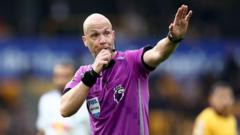
Ask any official who has walked off the pitch after a high-stakes match what they hear first. They will not tell you about the roar of the crowd. They will tell you about the silence. That heavy, suffocating quiet that descends the moment a controversial decision splits a stadium down the middle. For years, Anthony Taylor walked into that silence. He wore the black, swallowed the abuse, and blew the whistle anyway.
Now, the whistle is down.
When a veteran official steps away and points directly to a culture of fear driven by critical former referees, it is worth pausing to understand what is breaking down in our games. We have built an ecosystem where accountability has metastasized into public flaying. Every weekend, retired professionals step behind microphones and into television studios to dissect every split-second judgment made by their former colleagues. They use slow-motion replays to achieve a god-like omniscience that no human being possesses on the grass.
Consider what happens next: the referee, already isolated by the nature of the job, becomes public enemy number one before the Tuesday morning headlines even dry.
I remember standing near the tunnel after a lower-league academy match years ago, watching a teenage referee barely older than seventeen pull off his yellow jersey with trembling hands. A pack of furious adults lined the chain-link fence, screaming obscenities about a disputed offside call. That kid did not cry because he made a mistake. He cried because he realized, in that exact second, that nobody in the world had his back.
Multiply that by a hundred thousand, add television cameras, millions of social media impressions, and former players-turned-pundits cashing checks to pick apart human error with surgical malice, and you get the modern refereeing crisis.
Fear.
It is a corrosive agent. When fear enters the mind of an official, hesitation follows. Hesitation ruins matches. A referee who second-guesses their own instincts because they are terrified of the Monday morning media firing squad is a compromised referee. They are human beings operating under immense cognitive load, making decisions in fractions of a second that millions evaluate with the luxury of twenty camera angles.
The culture of critique has crossed the line from analysis to intimidation.
When former referees join the chorus of condemnation for ratings or relevance, they pull up the ladder behind them. They know the burden of the badge. They know the lonely car rides home after a match where a missed penalty kick dominated the national news cycle. Yet, too many trade their solidarity for studio airtime. They feed the beast that devours the very people holding the sport together.
Grassroots recruitment is collapsing. Across every level of competition, leagues are facing severe shortages of officials. Why would anyone sign up to be publicly humiliated for a nominal match fee on a rainy Tuesday night? Why subject yourself to the vitriol when the people who should understand the job best are the ones sharpening the knives?
The game is changing, but our empathy for the human element is shrinking.
We demand perfection from mortals while giving them the tools of the stone age. Then, when the inevitable error occurs, we demand blood. We turn judgment calls into character assassinations.
Taylor's retirement should serve as a flashing red light for anyone who cares about the integrity of sports. This is not about shielding officials from valid evaluation. Constructive review behind closed doors is necessary. Training is necessary. Accountability is necessary. Public execution by former colleagues for entertainment value is not.
If we continue down this path, we will hollow out the core of officiating. We will be left with officials who are too afraid to make a tough call, too paralyzed by the looming threat of public ridicule to govern the game fairly.
The whistle deserves respect. Not because the person blowing it is infallible, but because without them, the game simply ceases to exist.
Next Saturday, thousands of matches will kick off across the globe. Somewhere, a referee will put on their kit, check their watch, and walk out into the noise. They will make mistakes. They will miss a foul. They will endure the screaming from the stands. And somewhere on a screen, a retired expert will lean into a microphone, smile for the cameras, and prepare to make their living by tearing that referee apart.
Until the culture changes, the silence after the final whistle will only grow colder.
.jpg?width=1200&auto=webp&trim=0%2C100%2C0%2C100)