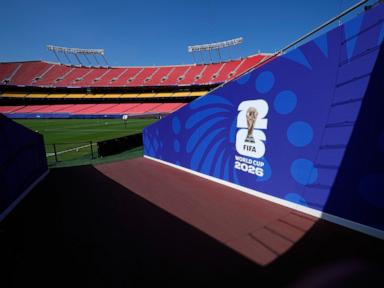
The soccer world changed forever today. Mexico and South Africa kicked off the biggest, most chaotic sporting event in human history at the Azteca. Forget everything you know about how a World Cup functions. The old format we all loved, with 32 teams neatly split into eight groups, is completely dead.
Now, we have a staggering 48 nations crammed into 12 groups, playing 104 matches across three massive countries. It is a wildly ambitious experiment. Honestly, it is also bound to be a logistical nightmare for fans trying to follow the action in person or on TV.
If you're wondering how the group stage works, where the games are happening, or why your favorite team faces an entirely different path to the trophy, you aren't alone. This whole thing feels experimental. Let's break down exactly what this massive expansion looks like and how it affects the actual tournament.
The 48 Team Group Structure Explained Simply
The most baffling part of this new format is the group stage setup. FIFA originally wanted groups of three, which would have invited collusion in final group games. They backed out at the last second. Instead, we have 12 groups of four teams each.
Here is how the groups shake out for the tournament.
- Group A: Mexico, South Africa, South Korea, Czechia
- Group B: Canada, Bosnia and Herzegovina, Qatar, Switzerland
- Group C: Brazil, Morocco, Haiti, Scotland
- Group D: United States, Paraguay, Australia, Turkiye
- Group E: Germany, Curacao, Ivory Coast, Ecuador
- Group F: Netherlands, Japan, Tunisia, Sweden
- Group G: Belgium, Egypt, Iran, New Zealand
- Group H: Spain, Cape Verde, Saudi Arabia, Uruguay
- Group I: France, Senegal, Norway, Iraq
- Group J: Argentina, Algeria, Austria, Jordan
- Group K: Portugal, Uzbekistan, Colombia, DR Congo
- Group L: England, Croatia, Ghana, Panama
Because there are 12 groups, the math to qualify for the knockout stage gets weirdly complicated. The top two teams from every single group advance automatically. That makes 24 teams. To fill out a clean Round of 32 bracket, the eight best third-place teams also move on.
Basically, almost everyone has a chance to advance. You could tie two games, lose one, and still find yourself in the knockout rounds. It reduces the high-stakes drama of the final group matchday, but it guarantees that major soccer powers rarely go home early.
Sixteen Cities and Three Time Zones
Hosting a tournament across Canada, Mexico, and the United States sounds great on a marketing brochure. In reality, it means teams and fans face brutal travel schedules. We are talking about flights that span five hours just to move from one group game to the next.
To prevent utter exhaustion, FIFA grouped the 16 host cities into three distinct regional zones.
The Western Region features Vancouver, Seattle, San Francisco, and Los Angeles. The Central Region covers Guadalajara, Mexico City, Monterrey, Houston, Dallas, and Kansas City. The Eastern Region includes Atlanta, Miami, Toronto, Boston, Philadelphia, and New York New Jersey.
Even with regional groupings, the travel burdens are uneven. A team playing in the Eastern zone gets relatively short flights between Toronto and Boston. A team stuck moving between West Coast venues deals with massive stadium footprints and serious heat.
Key Dates You Must Circle On Your Calendar
The sheer scale of this tournament means it runs longer than any previous iteration. We are looking at 39 days of pure soccer saturation.
The tournament opened today, June 11, 2026, with the historic clash at Mexico City's Estadio Azteca. The group stage runs intensely for more than two weeks, wrapping up on June 27. From there, the knockout madness begins immediately.
The newly minted Round of 32 starts on June 28, meaning teams get almost zero rest before entering single-elimination territory. The Round of 16 takes place in early July, leading into the Quarterfinals around July 9-11. The Semifinals will take over Atlanta and Dallas on July 14 and 15.
Everything builds toward the final match on Sunday, July 19, 2026. MetLife Stadium in East Rutherford, rebranded as the New York New Jersey Stadium for sponsorship reasons, secured the ultimate prize of hosting that final match.
The Underdog Stories Everyone is Ignoring
Everyone talks about France, Argentina, and Brazil. But the true beauty of expanding to 48 teams lies in the lower-ranked nations making history.
Curacao, an island nation with a population of roughly 156,000 people, is officially the smallest country to ever qualify for a men's World Cup. Think about that. Their entire population could fit inside the tournament's biggest stadiums twice over.
Uzbekistan is making their tournament debut under Italian legend Fabio Cannavaro, providing a massive narrative spark for Asian soccer. Jordan is here for the first time too. We also see emotional returns for teams like Haiti, who haven't tasted this stage since 1974, and Scotland, back after a painful 28-year absence.
How to Navigate This Monster Tournament
If you are planning to follow this competition, you need a strategy. Do not expect to flip on the TV and understand the bracket effortlessly.
First, keep a close eye on the third-place tracker. During the final week of June, the live standings will change by the minute as goal differences shift across 12 different groups. Every goal matters, even in a blowout.
Second, prepare for wild kickoff times if you are watching from Europe or Asia. Games in Los Angeles and Seattle will start well past midnight for European viewers.
Your best next step right now is to download the official FIFA app and lock in your favorite team alerts. Because games are overlapping and jumping across three countries, tracking the live group standings manually will give you a headache. Pick three underdogs from the debutants, track their goal differentials, and enjoy the madness.