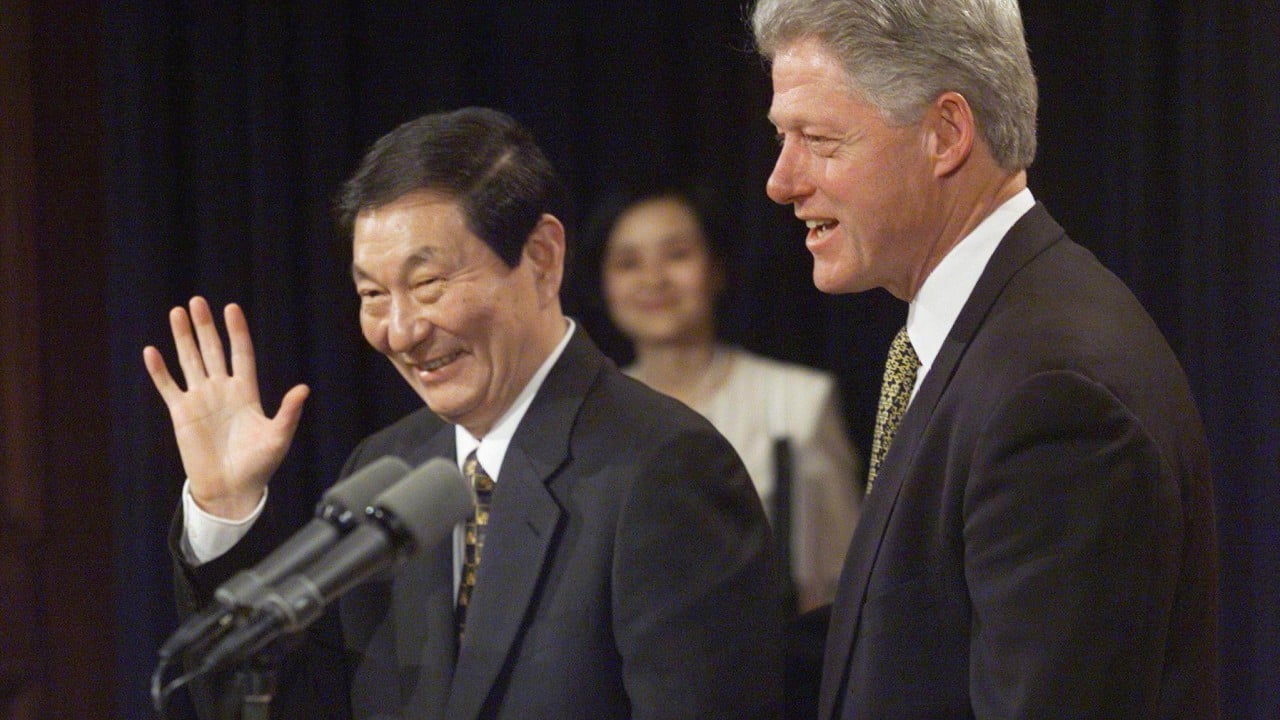
History loves a clean narrative. Tell people that a lone reformer stepped into a bureaucratic swamp in the late nineteen nineties, swung a massive axe, and single-handedly built modern economic power. They will nod, buy the book, and frame the poster.
The lazy consensus on Zhu Rongji paints him as the benevolent architect who saved China through sheer force of will, privatization, and the miraculous rise of Pudong. That story misses the body count. It ignores the structural violence of mass layoffs. It treats state-owned enterprise restructuring as a neat accounting trick rather than a social earthquake that displaced tens of millions of urban workers overnight.
If you want to understand how an economy actually scales, stop looking at the glossy brochures of Pudong skyscrapers. Look at the balance sheets of the companies that were left to bleed out, and look at the brutal calculus required to shut down thousands of inefficient factories.
The Myth of the Gentle Reformer
Mainstream economic commentary treats state firm restructuring as a polite boardroom negotiation. I have sat across the table from veterans of that era. They do not talk about polite negotiations. They talk about panic.
Between nineteen ninety-five and two thousand, the state sector shed over forty million jobs. Let that number sink in. Forty million people told that their lifelong cradle-to-grave security system—the iron rice bowl—was smashed. Factories that had operated as mini-cities, providing housing, schools, and hospitals, were liquidated or sold off for scrap.
The conventional take views this as a triumphant pivot to a market economy. That is half-true and entirely sanitized. It was not a pivot; it was a demolition derby. Zhu did not save state enterprises by making them efficient. He saved the broader financial system by starving the zombies of cash. He tightened credit so aggressively that insolvent factories defaulted by the thousands.
This brings us to the first major misconception: privatization solves everything. It does not. Privatization only works if there is a functioning judicial system and a deep capital market ready to absorb the shock. In the nineties, neither existed in a mature form. What happened instead was a massive reallocation of state assets, frequently accompanied by asset stripping and local protectionism.
The Pudong Paradox
Pudong is cited as the crown jewel of this era. A swamp transformed into a global financial powerhouse in less than a decade. The standard line is that government planning created a metropolis out of mud.
Wrong.
Pudong succeeded not because planners drew pretty lines on a map, but because Beijing granted it unprecedented regulatory arbitrage. It was an institutional sandbox. Special tax zones, land-use leasing rights borrowed from Hong Kong models, and direct access to foreign capital turned it into a magnet.
Yet, for every gleaming tower built in Lujiazui, a hundred rust-belt towns in the northeast went dark. The wealth generated in the coastal enclaves did not automatically trickle inland. It created a massive dual economy. The coastal boom was financed by the forced deflation of rural incomes and the gutting of the interior industrial base.
To give credit solely to visionary leadership is to ignore the macroeconomic violence underneath. If you remove credit from forty percent of the economy while forcing banks to write off mountains of non-performing loans, you create a deflationary shock. That shock hit ordinary households first, forcing families to build massive precautionary savings rates because the social safety net vanished the moment the factory gate closed.
The Real Lesson on Capital Allocation
Watch what modern analysts miss when they study this playbook today. They look at state-owned enterprises as archaic relics. They assume state capitalism is an oxymoron bound to collapse.
They are misreading the data.
The state sector never truly disappeared; it consolidated. The inefficient mom-and-pop local factories died. In their place rose massive, national-champion conglomerates controlled directly by the central government. These firms retained privileged access to state bank lending, cheap land, and regulatory protection.
When you hear people argue that state firms are inherently sluggish, look at high-speed rail, ultra-high-voltage power grids, and shipbuilding. These sectors require capital expenditure horizons spanning decades—horizons that private venture capital or quarterly-earnings-obsessed public markets will never touch. Zhu’s legacy established the blueprint for this dual-track model: ruthlessly purge the bottom tier while doubling down on state control of commanding heights.
The downside? Misallocation of capital on a national scale. When banks are state-owned and lend to state-owned firms based on political mandates rather than risk-adjusted returns, you inevitably build ghost cities, overcapacity in steel and cement, and towering corporate debt loads. The miracle of rapid industrialization always sows the seeds of its own debt hangover.
Dismantling the FAQs
People ask how a command economy transitioned so fast without collapsing into total chaos. The premise is flawed. It almost did collapse. The banking system was technically insolvent by the late nineties, choked by bad loans to failing factories. The creation of asset management companies to take those bad loans off the books was essentially a massive hidden bailout.
People ask if this model can be replicated elsewhere. Try telling a democratic populace that you are going to lay off forty million industrial workers in five years while dismantling their healthcare and housing. No electoral system could survive the backlash. The speed of the transformation was a direct function of a centralized political apparatus capable of suppressing social unrest while imposing maximum short-term pain.
The Uncomfortable Truth
We praise the outcome while ignoring the cost function. Economic development is rarely a Pareto improvement where everyone wins. More often, it is a zero-sum reallocation where the future is bought by sacrificing the present generation of workers.
Zhu Rongji did not perform magic. He performed triage. He recognized that gangrene had set in, and instead of applying herbal remedies, he took a bonesaw to the limb.
Stop looking for gentle reforms. Stop looking for win-win solutions in macroeconomics. Real transformation is messy, cold, and leaves scars that last for generations. The sooner we admit that growth has a body count, the sooner we can stop buying fairy tales about how miracles happen.