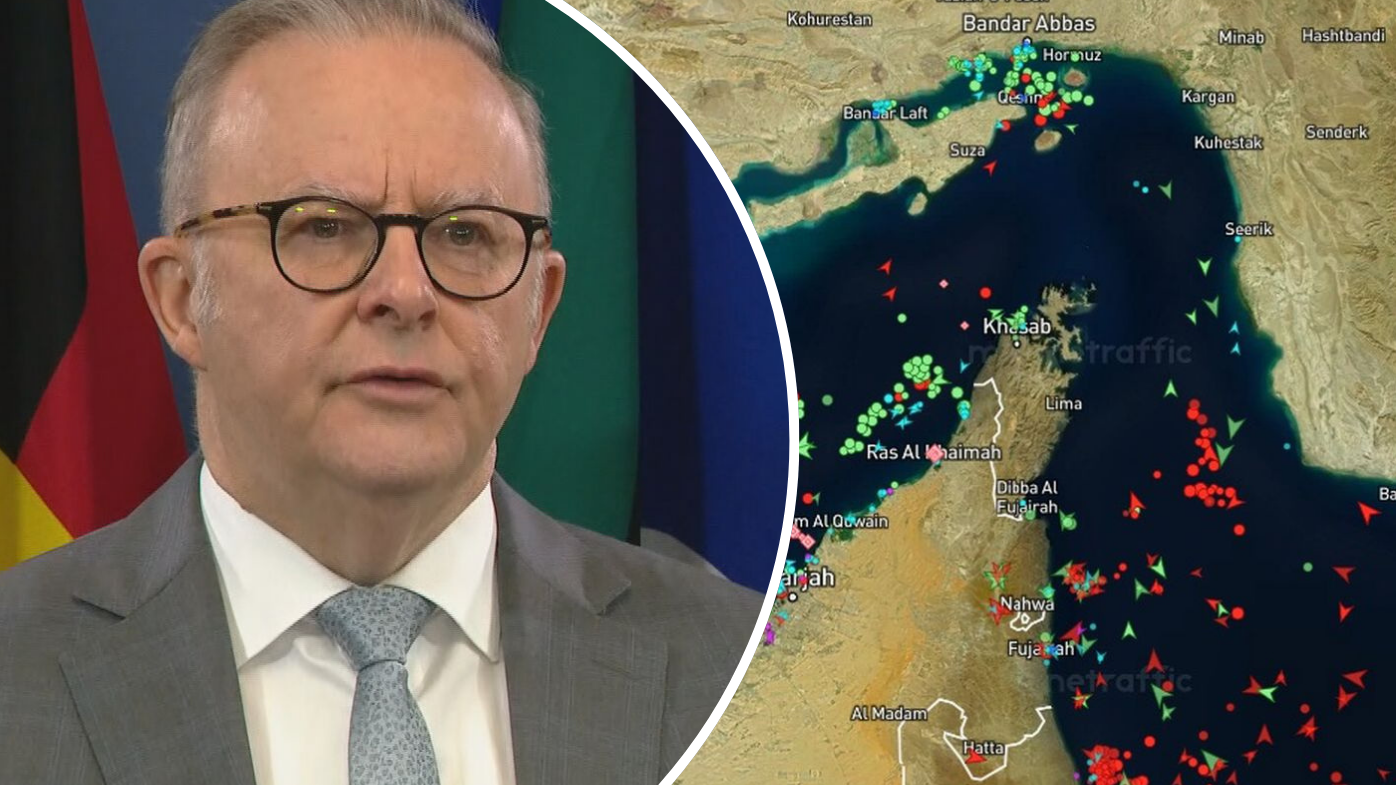
The Strait of Hormuz is barely 40 kilometres wide at its narrowest point. Yet, this tiny slice of water between Iran and Oman dictates the price of your petrol, your heating, and the stability of the global economy. When news broke that Iran had opened the waterway for commercial shipping following the recent ceasefire, the collective sigh of relief in Canberra was audible.
Prime Minister Anthony Albanese has spent the last week in virtual summits, standing shoulder-to-shoulder with global leaders like Emmanuel Macron and Keir Starmer. They are all talking about the same thing: maritime freedom. But while the rhetoric is united, Australia’s actual contribution is telling.
If you were expecting to see Australian destroyers racing toward the Persian Gulf to join a US-led naval blockade, you’ve missed the point of the current Australian strategy. Albanese isn't sending ships. He’s sending diplomatic memos. And honestly, it’s the only move he could reasonably make.
The Reality Of Our Naval Capacity
There has been an aggressive push from the opposition and some defence analysts to get Australia involved in the naval security of the Strait. The argument is simple: if the Strait closes, the global energy supply shudders, and Australian households pay the price at the pump. We rely on those sea lanes for our fuel security. Therefore, we should be there, boots on the deck, patrolling the waters.
But this argument ignores a brutal reality. The Royal Australian Navy is currently stretched thin.
The government has been defensive about questions regarding fleet capacity. When you look at the deployment schedule for 2026, the ships are already doing the heavy lifting in our own backyard. Between Operation Argos, supporting UN sanctions in North Korea, and the ongoing regional presence deployments in the South China Sea, the fleet isn't sitting idle.
Expecting our current naval force to project power halfway across the globe into a high-intensity conflict zone isn't just a matter of "priorities." It’s a matter of basic physics. We don't have the luxury of surplus hulls. Sending an Anzac-class frigate to the Gulf would leave a gaping hole in our own regional commitments. Albanese knows this. He’s playing the hand he has, not the one his critics want him to hold.
Fuel Security Is The Real Battleground
The obsession with naval deployment misses the actual crisis. The real battle for the Australian government isn't happening in the Persian Gulf; it’s happening at the local service station.
Energy Minister Chris Bowen has been working the phones, trying to shore up Australia's fuel reserves. We are talking about days—not months—of supply on hand. When the Strait of Hormuz effectively locked down, global gas prices spiked, and the volatility became a tangible economic threat.
The government’s response hasn't been to send a gunboat; it’s been to change the laws to make it easier for Australian refineries to grab fuel on the open market. They’ve rushed legislation through to underwrite the cost of these imports. This is boring, bureaucratic, and unglamorous. It doesn't make for good headlines compared to a warship leaving Sydney Harbour. But it is infinitely more effective at keeping the Australian economy from grinding to a halt.
The Geopolitical Tightrope
Let’s be direct about the diplomatic situation. Supporting the US alliance is a cornerstone of Australian foreign policy. Nobody in Canberra is suggesting we abandon that. But there is a clear distinction between supporting your allies and getting dragged into their fight.
The US and Israel have specific goals regarding Iran. Australia has its own goals: keep the oil flowing, keep the prices down, and avoid getting sucked into another "forever war" in the Middle East. Albanese is walking a razor-thin line. By deploying a Wedgetail aircraft and 85 personnel to the UAE for defensive support, he’s signaled that Australia isn't neutral. We are an active participant in regional stability.
But by refusing to send naval assets to the Strait, he’s drawing a hard line. He’s essentially telling the US: "We will help with surveillance and regional defense, but we aren't going to be the ones enforcing a blockade that risks direct confrontation with Iranian forces."
This is a measured approach that acknowledges domestic fatigue. Polls consistently show the average Australian has zero appetite for sending troops back into a Middle Eastern conflict. After decades of engagement in the region, the public mood has shifted to isolationism. Albanese is reading the room. Ignoring the public would be a political disaster for the Labor party, especially with an election cycle that never really ends.
Why The Critics Are Missing The Point
Critics like former PM Tony Abbott have slammed the government, claiming that staying out of the naval effort betrays our values. This rhetoric plays well on talk radio, but it’s thin on substance.
If you look at the maritime initiative being discussed by the UK and France, it’s not just about protecting ships; it’s about enforcement. Enforcement means the potential for kinetic engagement. Do we really want an Australian ship in a position where it has to fire on Iranian vessels—or be fired upon—to protect a commercial tanker?
Australia’s strategic interest is regional. We are an Indo-Pacific power. The South China Sea is our primary theatre of operations. That is where our national security interests are directly challenged. Every dollar and every hour of maintenance we pour into a Middle Eastern intervention is, by definition, a dollar and an hour taken away from monitoring our own backyard.
What Happens Next
The temporary reopening of the Strait is a fragile victory. It relies on a ceasefire that could shatter tomorrow. If the fighting resumes, the pressure on Albanese to "do more" will skyrocket.
Here is what you should actually watch for in the coming months:
- Fuel Reserve Legislation: Keep an eye on how the government manages the fuel supply chain. If they have to keep underwriting the cost of imports, expect energy prices to remain high regardless of what happens in the Strait. That is the true cost of the conflict to the average person.
- Intelligence Sharing: The role of Pine Gap will continue to be a quiet point of contention. If the US uses intelligence gathered from Australian soil to launch offensive strikes, the domestic backlash against the government will be swift and fierce.
- Regional Naval Presence: Don't look for a shift to the Middle East. Look for the opposite. Australia will likely double down on its commitment to the Indo-Pacific, using the conflict in the Gulf as a justification to accelerate the acquisition of the AUKUS submarines and boost our own naval self-sufficiency.
The era of relying on other nations to secure the world's shipping lanes is ending. We are moving toward a period where every country is responsible for its own energy security. For Australia, that means accepting that we cannot be everywhere at once.
If the government’s plan seems underwhelming to the armchair generals, that’s because it’s a plan designed to keep the lights on in Sydney and Melbourne, not to project power in the Persian Gulf. They are prioritizing the home front, and in a world where energy prices dictate the cost of living, that’s the only logical place to start.
Stop waiting for a naval task force to sail toward Iran. Start paying attention to the supply chains closer to home, because that is where the real impact of this war will be decided for Australians.