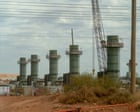
Every few months, the mainstream press discovers a new bogeyman to frighten the credulous. Right now, the media darling is the digital infrastructure sector. Recent headlines scream that a couple of planned server facilities in the UK will somehow out-pollute massive energy conglomerates like ExxonMobil. Environmental groups nod in pious agreement. Politicians scramble to draft punitive zoning laws.
It is populist theatre built on a foundation of mathematical illiteracy. Read more on a similar subject: this related article.
I have spent years watching corporate boards panic over carbon accounting while missing the forest for the server racks. The conventional narrative treats compute capacity as a standalone pollutant, as if electrons flow straight from a coal plant into a GPU to cook the planet for fun. That view is childish.
To understand why comparing a modern compute campus to an oil major is an exercise in intellectual dishonesty, you have to look past the scary press releases and examine how energy grids, industrial efficiency, and economic value actually operate. More journalism by The Verge explores similar views on this issue.
The Flawed Logic Of Static Carbon Accounting
The entire premise of the ExxonMobil comparison relies on a static, snapshot-in-time carbon accounting trick. Analysts look at the maximum potential power draw of a massive facility, multiply it by the dirtiest possible regional grid mix, and project that forward for decades.
This assumes compute facilities operate in a vacuum. They do not.
I have watched companies blow millions chasing empty net-zero badges while ignoring the actual physics of power markets. A server farm does not passively sit there sipping fossil fuels because its owners hate polar bears. These operators are under intense commercial pressure to drive power costs down. That pressure makes them the single largest private financiers of new renewable energy capacity on earth.
When a major tech operator signs a Power Purchase Agreement, they are not just buying green electrons to feel virtuous on LinkedIn. They are guaranteeing revenue streams for utility developers to build new wind and solar farms that would otherwise lack financing. Try getting an oil company to fund the construction of a competing solar array. You will wait a long time.
Operational Efficiency Beats Moral Outrage
Let us talk about what these facilities actually replace.
The lazy consensus assumes that spinning up a new cloud region creates entirely new emissions out of thin air. In reality, modern hyperscale facilities consolidate compute workloads that used to live in millions of bloated, inefficient corporate server closets, legacy data rooms, and poorly managed enterprise basements.
Old enterprise servers run at an average utilization rate of fifteen percent while bleeding electricity for cooling and lighting in commercial office buildings. A modern cloud facility runs densities and efficiencies that make traditional IT look like a steam engine.
Consolidation is not just an efficiency gain; it is an environmental sterilization. Moving workloads from thousands of fragmented corporate silos into a hyper-optimized facility cuts total energy consumption per compute cycle by orders of magnitude.
If you shut down the planned digital infrastructure to appease local activists, those workloads do not vanish. They stay in fragmented, dirtier, less efficient environments where energy waste is five times higher.
The Real Energy Crisis And Where To Point The Finger
The critics love to target digital infrastructure because it is a visible, monolithic symbol of modern technology. It has flashing lights, high security fences, and high-profile corporate logos attached to it. It makes an easy target for campaign brochures.
The actual grid crisis has very little to do with whether a council approves a new server farm in Slough or Dublin. The bottleneck is transmission infrastructure. Our electrical grids are ancient, crumbling networks designed for twentieth-century manufacturing economies, not twenty-first-century digital commerce.
Blaming digital hubs for grid strain is like blaming a sports car for traffic congestion while ignoring the fact that everyone is driving on a dirt road built in 1920.
Energy providers want large, predictable, 24/7 anchor tenants. These facilities provide the baseline financial stability utilities need to upgrade regional grids, integrate intermittent renewables, and build out next-generation storage solutions. Without these commercial buyers footing the bill for grid modernization, household consumers would face even steeper transmission cost hikes.
The Trade-Offs Nobody Wants To Admit
My contrarian take does not mean the digital sector is entirely blameless. I am not here to shill for tech monopolies or pretend that running millions of specialized processors comes with zero environmental footprint.
The uncomfortable truth is that compute growth requires energy. Lots of it. If society demands real-time translation, automated logistics, advanced medical modeling, and global communication networks, that compute has to live somewhere. It requires physical steel, copper, water, and megawatts.
Pretending we can have an advanced digital economy while starving it of power is magical thinking. You can either accept the energy cost of running modern infrastructure, or you can turn off the servers and go back to fax machines. You do not get to enjoy the convenience of modern software while throwing rocks at the buildings that house it.
Stop falling for the breathless panic of journalists who do not know the difference between a kilowatt and a megawatt-hour. The next time you read a headline pitting a server farm against an oil giant, look past the shock value. Follow the money, check the grid math, and realize that the real pollution is the intellectual laziness driving these headlines.