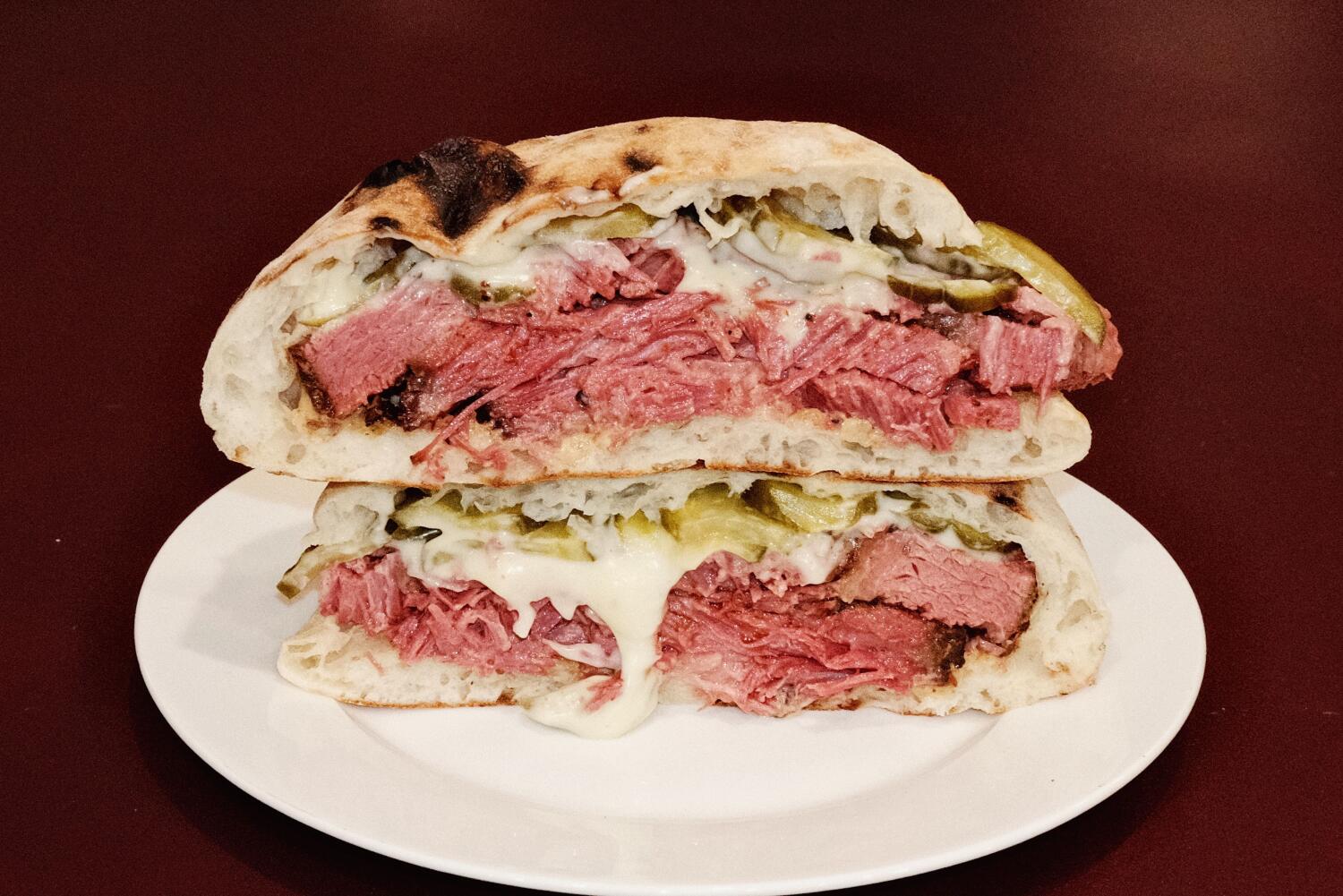
Food has always been a proxy war for class, culture, and inflation. When a Los Angeles deli started charging $38 for an Armenian brisket sandwich, the internet reacted with predictable outrage, treating the price tag as a symptom of runaway greed or hyper-gentrification. But the public fury misses the deeper reality of the modern restaurant industry. The $38 sandwich is not an anomaly. It is a logical, inevitable result of a collapsing economic model where rising supply chain costs, soaring urban rents, and the intense labor required for traditional heritage cooking clash with consumer expectations shaped by fast-food pricing.
To understand why a sandwich costs as much as a prime rib dinner did a decade ago, you have to look past the plate. You have to look at the ledger.
The Illusion of the Cheap Lunch
For generations, the American consumer has been conditioned to believe that casual food should be cheap. Sandwiches, tacos, and dumplings were born as working-class sustenance, designed to turn affordable cuts of meat and simple grains into portable meals. But that economic baseline was built on cheap real estate, low wages, and industrialized agricultural systems that subsidized the true cost of production.
None of those conditions exist anymore in major metropolitan areas.
When a restaurant commits to heritage cooking—like curing, smoking, and hand-slicing brisket using traditional Armenian techniques—they are choosing a path that cannot be automated. Brisket loses roughly 30% to 40% of its weight during the trimming and smoking process. A cut of meat that starts at $8 per pound wholesale instantly becomes $13 per pound before it ever touches a piece of bread. Add in specialized labor, premium spices, and hours of artisanal preparation, and the raw food cost alone outpaces the total menu price of a standard deli offering.
The Real Estate Stranglehold
Restaurants operate on notoriously razor-thin margins, historically hovering between 3% and 5%. In premium urban markets, those margins are being squeezed to zero by commercial landlords.
A sandwich shop in a trendy neighborhood is not just selling food. It is subleasing a highly competitive piece of real estate for thirty minutes. High-foot-traffic locations command astronomical square-foot pricing, and those fixed overhead costs must be distributed across every single item sold. If a lease costs $15,000 a month, a business cannot survive by selling $10 pastrami rolls, no matter how many units they move.
The math forces a choice. A business must either transition to high-volume, low-quality assembly lines, or position itself as a premium culinary experience that justifies luxury pricing. The $38 price tag is a defense mechanism against commercial eviction.
Culture Value Disparity
There is a unspoken hierarchy in how consumers value ethnic cuisines. Diners routinely pay $100 for a tasting menu at a French bistro or a high-end sushi bar without blinking, viewing the expense as an investment in art and tradition. Yet, when Western Asian, Mexican, or Southeast Asian concepts utilize the exact same caliber of ingredients and labor-intensive techniques, they face immense pushback if their prices cross a certain threshold.
This cultural double standard creates a glass ceiling for immigrant restaurateurs.
The Cost of Tradition
Authentic Armenian brisket preparation involves days of marination, precise spice blending, and slow wood-firing. It requires a level of skill and oversight comparable to any European classical cooking technique. Labeling a dish as "just a sandwich" diminishes the craftsmanship involved, demanding that cultural heritage remain cheap simply because of the format in which it is served.
The Choice Ahead
The outrage surrounding expensive casual food highlights a widening gap between what it actually costs to run a ethical, sustainable food business and what the public is willing to pay. As supply chains remain volatile and urban centers become more expensive, the middle tier of dining is evaporating.
Consumers are left with two stark alternatives. They can support industrialized fast-food chains that leverage massive corporate scale to keep prices low, or they can accept that independent, high-quality food preservation is becoming a luxury item. The $38 sandwich is not a scam. It is the true cost of independent survival in an unforgiving economic landscape.