The air at 13,000 feet does not feel like air. It feels like a solid, rushing wall of ice. When you step out of the aircraft door, your brain screams at you that you are falling, but your body experiences something entirely different. You are flying. You are suspended in a crystalline void, a place where the noise of the earth completely vanishes, replaced by the deafening, singular roar of the wind.
Up there, the world is divided into two things: the infinite blue above and the patchwork quilt of the dirt far below. It is the ultimate expression of human freedom. But that freedom is an illusion sustained entirely by physics, meticulous preparation, and absolute trust in the people flying beside you.
When that trust shatters, it happens in a fraction of a second.
A standard news report will tell you the bare statistics of a midair skydiving collision. It will list the altitude, the location, the emergency response times, and the tragic outcome. It will use sterile words like "bystander," "incident," and "pronounced dead at the scene." What those reports leave out is the human weight of a single mistake in a sport where the margin for error is exactly zero. They leave out the sensory reality of a tragedy that unfolded in the open sky, a place where there are no walls to crash into, yet where a collision can be as devastating as a head-on wreck on a highway.
To understand how two experienced jumpers can collide in an ocean of empty space, you have to understand the mechanics of a formation jump. Imagine driving down a highway at 120 miles per hour, bumper-to-bumper with three of your closest friends. Now imagine there is no road. You are moving in three dimensions. You can drift left, slide right, sink faster, or float upward based entirely on how you cup the wind with your palms or tilt your hips.
Let us look at a hypothetical jumper named Marcus. Marcus has logged five hundred jumps. He knows the ritual by heart. The smell of aviation fuel in the cramped cabin. The nervous, high-energy high-fives exchanged before the green light flashes. The collective exhale as the group exits the plane in unison, forming a human star against the sky.
For the first forty seconds, everything is perfect. The jumpers are locked in a silent, high-speed dance, holding onto each other’s wrists and jumpsuits, tracking across the sky like a single organism.
But a skydive is a countdown. The ground is rising at roughly one thousand feet every five seconds.
At a predetermined altitude—usually around 5,000 feet—the formation must break apart. This is called the tracking phase. It is the most critical portion of the jump. To open a parachute safely, every jumper needs a clear column of airspace. If you deploy a canopy too close to another person, your nylon lines can tangle, or one person can steal the other’s air, causing a catastrophic collapse.
Marcus turns his body away from the center of the formation and straightens his legs. He becomes a human wing, propelled forward across the sky to create a safety buffer. He is looking down and ahead, scanning the horizon for his opening clear zone.
He does not see the other jumper coming from his blind spot.
In freefall, you have no rearview mirror. Your peripheral vision is restricted by the edges of your goggles and the helmet casing. You rely on predictability. You trust that everyone else is tracking in their assigned direction, away from the center, like spokes on a bicycle wheel.
But if someone loses their orientation, even for a moment, the geometry of the sky turns lethal.
The closing speed between two skydivers tracking toward each other can exceed two hundred miles per hour. At that velocity, human flesh and bone become rigid projectiles. The impact of a boot hitting a helmet at that speed carries the same kinetic energy as a swinging sledgehammer.
When the collision occurs, there is no screech of brakes. There is only a sickening, dull thud, swallowed instantly by the rushing wind.
In an instant, the peaceful mechanics of a flight turn into chaos. One jumper is knocked unconscious, their body limp, tumbling head over heels in a chaotic spin. The other is disoriented, struggling to regain stability as the altitude alarm inside their helmet begins to beep frantically.
This is where the invisible stakes of the sport reveal themselves. Skydiving is often categorized as a pastime for adrenaline junkies, a reckless pursuit undertaken by people with a casual disregard for life. The truth is exactly the opposite. The skydiving community is a fiercely tight-knit subculture built on rigorous safety protocols, constant equipment inspection, and a deep reverence for the laws of gravity. They do not want to die; they want to feel intensely alive.
Every rig is equipped with an Automatic Activation Device, a tiny, highly sophisticated computer designed to save a jumper who cannot save themselves. If the computer detects that a jumper is still moving at freefall speeds below a certain altitude—usually around 750 to 1,000 feet—it fires a small pyrotechnic cutter that severs the reserve parachute loop. The reserve canopy shoots out into the airflow automatically.
It is a miracle of engineering. But it requires time to work. It requires clean air.
If a collision occurs too low, or if the spinning bodies become entangled in each other’s deployment bags, even the best technology in the world becomes useless. The nylon fabric becomes a shroud instead of a wing.
On the ground, the drop zone is usually a place of vibrant energy. Music plays from loudspeakers near the packing hangar. Spectators sit on picnic tables, squinting up at the sky, pointing at the colorful squares of fabric drifting lazily toward the grass. Experienced jumpers pack their rigs, swapping stories about the last exit, laughing about a sloppy turn or a hard landing.
Then, the atmosphere changes.
It starts with a silence that ripples through the hangar. Someone notices that the headcount is wrong. The parachutes are all down, but one canopy landed far out in the trees, or perhaps two jumpers are missing from the landing area entirely.
The sirens in the distance break the silence.
The community closes ranks in these moments. It is a protective instinct born of shared vulnerability. They know the risks. They have signed the waivers that explicitly state, in bold black ink, that you can die doing this. Yet, seeing those words on a piece of paper during check-in is vastly different from watching an ambulance bounce across the airfield toward a remote corner of the property.
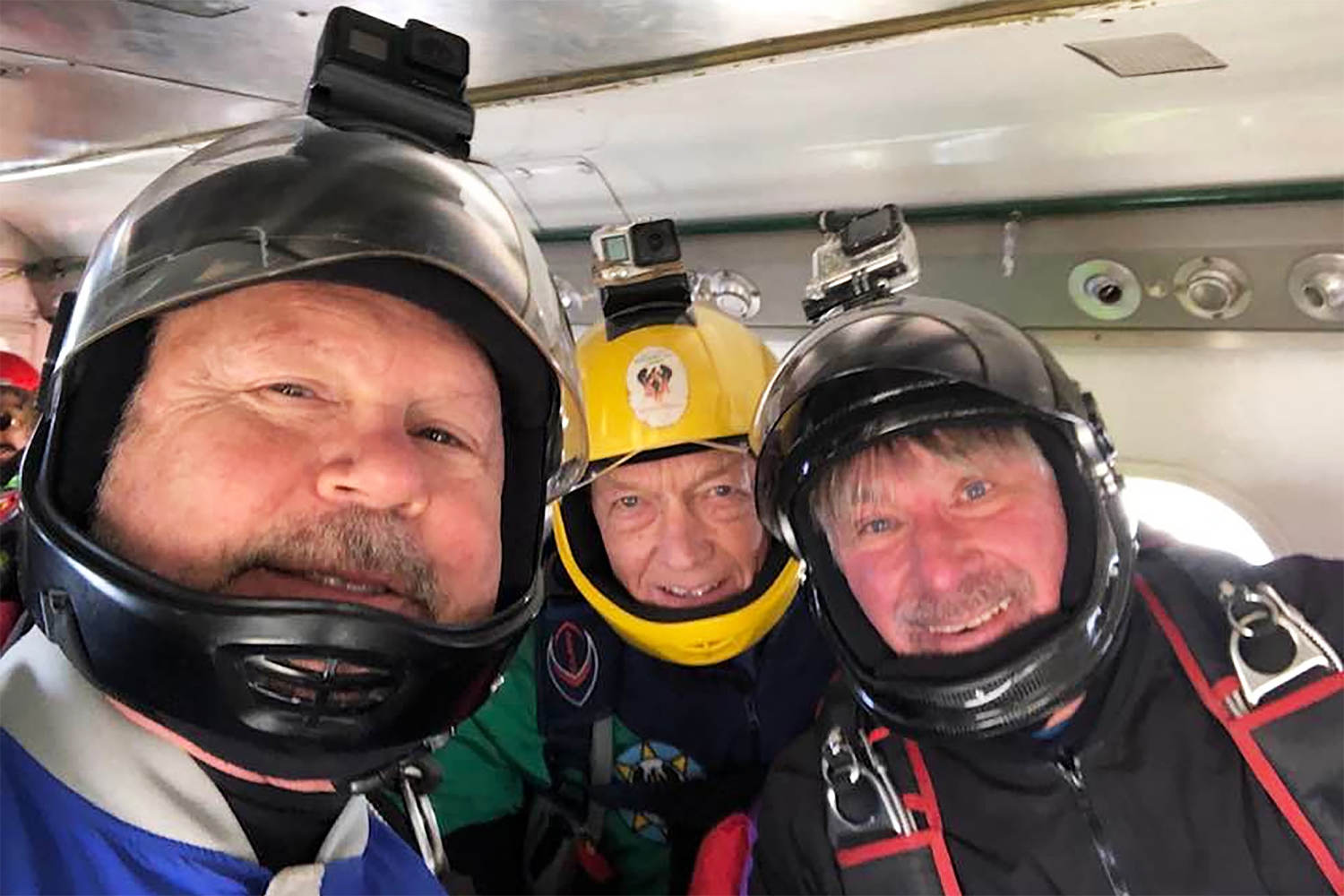
The aftermath of an aviation tragedy is a heavy, slow-motion ordeal. Investigators from the Federal Aviation Administration arrive to inspect the gear. They check the reserve seals, the main pilot chutes, and the data logged on the digital altimeters. They review any video captured by helmet-mounted cameras worn by the other jumpers in the formation. They look for the exact point where the plan fell apart.
But the technical analysis never quite satisfies the emotional void left behind.
To lose a life in the pursuit of something so beautiful feels like a betrayal by the elements themselves. The sky, which felt so welcoming and vast just minutes before, suddenly looks cold, empty, and indifferent. The wind that carried you feels like an enemy.
The sport will continue. The planes will fuel up again the next morning. Jumpers will strap on their rigs, check their three-ring release systems, and step back up into the cabin. They do this not because they are heartless, but because they understand that the danger is part of the contract. You cannot have that profound sense of weightlessness without acknowledging the terrifying reality of weight.
A pair of goggles sits on a wooden bench in the hangar, catching the late afternoon sun. The lens is slightly scuffed from use. Beside it lies an altimeter, its needle resting quietly at zero, completely indifferent to the heights it has seen or the depth of the silence it left behind.