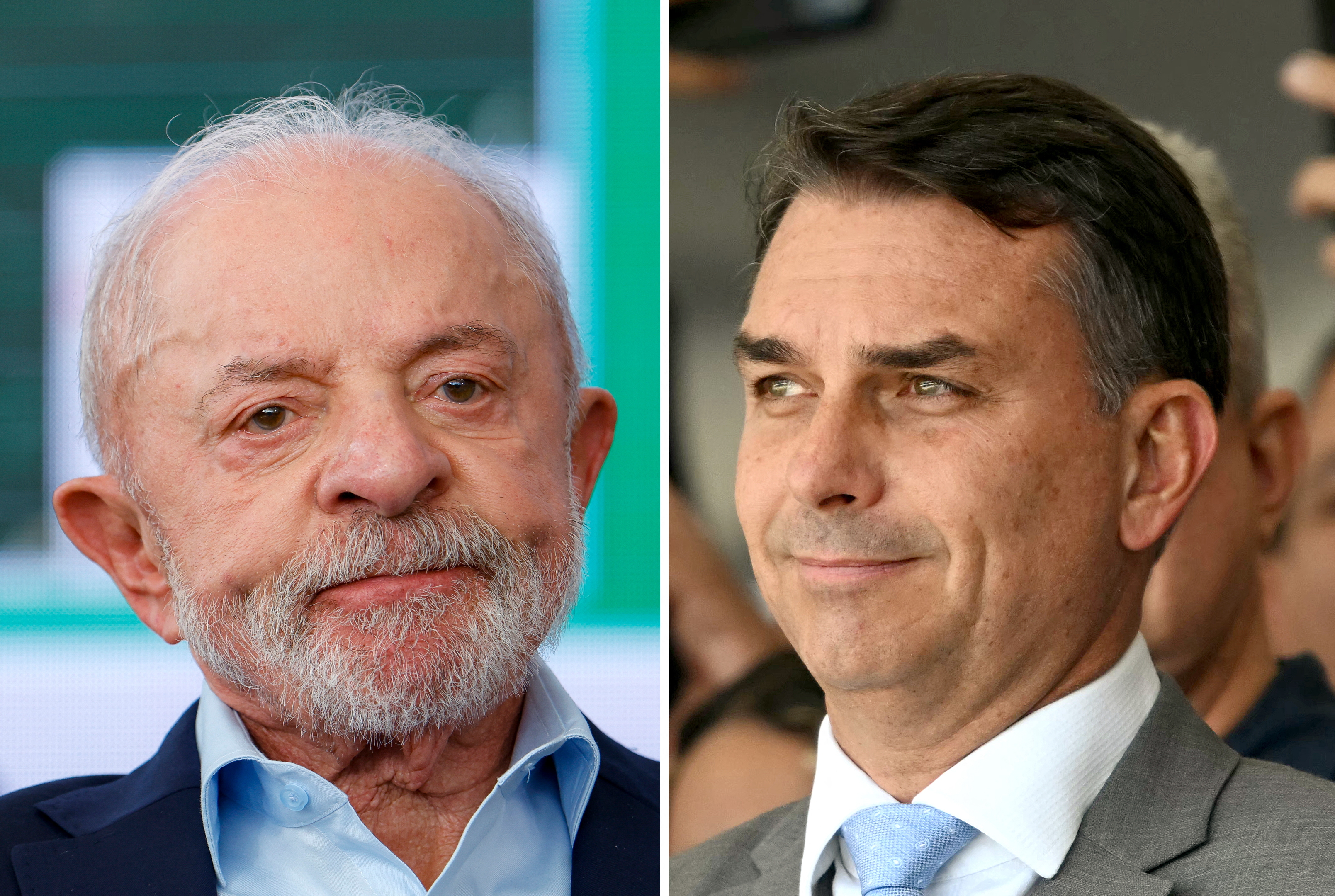
Brazil’s 2026 presidential race did not simply advance to an October 25 runoff between incumbent President Luiz Inácio Lula da Silva and Senator Flávio Bolsonaro; it exposed a massive structural split where the right conquered Congress while leaving the presidency balanced on a razor's edge. In the October 4 first round, Flávio Bolsonaro—running in place of his father, former President Jair Bolsonaro—secured 47.03% of the valid vote against Lula’s 45.16%. Yet those headline percentages hide the real story of how Brazil votes, why abstentions nearly sank the incumbent, and why a second-round comeback defied four decades of electoral history.
Most surface-level coverage framed the first round as a straightforward rightward wave. That reading misses the mechanics of the ballot box. Since Brazil restored democracy in 1985, no presidential candidate who finished second in the opening round had ever overturned that deficit in the runoff. Conversely, no incumbent president from Lula's Workers' Party (PT) had ever lost a re-election bid. Something had to break.
The Myth of the Uniform Rightward Surge
Looking strictly at the legislative tallies, the right did not just gain ground—it built a fortress. On October 4, Flávio Bolsonaro’s Liberal Party (PL) expanded its footprint in the 513-seat Chamber of Deputies by 23 seats, bringing its total to 121. When combined with aligned right-wing and center-right blocs—including the Progressive Party, União, and Republicanos—that coalition reached 249 seats. In the 81-seat Senate, the PL added 13 seats to reach 28, anchoring an allied bloc of at least 45 senators.
Four members of the Bolsonaro family won federal legislative seats in that single cycle.
To an outside observer, a presidential sweep looked inevitable. Yet executive races in Brazil run on entirely different fuel than proportional legislative contests. Down-ballot races reward local political machines, evangelical networks, and regional patronage. Presidential runoffs strip away local buffers and force a binary referendum on national anxiety versus institutional stability.
Crime, Cost of Living, and the Bukele Blueprint
Flávio Bolsonaro outperformed pre-election polling because his campaign tapped directly into acute voter frustration over organized crime and household expenses. Rather than running purely on nostalgia for his father's administration, the senator imported a hardline security pitch modeled on El Salvador's Nayib Bukele, promising the construction of five mega-prisons alongside severe punitive measures.
For millions of working-class and middle-class voters, public safety outweighed loyalty to the social programs that defined Lula's earlier terms. Simultaneously, Lula entered the race carrying the weight of incumbency at 80 years old, struggling in the first round to translate macroeconomic indicators into felt relief at the grocery store.
The Abstention Trap in Minas Gerais
The decisive battleground was never Brasília or São Paulo. It was the turnout gap in Minas Gerais.
Brazil enforces mandatory voting, yet the October 4 first round recorded a historic abstention rate of 21%. Abstention does not hit both political camps equally. Political scientists tracking the electorate noted that non-voters disproportionately came from lower-income brackets, less-educated demographics, and older citizens—precisely the constituencies that form Lula's core base.
Consider the geography of that stay-at-home vote:
- The Bellwether Rule: No presidential candidate in modern Brazilian history has won the national election without carrying Minas Gerais, the nation's second-largest electorate.
- The First-Round Deficit: Lula finished nearly five percentage points behind Flávio Bolsonaro in Minas Gerais on October 4.
- The Local Collapse: Eight of the ten municipalities with the highest abstention rates in the entire country were located inside Minas Gerais.
When pundits declared the right unstoppable after the first round, they were mistaking suppressed turnout for ideological conversion. Millions of Lula-leaning voters had simply stayed home, uninspired by a cautious first-round campaign that failed to frame the stakes in urgent terms.
Why the Runoff Flipped the Script
Entering the three-week sprint to October 25, Flávio Bolsonaro held a lead of less than two percentage points and appeared to have the momentum. He publicly pledged that, if elected, he would pardon his father and receive the presidential sash directly from him.
That promise proved to be a double-edged sword. While it electrified the hardcore base, it also snapped undecided voters out of complacency.
The Ceiling Problem and Unclaimed Votes
Around 5.3 million first-round votes had gone to minor candidates like Ronaldo Caiado and Renan Santos, both of whom declined to endorse either finalist. To win, Flávio Bolsonaro needed to expand beyond his family's ceiling. Instead, his support stalled. Scrutiny over two ongoing federal police inquiries into the senator—involving allegations of corruption and money laundering—blunted his ability to campaign as an anti-establishment reformer.
Meanwhile, the dynamics outside official party headquarters shifted dramatically:
- Organic Street Mobilization: Student-led demonstrations erupted across major cities, driven by young voters who feared a rollback of civil rights and democratic guardrails rather than acting on orders from the Workers' Party.
- Digital Counter-Offensive: Lula overhauled his stagnant online operation, leaning on decentralized networks of digital creators and mass-messaging channels—including an outreach push dubbed "Lula's Army" that drew over 10 million followers.
- Sovereignty as a Wedge: Rising friction with Washington, including new U.S. tariffs and vocal backing for the Bolsonaros from Donald Trump, allowed Lula to reframe the runoff around national sovereignty.
The Math of a Historic Reversal
When Brazilians returned to the polls on October 25, overall participation surged by nearly 3 million votes compared to the first round, pushing total turnout past 124 million.
Those returning voters broke decisively for the incumbent. Lula captured 51.79% of the valid vote to Flávio Bolsonaro's 48.21%, securing an unprecedented fourth presidential term and becoming the first candidate in Brazil's democratic era to lose the first round and win the runoff.
| Electoral Metric | First Round (Oct 4) | Runoff (Oct 25) |
|---|---|---|
| Flávio Bolsonaro (PL) | 47.03% | 48.21% |
| Luiz Inácio Lula da Silva (PT) | 45.16% | 51.79% |
| Net Margin | Bolsonaro +1.87% | Lula +3.58% |
The aftermath underscored the volatility of the new political map. While the Liberal Party officially recognized the election outcome, Flávio Bolsonaro refused to concede and soon departed Brazil for Miami via Argentina.
Governing Inside a Divided House
Winning the Planalto Palace solved Lula's immediate survival problem, but it did not erase the first-round legislative reality.
Starting in 2027, Lula will govern facing the most entrenched right-wing Congress since the end of military rule. With 249 aligned deputies in the lower house and 45 aligned senators in the upper chamber, the opposition holds enough leverage to block constitutional amendments, stall budget approvals, and dictate the legislative agenda.
The stakes extend straight into the judiciary. Over the next four-year term, the presidency holds the power to appoint at least four justices to the 11-member Supreme Federal Court. Had Flávio Bolsonaro won, a single political bloc would have controlled the executive branch, both houses of Congress, and a newly reshaped Supreme Court majority. Lula's runoff survival prevented that total institutional sweep, preserving a system of checks and balances that will now be tested every single day on the floor of Congress.