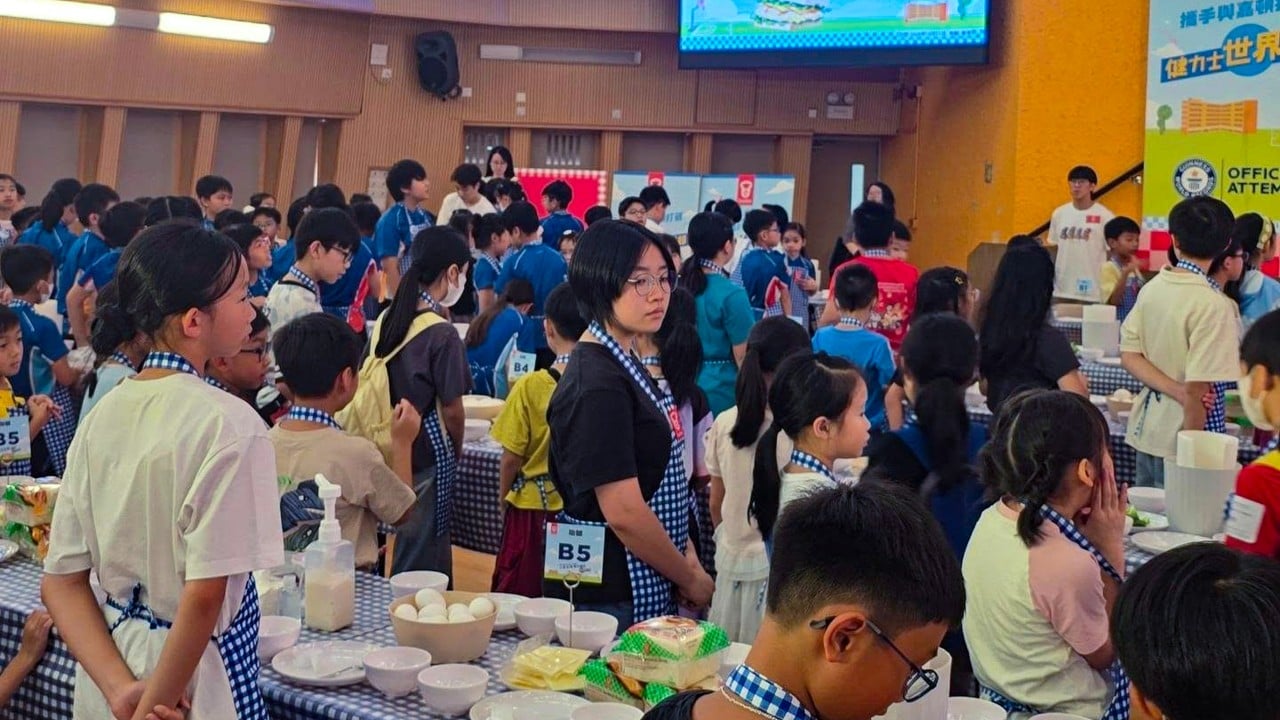
Corporate anniversaries are supposed to be celebrations of longevity, reliability, and community goodwill. When Hong Kong’s iconic century-old bakery brand, the Garden Company, attempted to stage a record-breaking mass sandwich-making lesson involving over 700 students at SKH Tang Shiu Kin Secondary School in Wan Chai, public relations disaster struck instead. What was meant to be a wholesome spectacle celebrating corporate heritage quickly devolved into a chaotic crush, a broken door handle, and a barrage of criticism over crowd control and safety.
To understand why a simple corporate milestone turned into a near-stampede, we have to look past the superficial corporate apologies and examine the structural hubris of modern experiential marketing. In an age dominated by social media validation and public relations stunts, corporations routinely prioritize spectacle over logistical safety. The incident in Wan Chai laid bare a dangerous disconnect between marketing ambitions and basic crowd management realities.
The Mechanics of Manufactured Hype
For decades, heritage brands have relied on nostalgic marketing to secure consumer loyalty. Founded nearly a hundred years ago, the Garden Company holds a warm, familiar place in local households. Yet, as traditional advertising loses its bite against digital fatigue, legacy institutions feel compelled to manufacture high-impact spectacles. Setting a Guinness World Record—such as hosting the largest sandwich-making lesson—serves as an irresistible shortcut to earned media coverage.
However, mass participation events involving children require military-grade logistical planning. According to reports from the scene, the bottleneck occurred as crowds of parents, spectators, and participants converged in a confined space. As wait times dragged on and frustration mounted, the physical infrastructure of the venue failed. A door handle was broken under the sheer pressure of surging bodies, and an atmosphere of celebration quickly curdled into anxiety.
While corporate representatives were quick to issue statements noting that staff intervened and no injuries were officially recorded, the defense misses the point entirely. Relying on luck to prevent a catastrophic human crush is not a safety strategy. When thousands of people are funneled into a tight secondary school compound for a commercial PR stunt, the margin for error is razor-thin.
The Illusion of Control in Experiential Marketing
In modern corporate event planning, risk assessment often takes a backseat to visual aesthetics. Organizers visualize the polished final photograph—hundreds of smiling students holding uniform sandwiches beneath branded banners—while ignoring the logistical friction required to move those bodies in and out of a venue safely.
When things go wrong, the standard playbook is predictable. Issue a swift apology, promise an internal review of the admission mechanism, and pivot back to celebrating the brand's history. But public trust is not repaired through boilerplate corporate phrasing. When parents send their children to participate in a sponsored school activity, they expect a secure environment, not an impromptu lesson in crowd panic.
The Wan Chai breakdown highlights a wider industry blind spot. As brands scramble to generate viral moments, they routinely underestimate the unpredictability of human crowds. Capacity limits are treated as flexible guidelines rather than hard physical laws. Security personnel are frequently deployed as reactive window-dressing rather than proactive traffic controllers.
What the Garden Incident Teaches Corporate Communications
The fallout from the Garden Company’s troubled milestone offers a stark cautionary tale for any organization attempting large-scale public activations. First, scale must never outpace infrastructure. If a venue cannot comfortably handle the influx of participants, media, and parents, the event must be scaled down or moved, regardless of what the marketing department has promised stakeholders.
Second, transparency must replace damage control. A generic commitment to "review future mechanisms" does little to reassure parents who watched a door handle shatter under pressure. True accountability requires detailing precisely what failed, who authorized the layout, and what concrete, independently audited protocols will replace them.
Corporate longevity is earned over decades and can be strained in a single afternoon. As the Garden Company approaches its century mark, this episode serves as an uncomfortable reminder that nostalgia and brand equity cannot absorb infinite stress. When marketing departments treat public safety as an afterthought, the cost is paid by the community standing on the other side of the jammed doors.
How the world's biggest food stunts go wrong
This video explores how large-scale promotional food events can quickly spiral out of control due to poor crowd management and logistical oversights.