The conflict in Ukraine has transitioned from a war of maneuver into a systemic industrial competition defined by the exhaustion of material reserves and the synchronization of electronic warfare with precision fires. Surface-level reporting often focuses on territorial gains measured in meters, but the true state of the conflict is found in the intersection of three specific operational variables: the artillery-to-drone feedback loop, the degradation of heavy armor utility in high-transparency environments, and the hard limits of Western versus Russian defense manufacturing scaling.
The Feedback Loop of Precision Attrition
The traditional doctrine of massed fires has been replaced by a "sensor-to-shooter" cycle that now operates in under 120 seconds. This compression of time is the result of persistent Intelligence, Surveillance, and Reconnaissance (ISR) capabilities. When a target is identified, the information is processed through decentralized digital battle management systems and relayed to a firing unit almost instantly.
This creates a structural paradox for offensive operations. Concentrating forces to achieve a breakthrough provides the density required to pierce defensive lines, but that same density creates a target profile that is impossible to hide from ubiquitous First-Person View (FPV) drones and thermal-imaging satellites. The tactical result is a "transparency zone" extending 20 to 30 kilometers behind the Forward Line of Own Troops (FLOT). Within this zone, any movement larger than a single squad is detected and engaged.
The cost function of this attrition favors the defender for two primary reasons:
- Asymmetric Precision: A drone costing $500 can disable a Main Battle Tank (MBT) costing $6 million. Even with low success rates, the economic exchange remains heavily skewed.
- Fixed Fortifications: Deeply echeloned defensive lines, reinforced by extensive mining (averaging up to 5 mines per square meter in some sectors), force the attacker to slow down, increasing their exposure time within the kill zone of pre-registered artillery.
The Industrial Bottleneck and Shell Hunger
The war is currently dictated by the "155mm Constraint." Western defense industries, optimized for low-volume, high-technology production during decades of counter-insurgency, have struggled to pivot to the high-intensity requirements of a continental peer-to-peer conflict.
Current Russian production estimates suggest an output of approximately 250,000 artillery munitions per month, or 3 million units per year. This is supplemented by significant transfers from external state actors. In contrast, the combined capacity of the United States and European Union, while increasing, remains behind this curve. The strategic implication is a "firepower gap" where the ratio of outgoing shells often reaches 5:1 or 10:1 in favor of Russian forces in active sectors.
This gap is not merely a number; it dictates the tactical feasibility of defense. Without counter-battery fire—the ability to target the enemy's cannons—infantry in trenches are subjected to "creeping barrages" that systematically dismantle fortifications before an assault even begins. The shortage of interceptor missiles for Integrated Air Defense Systems (IADS) further complicates this, as it allows for the increased use of glide bombs—modified gravity bombs with GPS guidance wings—which can deliver up to 1,500kg of explosives with high accuracy from outside the range of most short-range air defenses.
The Electronic Warfare Hegemony
Victory on the modern battlefield is increasingly dependent on control of the electromagnetic spectrum. Electronic Warfare (EW) is no longer a support function; it is a primary combat arm. Both sides have deployed wide-spectrum jamming suites that create "bubbles" of signal interference.
- GPS Spoofing: High-end Western munitions, such as Excalibur shells and HIMARS rockets, rely on GPS coordinates. Russian EW units, particularly the Pole-21 and Zhitel systems, have demonstrated the ability to degrade the accuracy of these systems by "blanketing" signals, forcing a return to less precise inertial navigation or purely visual guidance.
- Drone Frequency Shifting: The FPV drone war is a constant race between frequency hopping and signal jamming. When a specific radio frequency used by drone pilots is jammed, the entire fleet of that drone model becomes paperweights until the hardware can be modified with new chips or antennas.
This creates a "technological decay" where any new weapon system introduced to the battlefield has an effective peak utility of roughly three to six months before counter-measures are developed and deployed at scale.
The Logic of Personnel Mobilization and Training
The fundamental constraint on Ukrainian operations is the depletion of the pre-war professional cadre. Replacing a combat-hardened sergeant or officer takes years, not weeks. While Western training programs provide basic proficiency in combined arms tactics, these programs often fail to account for the reality of a battlefield where the air is not contested by friendly jets, but by enemy loitering munitions.
The Russian strategy relies on a "mass over efficiency" model, utilizing a deeper mobilization pool to sustain high casualty rates while maintaining pressure across a 1,000km front. This forces the Ukrainian command to commit reserves to defensive actions, preventing the accumulation of the "force-multiplier" units required for a concentrated counter-offensive.
The Energy Infrastructure Attrition
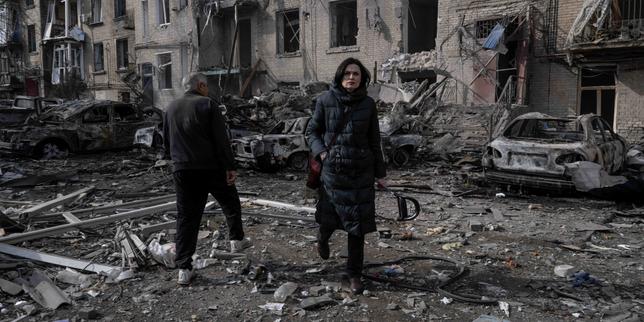
Beyond the FLOT, the conflict has evolved into a war against the domestic industrial base. The systematic targeting of electrical substations and thermal power plants serves a dual purpose. First, it degrades the logistics of the rail network, which is the primary method for moving heavy equipment. Second, it imposes a massive economic cost on the civilian state, siphoning funds away from defense spending and toward humanitarian repair and backup power generation.
The resilience of the Ukrainian energy grid is reaching a critical threshold. Most of the Soviet-era transformers and turbines are difficult to replace with Western components, which operate on different specifications. The cumulative damage to the "backbone" of the national grid creates a fragility that could lead to a systemic collapse if air defense coverage is spread too thin to protect both the frontline and the interior.
The Strategic Calculus of End-State Scenarios
We must distinguish between a tactical stalemate and a strategic collapse. A tactical stalemate exists when neither side can move the line of contact. A strategic collapse occurs when one side's ability to replace lost equipment and personnel falls below the rate of attrition.
Currently, the war is a race against the clock for both sides:
- For Ukraine, the objective is to maintain a high enough attrition ratio to make the Russian offensive unsustainable while waiting for Western industrial production to reach parity.
- For Russia, the objective is to exploit the current firepower advantage to seize key logistical hubs like Pokrovsk or Chasiv Yar before the introduction of new Western capabilities, such as F-16 platforms and increased long-range strike munitions, can shift the air superiority dynamic.
The bottleneck is no longer a lack of courage or tactical ingenuity; it is a lack of "metal." The side that can first solve the mass-production of autonomous systems and the replenishment of 155mm/152mm munitions will dictate the terms of the next phase.
To regain the initiative, Ukrainian forces must transition to a "Deep Defense" posture that prioritizes the preservation of personnel over the holding of non-strategic territory. This requires an immediate investment in underground manufacturing facilities and the decentralization of command nodes to mitigate the impact of precision glide bombs. Simultaneously, Western partners must move beyond "just-in-time" delivery models and establish long-term procurement contracts that signal a permanent shift in the European security architecture. Failure to do so will result in a slow, grinding loss of sovereign capability as the industrial weight of the opposition eventually overcomes tactical brilliance.
Would you like me to analyze the specific logistics of the North Korean munitions pipeline and its impact on the 2026 spring offensive projections?


