The air in Kotelnich, a quiet speck in the Kirov region of Russia, usually smells of damp earth and the heavy, industrial scent of the Vyatka River. It is a place that feels insulated by distance. Moscow is nearly 600 miles to the west. The border with Ukraine is even further—a staggering 750-mile stretch of forest, highway, and history. For the people living near the Zenit oil depot and the surrounding chemical facilities, the war was something that happened on a television screen or in the hushed tones of a neighbor whose son hadn't called in weeks.
Then came the hum.
It isn't the roar of a jet engine. It is a persistent, lawnmower-like thrum that vibrates in the marrow of your teeth before you even see the shape against the clouds. On a Wednesday that started like any other, that sound signaled the end of the illusion of distance. For the first time since the escalation began, the reach of the Ukrainian military stretched deep into the Russian heartland, striking a blow that was as much about psychology as it was about chemistry.
The Anatomy of a Thousand Kilometers
To understand how a drone traverses 1,200 kilometers (roughly 750 miles) of contested, monitored airspace, you have to stop thinking about war as a map of front lines. Instead, think of it as a sieve.
Modern air defense is designed to catch the big fish: ballistic missiles, fighter jets, and high-altitude bombers. These are the predators that scream across the radar. But a long-range kamikaze drone is different. It is a ghost. Often made of wood, foam, or light composites, these devices have a radar signature smaller than a migratory bird. They hug the contours of the land, dipping into valleys and skimming over treetops, exploiting the "clutter" that confuses electronic eyes.
When several of these drones targeted the Zenit oil refinery and its neighboring chemical infrastructure, they weren't just delivering explosives. They were delivering a message about the obsolescence of traditional borders.
Consider the hypothetical perspective of a technician at the Zenit plant. Let’s call him Mikhail. For Mikhail, the facility isn't a "strategic asset" or a "logistical node" in a geopolitical struggle. It is a labyrinth of pipes, pressure gauges, and the constant, rhythmic hiss of volatile liquids moving through steel. His world is governed by the laws of thermodynamics. If the pressure rises too high in Tank 4, he turns a valve. If the temperature spikes, he checks the cooling system.
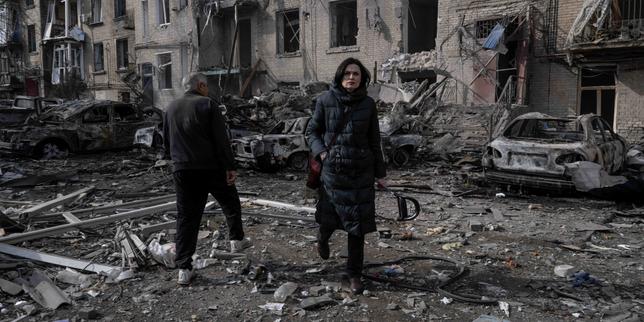
But the laws of thermodynamics have no defense against a kinetic impact from the sky. When the first drone struck, the ground didn't just shake; it heaved. The "dry facts" of the news report—four drones, two tanks on fire—fail to capture the sensory nightmare of a chemical fire. It is a heat that feels solid, a black, oily smoke that tastes like burnt pennies and suffocates the very air it occupies. In that moment, the 750 miles between Mikhail and the border collapsed into nothing.
The Invisible Stakes of a Chemical Strike
Striking a chemical plant is a surgical act with blunt-force consequences. Unlike a traditional battlefield where the objective is to take ground, the objective here is to paralyze the engine of society.
Chemicals and petroleum are the blood and bile of a modern war machine. They provide the fuel for the tanks, the lubricants for the gears, and the precursors for the explosives themselves. But the stakes go deeper. These facilities are often the economic lifeblood of the regions they inhabit. When a plant in Kirov burns, the ripples are felt in the local power grid, the water supply, and the stability of the local ruble.
The Ukrainian strategy has shifted toward this "deep strike" philosophy not out of a desire for carnage, but out of a cold necessity. If you cannot stop the hammer from falling on the front lines, you go after the arm that swings it. By forcing Russia to pull air defense systems away from the trenches to protect deep-rear infrastructure like Kotelnich, Ukraine creates gaps elsewhere. It is a high-stakes game of shell-shifter, where every battery moved to protect a refinery is a battery lost to the soldiers in the Donbas.
The Technological Leap of the Underdog
There is a grim irony in the technology being used. Many of these long-range drones are relatively inexpensive, costing perhaps a few thousand dollars to manufacture. They are being used to destroy assets worth tens of millions, protected by defense systems that cost even more.
We are witnessing the democratization of long-range devastation.
In previous eras, striking a target 1,000 kilometers away required a superpower's budget and a fleet of B-52s. Today, it requires a small workshop, a handful of engineers, and GPS coordinates. This shift has turned the vastness of Russia—once its greatest defensive asset—into a liability. There is simply too much sky to guard. Every forest, every river valley, and every rural highway becomes a potential corridor for a silent, flying bomb.
The psychological toll on a population that believed itself to be "out of range" cannot be overstated. When the war reaches the Kirov region, it reaches the kitchen table. It interrupts the school day. It makes the hum of a distant tractor sound like a threat.
The Fire That Doesn't Go Out
As the smoke cleared over the Zenit plant, the official reports were quick to minimize the damage. They spoke of "minor fires" and "successful interceptions." But the video footage told a different story—plumes of soot rising like black scars against the blue sky, the frantic movement of emergency vehicles, and the unmistakable glow of burning hydrocarbons.
This isn't just about the Kirov region. It is about the fundamental transformation of 21st-century conflict. The front line is no longer a trench in the mud; it is wherever a drone can find a signal. It is the realization that in a world of autonomous navigation and low-cost composites, no one is truly "in the rear."
Mikhail, if he returned to work the next day, would look at those pipes differently. He would listen to the wind with a new kind of intensity. He would realize that the distance he once trusted to keep him safe was just a number on a map, and maps are being rewritten every day.
The hum in the sky has become the new background radiation of modern life. It is the sound of a world where the distance between a quiet town and a combat zone is exactly as long as a drone's battery life. The fires in Kirov eventually burned out, but the warmth they cast was not one of comfort. It was the heat of a realization that the war has no edges, no boundaries, and no back porch.
The sky is no longer empty. It is waiting.