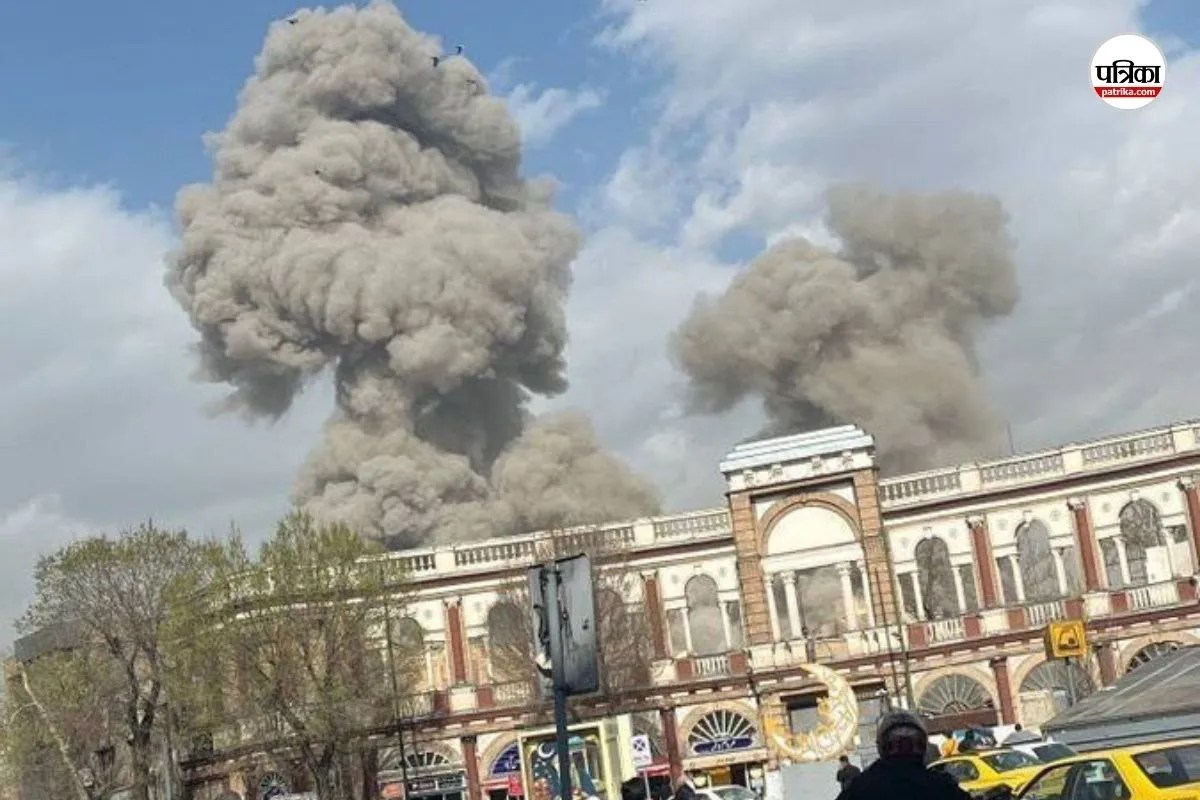
The escalation of direct military engagement between Iran and Israel represents a structural shift from "gray zone" shadow warfare to a high-intensity kinetic calculus. When analyzing reports of strikes involving 30 or more targets within Iranian territory, the objective is rarely the total annihilation of the adversary's military. Instead, these operations are governed by a Signaling and Degradation Framework, where the choice of target dictates the political cost and the operational recovery time for the state under fire. Understanding this conflict requires moving beyond the sensationalism of "missile counts" and focusing on the three specific vectors of strategic friction: Integrated Air Defense Systems (IADS) suppression, ballistic missile infrastructure neutralization, and the psychological decoupling of the regime from its defensive assets.
The Triad of Target Categorization
In any large-scale aerial campaign involving precision-guided munitions (PGMs), target selection follows a rigid hierarchy of necessity. Military planners categorize these based on their contribution to the enemy's "kill chain."
- Enabling Infrastructure (The IADS Layer):
Before striking high-value assets, an attacker must blind the defender. Reports of 30 targets likely begin with S-300 or indigenous Khordad-15 radar arrays and surface-to-air missile (SAM) batteries. Neutralizing these sites creates "corridors of vulnerability," allowing subsequent waves of aircraft or drones to operate with relative impunity. - Production and Storage (The Logistics Layer):
Targeting factories—specifically those housing solid-fuel mixers for ballistic missiles or centrifuge assembly halls—imposes a multi-year recovery cost. Unlike a mobile launcher, which can be replaced, the specialized machinery required for high-precision aerospace engineering is subject to global export controls and difficult to reconstruct under heavy sanctions. - Command and Control (The Nervous System):
Hardened underground facilities (UGFs) represent the ultimate tier of targeting. Striking these locations signals a capability to penetrate "impenetrable" geography, using tandem-charge "bunker busters" to reach depths previously thought safe.
The Economics of Attrition
The disparity between the cost of an interceptor and the cost of an incoming projectile creates a fundamental bottleneck in modern warfare. Israel’s multi-layered defense—comprised of Arrow 3, David’s Sling, and Iron Dome—operates on a sophisticated cost-to-kill ratio.
An Iranian-made Shahed-136 "suicide drone" may cost approximately $20,000 to $50,000. In contrast, an Arrow 3 interceptor, designed to neutralize medium-range ballistic missiles in the exo-atmosphere, is estimated at over $2 million per unit. This creates an Asymmetric Economic Burden. Iran’s strategy hinges on saturating these defenses to force a depletion of interceptor stockpiles, while Israel’s counter-strategy focuses on "Deep-Strike Deterrence"—neutralizing the launch platforms themselves to stop the flow at the source rather than catching the rain.
Technical Limitations of Iranian Hardening
Iran has invested heavily in the "Passive Defense" doctrine, which involves burying its most sensitive military and nuclear assets deep within the Zagros Mountains. While this provides protection against standard 2,000-pound Mark 84 bombs, it introduces two critical vulnerabilities:
- The Ventilation Bottleneck: Every underground facility requires a constant flow of oxygen and a method to exhaust heat and gases. Precision strikes on these ventilation shafts can render a multi-billion dollar facility unusable without ever breaching the primary rock layer.
- The Access Point Fragility: A mountain base is only as functional as its tunnels. By utilizing "earth-penetrating" munitions to cause structural collapses at the entrance and exit points, an attacker can effectively "entomb" the equipment inside, achieving the same operational result as total destruction with a fraction of the explosive force.
The Shift from Proxy to Direct Kinetic Engagement
For decades, the strategic consensus was built on the "Ring of Fire" theory, where Iran utilized proxies (Hezbollah, Houthis, PMF) to maintain plausible deniability. The transition to direct state-on-state strikes changes the risk-reward profile for both nations.
The Sovereignty Tax
When a state’s internal soil is targeted, the "Sovereignty Tax" must be paid. This is the political necessity for a regime to respond to maintain internal legitimacy. If Iran fails to retaliate after 30 sites are hit, it signals a collapse of its deterrence. Conversely, if it responds and fails to penetrate Israel's defense, it signals technological inferiority. This creates a "Deterrence Trap" where both sides are incentivized to escalate to avoid looking paralyzed, yet both fear the total war that would follow.
Precision over Volume
The number "30" in the context of targets is less important than the type of targets. If the strikes hit Parchin or Khojir (centers for missile development), the impact is strategic. If they hit empty barracks or radar outposts, the impact is symbolic. Modern satellite imagery allows for an immediate assessment of "Battle Damage Verification," making it impossible for either side to hide the true extent of the damage from professional analysts or domestic audiences.
Cyber-Kinetic Integration
A critical missing piece in standard reporting is the role of non-kinetic warfare. Before physical missiles are fired, the electronic environment is manipulated. This involves:
- GPS Spoofing: Altering the coordinates for incoming drones to force them off-target or into unpopulated areas.
- SCADA Attacks: Targeting the industrial control systems of the facilities being struck to disable fire suppression systems or power grids, magnifying the impact of the physical blast.
The synergy between a cyber-attack that disables a radar system and a physical strike that destroys the dish is the hallmark of modern integrated operations. This explains why certain targets appear "defenseless" during a raid; they were likely blinded digitally before the physical munition entered their airspace.
Strategic Friction and the Threshold of Escalation
The current trajectory suggests that both nations are testing the "Maximum Tolerable Threshold." Israel is testing how much of Iran’s missile infrastructure it can dismantle before Tehran feels forced to use its remaining arsenal in a "use it or lose it" scenario. Iran is testing how many missiles it can fire before Israel decides to target the "Head of the Snake"—the political leadership or the primary oil-exporting infrastructure at Kharg Island.
The bottleneck for Israel is its reliance on US-supplied munitions and intelligence, while the bottleneck for Iran is its limited air force and aging radar technology. This creates a Technological Asymmetry where one side (Israel) relies on superior accuracy and stealth (F-35 Adir), and the other (Iran) relies on mass, geography, and unconventional persistence.
The operational reality of striking 30 targets in Iran is not merely a retaliatory gesture; it is a systematic dismantling of the defensive architecture required to protect the Iranian nuclear program. By stripping away the SAM sites and the missile production hubs, the aggressor leaves the core strategic assets exposed for future, more decisive operations. This is "Pre-emptive Shaping"—preparing the battlefield for a conflict that has moved beyond the shadows and into the realm of overt, high-stakes attrition.
The logical end-state for this phase of the conflict is a redefined "Red Line." If the international community fails to provide a diplomatic off-ramp that accounts for these new kinetic realities, the next logical step in the escalation ladder is a strike on energy infrastructure. This would shift the conflict from a military-technical exchange to a global economic crisis, as the Strait of Hormuz remains the single most sensitive chokepoint in the global oil supply chain. The strategic play now is not more missiles, but the credible threat of targeting the economic foundations of the state itself.