History has a cruel way of measuring success. It doesn't look at the size of the crowd or the volume of the applause. It looks at the silence that follows a decision. It looks at the empty chairs at dinner tables in Ohio and the scorched earth in places most Americans couldn't find on a map. For twenty years, we believed the ghost of the Iraq War was the ultimate cautionary tale—a singular, towering monument to how a superpower can trip over its own hubris. But we are witnessing a new contender for that dark crown.
Think of a small business owner in a border town. Let’s call him Elias. For decades, Elias operated under a set of invisible rules. He knew that alliances were like structural beams in a house; you don’t notice them until someone starts swinging a sledgehammer at the foundation. He understood that a treaty signed in a far-off capital was the reason his supply chain remained unbroken and his neighborhood remained stable.
Then the rules changed. The sledgehammer arrived, not under the guise of a grand strategy, but as a series of erratic, transactional jolts.
Comparing the invasion of Iraq to the systematic dismantling of the post-war international order under the banner of "America First" is not an academic exercise. It is an autopsy of two different ways to break a world. George W. Bush’s failure was an explosion—a sudden, violent, and catastrophic miscalculation based on flawed intelligence and missionary zeal. It cost trillions of dollars and hundreds of thousands of lives. It was a tragedy of action.
The current trajectory represents a tragedy of erosion.
The Slow Bleed of Trust
When the United States walked away from the Iran Nuclear Deal (JCPOA), it wasn’t just about centrifuges or enrichment levels. It was about the sanctity of a handshake. Imagine you sign a contract to buy a home, you move your family in, and two years later, the seller's brother shows up, tears up the deed, and tells you to get out because he didn't like the original terms. You wouldn't just be homeless; you would never trust a contract again.
By abandoning a multi-lateral agreement that international inspectors verified was working, the administration didn't just isolate Iran. It isolated America. It told every ally from Paris to Tokyo that a promise from Washington has the shelf life of a carton of milk. This isn't just "tough negotiating." It is the liquidation of the most valuable currency a nation possesses: credibility.
Once that credibility is gone, the world gets darker. Dictators stop fearing the consequences of their actions because they no longer believe the U.S. has the stomach or the consistency to follow through. Allies start making their own side deals with adversaries because they can no longer rely on the American shield.
The Abandonment of the Kurd
Consider the human cost of a single phone call. In October 2019, a brief conversation led to the abrupt withdrawal of U.S. troops from Northern Syria. This wasn't a calculated strategic shift. It was a green light for an invasion.
The Kurds had been our most effective boots on the ground in the fight against ISIS. They bled so American soldiers wouldn't have to. They guarded the prisons holding the world's most dangerous radicals. Then, in a heartbeat, they were left to face a Turkish onslaught alone.
The image of Kurdish civilians throwing potatoes at departing American armored vehicles is a stain that won't wash out. It was a visual representation of a superpower losing its soul. When you betray the people who fought beside you, you don't just lose a battle. You lose the right to ask anyone else to fight for you in the future. The Iraq War was a disaster of over-extension, but the betrayal in Syria was a disaster of character.
The Trade War of Attrition
While the bombs were falling in the Middle East during the 2000s, the economic engines of the Midwest were already beginning to sputter. The promise of the new era was that aggressive tariffs would bring those engines back to life.
It was a seductive story. It cast the global economy as a zero-sum game where every gain for a factory in Shanghai was a direct theft from a factory in Scranton. But the reality was far messier. Tariffs are not paid by the target country; they are a tax on the domestic consumer and the local manufacturer.
Elias, our hypothetical business owner, saw his costs skyrocket. The aluminum he needed for his products became a luxury. The retaliatory tariffs from China meant the farmers in his county couldn't sell their soy. The government eventually stepped in with billions in bailouts—socialism by another name—to fix a wound the government itself had inflicted.
The Iraq War drained the treasury through military spending. The trade wars drained the treasury through economic mismanagement and the need to patch the holes created by "easy to win" conflicts. Both resulted in a massive transfer of wealth away from the middle class, leaving the average citizen more vulnerable and more cynical.
The Void Where Leadership Used to Be
Nature abhors a vacuum, and so does geopolitics. Every time the U.S. withdrew from a climate accord, a trade pact, or a human rights council, someone else stepped into the gap.
China does not operate on a four-year election cycle. They play the long game. While Washington was busy insulting the leaders of democratic nations and praising autocrats, Beijing was busy building ports, laying fiber-optic cables, and signing hundred-year deals across Africa and Southeast Asia.
The "worst foreign policy decision" isn't always a single event. Sometimes it is a thousand small departures. It is the decision to stop showing up. It is the choice to treat long-standing alliances as protection rackets.
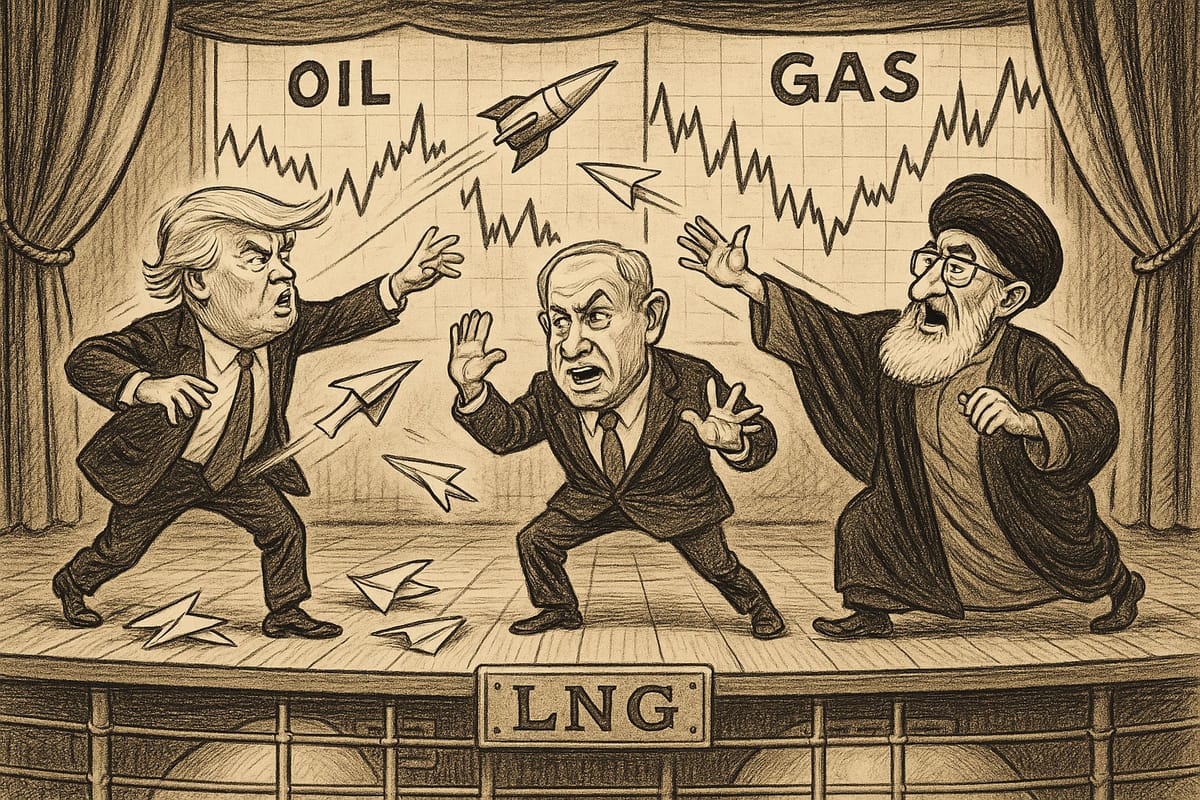
When George W. Bush went into Iraq, he did so with a "coalition of the willing." However misguided the mission, he understood that America is stronger when it leads a choir rather than performing a solo. The current era has seen the choir disbanded. We are now standing alone on a stage, shouting into the dark, wondering why the audience is leaving.
The Ghost of 2003 vs. the Reality of Now
The wreckage of Iraq is visible. You can see it in the broken cities and the military cemeteries. It is a tragedy of the physical world.
The wreckage of the current foreign policy is psychological and structural. You see it in the eyes of a diplomat who is laughed at in the United Nations. You see it in the shifting borders of Eastern Europe, where an emboldened Russia senses a fractured West. You see it in the rise of a multipolar world where the "American Dream" is no longer the default aspiration for the youth of developing nations.
Which is worse?
Is it the commander who leads his troops into a disastrous swamp, or the captain who tosses the compass overboard and tells the crew that the stars are a conspiracy?
The Iraq War was a fever. It was hot, violent, and devastating, but fevers can break. The current abandonment of global leadership is a degenerative disease. It is a slow thinning of the bones, a quiet weakening of the heart.
We used to argue about how to use our power. Now, we are arguing about whether we even want it. We are trading our seat at the head of the table for a solitary spot in the corner, clutching our grievances like a faded high school trophy.
Elias looks at his ledger and sees the numbers turning red. He watches the news and sees a world that no longer looks to his country for answers, but for entertainment—or as a warning. He realizes that the walls being built aren't just at the border. They are being built around our minds, cutting us off from the very influence that made the "American Century" possible.
The crown for the worst foreign policy decision in history isn't a prize anyone should want. But as the ink dries on the history books of this decade, the competition is becoming uncomfortably close. One man broke the world by trying to remake it in our image. The other is breaking it by pretending we aren't a part of it at all.
In the end, the result is the same. The lights go out, the doors lock, and we are left alone in a house we no longer recognize.
Would you like me to analyze the specific economic data regarding the long-term impact of 21st-century tariffs on small-to-medium enterprises?