Li Wei sits in a small, glass-walled office in Shenzhen, watching the sunset bleed into the South China Sea. He is thirty-four, a software architect who measures his life in sprint cycles and late-night caffeine runs. For years, the path for a man like Li was a straight line: build something brilliant in China, scale it, and then look toward the glittering promise of Silicon Valley or the massive liquidity of the New York Stock Exchange.
The world changed while Li was coding.
Today, the straight line has become a maze. To the West, the doors are heavy, reinforced by regulatory scrutiny and a growing suspicion of any data that originates behind the Great Firewall. To the North, the domestic market is fierce, crowded, and increasingly governed by rules that prioritize stability over the breakneck "996" culture of the past. Li’s company, a mid-sized firm specializing in artificial intelligence for logistics, found itself suffocating in the gap. They were too big to be a local secret and too Chinese to be a global darling.
Then came the mandate from the board: Move to Hong Kong.
This isn't just a story about real estate or tax brackets. It is a story about the desperate, brilliant, and calculated search for a "neutral" harbor in a world that is rapidly losing its neutrality. Chinese tech giants and scrappy startups alike are racing to the SAR (Special Administrative Region) not because they want a change of scenery, but because they are fighting for their lives.
The Geography of Survival
To understand why a company would pay some of the highest commercial rents on the planet, you have to look at the invisible borders of data. In the current geopolitical climate, data is the new plutonium. It is powerful, volatile, and everyone is terrified of where it’s being stored.
Consider a hypothetical startup called NexFlow. They develop predictive algorithms for global shipping. If NexFlow stays entirely within the mainland, Western venture capitalists hesitate. They worry about data localization laws and the "black box" of Chinese corporate governance. However, if NexFlow tries to incorporate in Delaware, they face the buzzsaw of CFIUS (the Committee on Foreign Investment in the United States) and a domestic audience that might view them as defectors.
Hong Kong offers a third way.
Under the "One Country, Two Systems" framework, the city remains a legal anomaly. It uses common law, a legacy of its British past that global investors find comforting. It is a place where a contract is a contract, recognizable to a lawyer in London or Singapore. For Li Wei and his peers, Hong Kong is a "ventilation port." It allows a company to keep its Chinese heart—its engineers, its supply chains, its cultural roots—while breathing the air of international finance.
The numbers tell the tale. In recent years, the Office for Attracting Strategic Enterprises (OASES) in Hong Kong has seen a surge of interest. We aren't just talking about Alibaba or Tencent, who have long held a presence there. We are talking about the "Little Giants"—specialized tech firms in biotech, fintech, and AI. They are setting up labs in the Science Park at Sha Tin and filling the towers of West Kowloon.
The Capital Ghost
Money is a nervous creature. It hates uncertainty.
When a Chinese tech company wants to go public, the math used to be simple: IPO in the U.S. for the prestige and the deep pockets. But the Holding Foreign Companies Accountable Act (HFCAA) in the U.S. and China’s own tightened data security reviews turned that dream into a liability.
Imagine you are an investor. You want a piece of the next great AI revolution, but you don't want your shares to be delisted because of a political spat over audit papers.
Hong Kong’s Stock Exchange (HKEX) recognized this fear. They pivoted. They changed the rules to allow "dual-class" shares—giving founders more control—and made it easier for pre-revenue biotech firms to list. They didn't just open a door; they built a golden bridge.
For the human beings behind these companies, the stakes are visceral. An IPO isn't just a liquidity event; it’s the culmination of a decade of missed birthdays and sleepless nights. In Hong Kong, these founders find a market that understands them. The investors in Hong Kong don’t need an interpreter to understand the nuances of the Chinese consumer market, yet they operate within a system that the rest of the world still trusts enough to trade in.
The Talent War in the High-Rises
Li Wei eventually made the move. He now spends his weeks in a co-working space in Cyberport. He noticed something immediately: the air felt different. Not the literal air—Hong Kong’s humidity is a legendary, suffocating blanket—but the intellectual atmosphere.
In Shenzhen, the focus is often on scale. How do we make this bigger? How do we make it faster?
In Hong Kong, the conversation shifts toward "How do we make this global?"
The city acts as a filter. It attracts the "returnees"—Chinese nationals who studied at MIT, Stanford, or Oxford—who want to be close to the mainland's manufacturing power but aren't ready to give up the international lifestyle. This talent pool is the secret sauce. By moving to Hong Kong, Chinese tech companies gain access to a workforce that can bridge the cultural divide. They find marketers who know how to sell to a teenager in Berlin and compliance officers who understand the nuances of the EU's GDPR.
But there is a cost.
The pressure is immense. Living in Hong Kong means navigating some of the smallest apartments in the developed world. It means a cost of living that can swallow a tech salary whole. Li Wei lives in a "nano-flat" in Sheung Wan, where his bed is three steps from his stove. He accepts this trade-off because he believes he is at the center of the world.
The Invisible Stakes
Why does this matter to someone who doesn't live in Asia? Why should a consumer in Chicago or a developer in Madrid care about the migration of Chinese tech to a small island on the edge of the Pacific?
Because the future of the internet is being decided in these boardrooms.
We are currently witnessing a "splinternet"—the fracturing of the digital world into two distinct spheres. One led by the U.S., the other by China. If this rift becomes absolute, innovation dies in the silos. We lose the ability to solve global problems like climate change or pandemics because our systems won't talk to each other.
Hong Kong is the last place where the two sides are still forced to shake hands. It is the testing ground for whether a Chinese company can truly operate as a global citizen. When a firm like Meituan or ByteDance expands its footprint in the SAR, it is practicing the art of translation. It is learning how to navigate a different set of rules, a different set of expectations, and a different kind of scrutiny.
If they succeed, Hong Kong becomes the blueprint for a multipolar world. If they fail, or if the city loses its unique "middle ground" status, the bridge collapses.
The Weight of the Bridge
There is a palpable anxiety beneath the surface. Every time a new law is passed or a trade restriction is announced, the residents of the Science Park hold their breath. They know their privilege is fragile. They are walking a tightrope between being "too Chinese" for the world and "too international" for the home office.
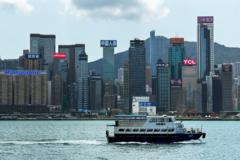
Li Wei spent an evening last week with a friend who works for a Western hedge fund. They sat at a rooftop bar overlooking the Victoria Harbour. Below them, the Star Ferry chugged across the water, a relic of a slower time.
"Are you happy here?" the friend asked.
Li looked at the neon signs of the banks—HSBC, Bank of China, Standard Chartered—standing side by side. He thought about his team back in Shenzhen and his investors in Singapore.
"I am useful here," Li replied.
That is the emotional core of the race to Hong Kong. It isn't about luxury or status. It is about utility. In a world that is pulling apart at the seams, there is a profound value in being the thread that still holds two pieces of fabric together.
The companies aren't just moving for the tax breaks or the stock exchange. They are moving because they want to belong to the world without losing themselves. They are betting that the bridge will hold, even as the waters below become increasingly choppy.
As the lights of the city flicker on, one by one, the high-rises look like a forest of glowing pillars. Each window represents a gamble. Each floor is a laboratory where the next decade of the global economy is being written in code and contracts. The race isn't over; in many ways, it has only just begun. The bridge is crowded, the stakes are astronomical, and for people like Li Wei, there is no turning back.
The ferry continues its crossing, back and forth, connecting two shores that seem further apart than ever, yet remain inextricably linked by the people who refuse to choose just one.
Would you like me to look into the specific regulatory changes the HKEX has implemented to attract these "Little Giant" tech firms?