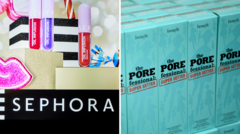
Italy’s antitrust authority is currently breathing down the necks of Sephora and Benefit Cosmetics. The charge? Unfair commercial practices targeting minors. The headlines are predictably panicked, painting a picture of "Sephora Kids" being brainwashed by TikTok into destroying their skin barriers with retinol they don’t need.
It’s a convenient narrative. It’s also spectacularly wrong.
The regulators are chasing the wrong ghost. By focusing on "predatory marketing," they are ignoring the massive structural shift in how the next generation views health, identity, and the very concept of "play." We are witnessing the death of the toy industry and the birth of cosmetic utility, yet we’re treating it like a consumer protection crisis.
The investigation into LVMH-owned entities isn't just about protecting ten-year-olds from expensive eye creams. It’s a desperate attempt by legacy institutions to maintain a boundary between childhood and adulthood that vanished a decade ago.
The Myth of the Vulnerable Child
The "lazy consensus" suggests that children are passive victims of an algorithmic onslaught. Regulators argue that brands use influencers to bypass parental filters. I’ve seen this play out in corporate boardrooms for twenty years: when a demographic shifts, the first instinct is to blame the "corrupting influence" rather than the changing demand.
Children aren't buying Drunk Elephant because they want to erase wrinkles they don't have. They are buying it because "play" has been digitized and commodified. In 1995, a nine-year-old girl bought a Barbie. In 2026, she buys a $60 serum. Both are plastic, brightly colored, and promise a transformation into a social ideal.
The skincare routine is the new dollhouse.
If we ban the marketing, the demand doesn't vanish. It just goes underground, moving from official brand channels to unverified "skincare gurus" on decentralized platforms. Italy’s investigation ignores that these children are often more ingredient-literate than their parents. They know the difference between a humectant and an occlusive before they know long division.
Skin Barrier Hysteria vs. Biological Reality
The most common "expert" take is that children are "destroying" their skin. Let’s look at the actual biology.
Young skin has a high rate of cellular turnover and a naturally acidic pH. While applying a 1% retinol or a high-percentage AHA (Alpha Hydroxy Acid) is unnecessary and potentially irritating, the idea that a generation is permanently scarring itself is hyperbole.
The real danger isn't physical; it's psychological. We are medicalizing childhood. By treating skin—the body’s largest organ—as a project to be managed daily, we are installing a permanent sense of "imperfection" that requires a purchase to fix.
The industry term is Consumer Lifetime Value (CLV). If you capture a customer at age nine, you don't just get their allowance; you get their loyalty for the next sixty years. Sephora isn't selling hydration; they are selling a membership to a tribe.
Why Regulators Will Fail
The Italian Competition Authority (AGCM) is bringing a knife to a drone fight. They are looking for "misleading claims." But the brands aren't making claims to kids. They are making claims to adults, and the kids are simply watching.
How do you prosecute a brand for being "cool"?
If Benefit Cosmetics creates a bright pink "pore fessional" primer, they aren't legally targeting children unless they use cartoons or child actors. If a twelve-year-old sees that product on a twenty-four-year-old’s feed and buys it, the brand has plausible deniability.
The investigation is a performance. It satisfies the "Think of the Children" lobby while doing nothing to address the $500 billion beauty industry’s reliance on insecurity.
The Counter-Intuitive Truth: Skincare is the New Literacy
Instead of banning marketing, we should be teaching cosmetic chemistry in schools.
If children are going to engage with these products—and they will, regardless of what the AGCM decides—then the only defense is radical transparency. Tell them that a $100 serum is 90% water and glycerin. Explain that "clean beauty" is a marketing term with zero legal definition.
We treat skincare like a hobby. It’s actually a sophisticated branch of biochemistry.
Imagine a scenario where we stop moralizing the purchase and start analyzing the product. If a child wants to spend their money on a peptide moisturizer, that is a better lesson in economics and chemistry than buying a plastic figurine that will end up in a landfill by Christmas.
The "damage" isn't coming from the cream. It's coming from the secrecy and the shame we attach to it.
The Business of Fear
The real "sin" Sephora and Benefit committed wasn't marketing to kids; it was being too successful at it.
When a brand moves the needle this significantly, regulators step in to reset the equilibrium. This isn't about health. It's about market dominance. By dragging these brands through a public investigation, the state signals to other retailers that they need to "self-regulate"—which is code for "make it less obvious."
I’ve worked with brands that intentionally "age up" their packaging to avoid this exact scrutiny. They use minimalist, clinical designs that look "serious." Ironically, this makes them even more attractive to children who want to feel grown-up.
The "Sephora Kid" phenomenon is a feedback loop:
- Brand creates high-performance product.
- Influencer showcases "aesthetic" lifestyle.
- Child mimics lifestyle to gain social capital.
- Regulators blame the brand.
- Parents buy the product anyway to stop the crying.
The Actionable Pivot for Parents and Brands
If you are a brand, stop apologizing. You are providing a product for which there is massive demand. Instead of hiding, lean into education. Create a "junior" line that actually respects the biology of young skin—lower concentrations, better prices, zero anti-aging claims.
If you are a parent, stop the ban. You are making the product a "forbidden fruit." Instead, demand the MSDS (Material Safety Data Sheet). Turn the bathroom vanity into a lab.
The AGCM investigation will end with a fine that amounts to a rounding error for LVMH. The headlines will fade. But the children will still be in the aisles of Sephora, looking for the next hit of dopamine packaged in a pump-top bottle.
The industry isn't "targeting" your children. It has simply realized that your children have more disposable income and less brand skepticism than you do.
The solution isn't a lawsuit. It's a reality check.
Stop looking for a villain in the skincare aisle and start looking at the mirror. We built this culture. The kids are just the first ones to master the controls.
Go buy the sunscreen and leave the retinol for the people who actually have wrinkles to hide.