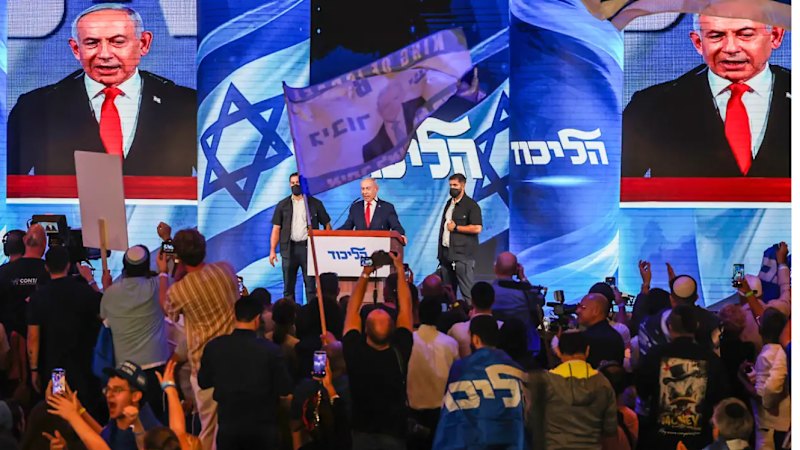
Wait.
That is the single word hanging over millions of kitchen tables, crowded cafes, and fluorescent-lit newsrooms from Tel Aviv to Jerusalem right now, suspended in the thick, humid air between the closing of the ballot boxes and the arrival of a verified number.
When a headline reads "Israel election results still unconfirmed," the words on the screen look sterile, almost bureaucratic, like a delayed flight or a pending bank transfer. You read the sentence, take a sip of your coffee, and assume the machinery of democracy is simply taking an extra hour to grease its gears.
You would be wrong.
Inside the Central Elections Committee headquarters in the Knesset, there is nothing sterile about the silence. Having sat through the bleary-eyed, four-in-the-morning stretches of previous Israeli election nights—listening to the low hum of servers, smelling burnt Turkish coffee in paper cups, and watching exhausted poll workers rub their temples—I can tell you that an unconfirmed election result is not an administrative pause. It is a psychological pressure cooker. Every unverified precinct is a live wire, and every missing percentage point carries the weight of a nation’s immediate future.
The Anatomy of the Double Envelope
To understand why an Israeli election hangs in the balance long after the exit polls fade from television screens, you have to picture a twenty-year-old soldier sitting on the back of an armored personnel carrier near the northern border, or a night-shift nurse at Ichilov Hospital in Tel Aviv snatching ten minutes between rounds.
They do not vote at their neighborhood elementary school. They use what the Israeli electoral system calls double envelopes—ma'atafot kfulot.
Consider a hypothetical voter, let us call her Noa, a twenty-two-year-old paramedic stationed miles away from her registered hometown of Beersheba. On election day, Noa slips her paper ballot into a small blue envelope, seals it, and places that envelope inside a larger outer envelope bearing her name and national identity number. She drops it into a specialized ballot box designated for soldiers, hospital patients, prisoners, diplomats, and election workers.
At the end of the night, regular ballot boxes are opened right where they stand, counted by local committees, and phoned in within hours. Double envelopes cannot be opened on-site. They must be trucked under armed guard to Jerusalem, cross-referenced manually against the national registry to ensure Noa did not vote twice, stripped of their outer identifying layer to preserve ballot secrecy, and only then fed into the tally.
In a country of roughly ten million people, between 400,000 and 600,000 votes—sometimes nearly ten percent of the entire electorate—travel inside those double envelopes.
Think of the Israeli parliament, the Knesset, as a balancing scale holding 120 heavy iron weights, where 61 weights on one side tips the entire government into existence. When the regular ballots leave the scale trembling at 60 to 60, or 61 to 59, those hundreds of thousands of uncounted double envelopes stop being paperwork. They become the entire story.
The Threshold Trap
Why does a fraction of a percent matter so fiercely here? Because of a mathematical cliff called the electoral threshold.
Under Israeli law, as codified in the Knesset Elections Law and administered by the Central Elections Committee, a political party must win at least 3.25 percent of the total valid votes to enter parliament. If a party finishes at 3.26 percent, it is awarded four seats in the Knesset. If that exact same party finishes at 3.24 percent after the double envelopes are tallied, it receives zero seats.
Zero.
Its votes do not disappear into thin air; they are redistributed proportionally among the parties that did cross the line, dramatically altering the math for every single bloc in the country. I remember watching a campaign war room in 2021 when a party hovered at 3.28 percent at midnight, dipped to 3.21 percent by dawn, and clawed back to 3.26 percent two days later. Grown strategists who had spent forty years in politics stood frozen in front of spreadsheets, unable to speak, because fifteen hundred paper slips sitting in cardboard boxes in Jerusalem held the power to collapse an entire coalition before it was even born.
When election results remain unconfirmed, political leaders are not merely waiting to see who won. They are waiting to see who survived.
Life in the Interregnum
Step outside the Knesset and walk down a residential street in Haifa or Ashdod during these limbo hours, and you feel the invisible friction of uncertainty.
For an ordinary family, an unconfirmed result means life is held in a state of suspended animation. Consider a hypothetical small business owner in Rishon LeZion—let us call him David—who imports construction materials and needs to decide whether to sign a three-year warehouse lease on Thursday morning. The interest rate outlook, the municipal tax adjustments, the labor permits he relies on—all of them hinge on which coalition partners take control of the Finance Ministry. Without confirmed results, David does not sign the lease. He waits.
Multiply David by two million households.
Teachers do not know who will run the Education Ministry when the next term begins. Hospital directors delay equipment orders because health budget allocations are frozen until a governing coalition is sworn in. Even casual conversations at the grocery store carry a guarded, sideways glance, because nobody knows yet whether they are speaking to a neighbor whose worldview just won a mandate or one whose hopes were just extinguished.
According to analyses by the Israel Democracy Institute, prolonged electoral uncertainty—especially following the unprecedented cycle of five national elections between 2019 and 2022—carries a measurable toll on public trust and institutional stability. That historical memory sits heavy on the public consciousness. Israelis know all too well that an inconclusive Tuesday night does not always end on Thursday morning; sometimes it stretches into weeks of coalition horse-trading, legal challenges, and the creeping dread of having to do it all over again.
The Mechanics of Verification
When reports emerge that results are still unconfirmed, conspiracy theories inevitably rush into the vacuum. Social media feeds fill with rumors of lost boxes, algorithmic manipulation, or intentional delays.
The reality inside the Central Elections Committee is far less cinematic and far more painstaking.
Every single tally sheet from over twelve thousand polling stations across the country undergoes a multi-layered audit. If a local polling station reports 512 ballots inside the box, yet the manual log shows only 510 voters checked off the registry, an automated flag freezes that station's data. Auditors must pull the physical protocol, inspect the handwritten signatures of the competing party representatives who watched the count, and verify whether a poll worker miscounted or forgot to cross off two names.
As legal observers and election officials from the Central Elections Committee have repeatedly noted during contentious counts, speed is the enemy of legitimacy. Confirming a result prematurely—only to retract two Knesset seats six hours later because of a transcription error in a northern village—would inflict far deeper damage on democratic confidence than making the nation wait another afternoon.
I admit, even knowing the mechanics, sitting through those quiet hours tests your nerves. There is a moment, usually around mid-morning on the day after an election, when the television anchors run out of fresh commentary, the politicians retreat behind closed doors, and the data feed on the official website stops refreshing for forty minutes straight. You stare at the static bar charts and wonder if the system has stalled, or if something monumental is shifting beneath the surface.
What Happens When the Numbers Lock
Eventually, the double envelopes are tallied. The flagged protocols are resolved. The Central Elections Committee publishes the final, official distribution of the 120 seats, and within days, presents those certified results to the President of the State of Israel.
Only then does the real constitutional clock start ticking.
Once the results are confirmed, the President consults with the leaders of every faction that crossed the 3.25 percent threshold, asking each one a simple question: Whom do you recommend to form the next government? Based on those recommendations, the President tasks one Knesset member—usually the leader of the largest faction or the head of a pre-aligned bloc—with building a majority coalition of at least 61 seats.
Until that final tally is stamped and signed, however, the President cannot make a single phone call, no coalition agreement can be drafted, and the caretaker government remains locked in place.
Out on the highway between Tel Aviv and Jerusalem, trucks are still moving, commuters are still checking their mirrors, and the afternoon sun is hitting the limestone hills of Judea with the same fierce, indifferent light it has cast for thousands of years. Inside a quiet room at the Knesset, a clerk picks up another blue envelope, slices open the paper seal, and unfolds a single slip bearing two Hebrew letters.


