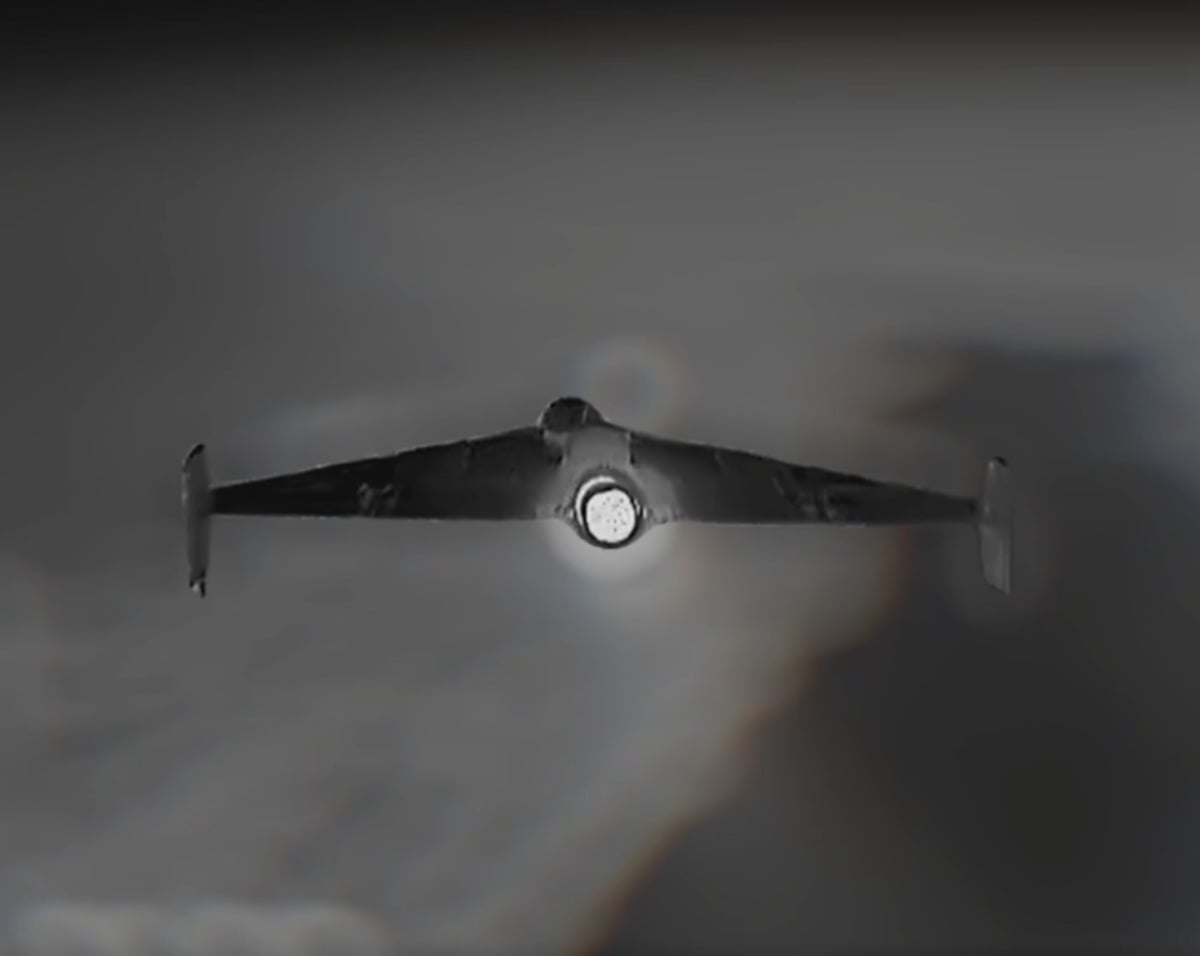
The confirmation from UFORCE that its Magura-type maritime drones were deployed to sink a target ship during the Balikatan 2026 exercises in the Philippines marks a critical inflection point in Pacific naval strategy. Operating near the strategic island of Itbayat, U.S. Special Forces utilized these low-profile Unmanned Surface Vessels (USVs) to deliver shaped charges directly into a decommissioned target vessel, executing a textbook lethal strike. This operational milestone proves that the low-cost, high-leverage asymmetric tactics honed in the Black Sea have successfully transitioned to the Indo-Pacific theater.
For years, defense traditionalists argued that the vast distances and open blue waters of the Pacific would insulate conventional navies from the chaotic, swarm-based drone warfare seen in narrower, enclosed seas. The Balikatan demonstration shattered that assumption. By deploying long-range, explosive-laden hull designs in a primary choke point just miles from Taiwan and disputed shoals, allied forces proved that a billion-dollar warship can be held at bay by a platform that costs less than a single standard torpedo.
Moving Beyond the Black Sea Template
The strategic shock of watching small, remote-controlled boats systematically dismantle a major naval fleet in Europe sent every defense ministry on earth scrambling for solutions. Yet, copying and pasting European tactics into the Pacific is not a plug-and-play operation. The geographic realities demand a fundamental alteration in propulsion, communications, and range.
During the Balikatan drills, the platform demonstrated an evolved capability to handle the unforgiving swells of the Luzon Strait. Rather than relying solely on short-range line-of-sight radio links, these extended-range USVs utilized advanced satellite arrays and hybridized communication architecture to maintain low-latency control over hundreds of nautical miles.
The target ship was not merely hit; it was systematically compromised. This requires an understanding of hull vulnerability that standard anti-ship missiles rarely account for. While a missile strikes from above, often impacting armored upper belts or superstructure, a low-slung maritime drone punches directly at the waterline or beneath it. The hydrostatic shock of an underwater or water-level detonation tears open welds, floods machinery spaces, and bypasses the traditional air defense umbrellas that navies have spent trillions of dollars perfecting.
The Logistics of the Low Profile
To understand why this works, one must look at the physical geometry of the threat. Traditional surface search radars are calibrated to filter out sea clutter—the constant, chaotic reflection of waves, spray, and birds. A sleek, composite-hulled drone riding less than a meter above the water line deliberately lives inside that clutter.
- Radar Cross-Section: The minimal surface area means that by the time a ship's radar isolates the signature from the surrounding waves, the weapon is often well within its terminal engagement run.
- Thermal Signature: Low-displacement internal combustion engines, often muffled and water-cooled, release exhaust directly into the water or right above the surface, rendering standard infrared tracking systems largely ineffective.
- Optical Tracking: At night or during heavy seas, spotting a dark gray or matte black hull moving at 40 knots is an exercise in futility for lookouts relying on standard night-vision optics.
The Industrialization of the Sea Drone
The transition of UFORCE from a rapid-prototyping defense contractor into a globally recognized defense entity valued at over $1 billion highlights a massive shift in military procurement. Western defense procurement is notoriously slow, burdened by decades of bureaucratic inertia, cost overruns, and multi-year development cycles. In contrast, the rapid evolution of the Magura platform—stretching from the V5 through to the heavily modified V7 variants utilized in recent international exercises—reveals an agile software-first development model.
This is no longer a cottage industry of modified jet skis. The production lines established through strategic European partnerships, particularly the localization efforts in Portugal, point to a highly scalable manufacturing blueprint. By decoupling the hull production from high-end proprietary military components, these systems can be built using commercial off-the-shelf marine composites, readily available diesel or electric powerplants, and modular payload bays.
+-------------------------------------------------------------+
|               Modular Payload Architecture                 |
+------------------------------------+------------------------+
| Kinetic Package                    | Recon & EW Package     |
+------------------------------------+------------------------+
| • Waterline Shaped Charges         | • Electro-Optical Masts|
| • Inertial Detonators              | • Signal Jammers       |
| • Thermobaric Elements             | • Passive Sonar Arrays |
+------------------------------------+------------------------+
This modularity allows operators to swap configurations on the fly. A hull that acts as a kamikaze strike craft on Monday can be reconfigured by Wednesday with an electro-optical mast for passive reconnaissance, or fitted with a remote weapon station to act as a harbor defense picket line.
The Hard Counter-Measures and the Flaws of Swarm Warfare
No weapon system is infallible, and treating the maritime drone as a silver bullet is a dangerous analytical trap. The successful sinking of a defenseless, stationary target ship during a controlled exercise does not mirror the frantic, lethal environment of active combat against an adversary equipped with layered, multi-domain defenses.
The most glaring vulnerability of any unmanned system is its reliance on the electromagnetic spectrum. If the data link between the remote pilot and the vessel is severed, the drone effectively becomes expensive driftwood. While inertial guidance systems and backup autonomous routines can keep a boat on a pre-programmed heading, hitting a aggressively maneuvering warship that is actively throwing up a wall of electronic jamming requires continuous, human-in-the-loop refinement.
Furthermore, conventional navies are not sitting idly by. The deployment of dedicated "drone killer" defense systems during the Balikatan exercises shows that the counter-strategy is maturing just as fast as the threat.
Kinetic and Non-Kinetic Defenses
- Rapid-Fire Automatic Cannons: Modern warships are rapidly retrofitting multi-barrel, stabilized small-caliber gun systems capable of chewing through fiberglass hulls at close range.
- Directed Energy Weapons: Shipborne lasers and high-powered microwave systems offer a virtually bottomless magazine to disable the sensitive optical domes and GPS antennas of oncoming swarms without wasting expensive ammunition.
- Physical Obstacles: The age-old solution of harbor booms, heavy anti-torpedo netting, and structural barriers remains highly effective at protecting static infrastructure, such as ports, anchored convoys, and off-shore drilling platforms.
If an adversary blankets a coastal sector with localized GPS spoofing and high-power radio frequency denial, a swarm of maritime drones can easily lose cohesion. Autonomous target recognition software powered by localized machine learning algorithms is being developed to counter this, but the tech remains a volatile, unproven variable in high-intensity combat.
Redefining the Geography of the Pacific Choke Points
The strategic significance of conducting this drone demonstration near Itbayat cannot be overstated. The Bashi Channel and the Luzon Strait are the primary gateways through which naval forces must pass to transition from the South China Sea into the wider Philippine Sea. By demonstrating that long-range, low-profile strike craft can be operated out of rudimentary coastal hiding spots, the alliance has rewritten the rules of access denial.
Consider a hypothetical scenario where a coastal nation sets up hidden, mobile containerized drone launchers along rugged, cave-pocked coastlines. This eliminates the need for sprawling, easily targeted naval bases. A fleet of fifty or a hundred USVs can be distributed across a dozen remote islands, hidden under camouflage netting, and launched from simple gravel boat ramps when a hostile surface group approaches.
This completely flips the economic calculus of naval warfare. A modern guided-missile destroyer costs upwards of $2 billion and takes years to construct. A swarm of fifty high-end maritime drones costs a fraction of that, can be built in a matter of weeks, and requires zero personnel at risk on the water. Even if forty-five of those drones are intercepted by shipboard defenses, the remaining five are more than capable of causing catastrophic structural damage, forcing the multi-billion-dollar asset to withdraw from the theater or face a slow sinking.
The message sent out of Balikatan 2026 is clear. The era of unchallenged surface dominance by massive, centralized naval platforms is drawing to a close, replaced by a decentralized, low-altitude, and surface-level web of lethal autonomy that turns the very contours of the ocean into a hiding place.