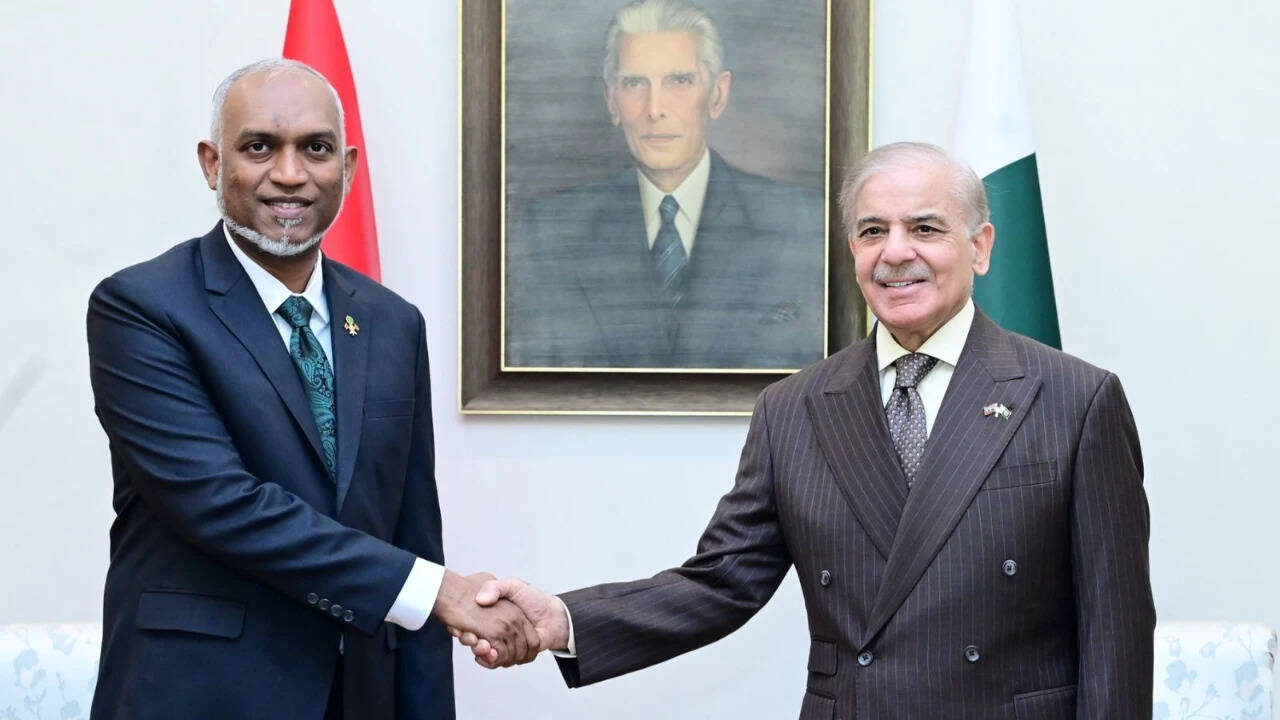
A call for an early South Asian Association for Regional Cooperation summit made from Islamabad by Maldivian leadership is rarely a purely procedural request about calendar dates. It is a signaling mechanism operating inside one of the world's least integrated regional blocs, where diplomatic optics, bilateral hedging, and domestic political imperatives collide. To understand what is actually at stake when Maldivian President Mohamed Muizzu presses for an early SAARC summit while visiting Pakistan, analysts must strip away headline diplomacy and examine the structural incentives governing South Asian multilateralism. Regional summits in South Asia do not fail or stall by accident; they reflect deeper disputes over security, sovereignty, connectivity, and geopolitical alignment. This analysis lays out the structural constraints keeping SAARC dormant, maps the bilateral logic connecting Male and Islamabad, and evaluates the conditions under which an early summit could move from diplomatic aspiration to operational reality.
The Structural Deadlock of South Asian Regionalism
Regional organizations succeed when member states perceive greater net benefit from coordinated rules than from unilateral bargaining. SAARC, established in 1985 to promote economic and social progress across South Asia, suffers from an institutional design flaw that turns bilateral friction into a bloc-wide paralysis. Under the SAARC Charter, decisions at all levels are taken on the basis of unanimity, and bilateral or contentious issues are excluded from formal deliberation. In theory, unanimity protects smaller states from being steamrolled by larger neighbors. In practice, it gives any single member an effective veto over collective momentum.
When major security and political tensions flare between key capitals—most visibly between India and Pakistan—summit diplomacy becomes hostage to unresolved grievances. The scheduled nineteenth SAARC summit in Islamabad was postponed in 2016 and has remained in limbo because regional consensus around hosting and participation broke down. A headline calling for an early summit therefore confronts an immediate institutional bottleneck: convening a leaders' meeting requires political alignment across all eight member states—Afghanistan, Bangladesh, Bhutan, India, Maldives, Nepal, Pakistan, and Sri Lanka—not merely enthusiasm between a host or visiting capital and a partner government.
Unanimity rules preserve sovereign equality on paper, yet they convert the sharpest bilateral rivalry in a region into a permanent brake on multilateral execution.
This structural deadlock produces a distinct analytical trap in standard reporting. Surface-level coverage often treats a call for a summit as evidence that regional cooperation is about to restart automatically. A rigorous structural view treats the call instead as an attempt to test whether diplomatic pressure, shifting alignments, or alternative forums can reopen a stalled channel. Because no external enforcement mechanism compels attendance or policy compliance, SAARC functions largely as a barometer of regional political weather rather than a supranational engine.
Bilateral Signaling Between Male and Islamabad
Why raise an early SAARC summit specifically in Pakistan? Location and audience carry strategic weight in South Asian statecraft. A leader visiting Islamabad speaks against the backdrop of Pakistan's long-standing interest in reviving the summit process—particularly one tied to Islamabad as the stalled host—while simultaneously projecting an independent foreign policy posture beyond immediate neighborhood defaults.
For a small island state like the Maldives, foreign policy is an exercise in calibrated diversification. Geographically situated astride vital Indian Ocean shipping lanes, the Maldives has historically balanced close security, trade, and development ties with India against broader engagement with other major and regional powers, including China, Gulf states, and South Asian neighbors. When Maldivian leadership emphasizes regional cooperation in a capital outside New Delhi, it signals diplomatic autonomy and a willingness to engage across multiple regional axes.
Yet diplomatic signaling operates along a narrow corridor. Small states face an asymmetry of capabilities: they can diversify partners and articulate principled positions on multilateralism, but they cannot unilaterally resolve structural rivalries between larger powers. Calling for an early SAARC summit allows Male to position itself as a constructive advocate for regional connectivity, trade, and climate or maritime cooperation without bearing sole responsibility for the diplomatic impasse that keeps summits on hold.
What Driving Forces Shape This Diplomatic Push
Several distinct variables shape why a small state leader would highlight early SAARC revival during a bilateral visit to Pakistan:
- Multilateral legitimacy: Framing initiatives around a recognized regional body gives smaller nations a formal table where every member holds equal nominal standing, offsetting size disparities in one-on-one negotiations.
- Bilateral relationship building: Advocating a shared regional objective during a state visit reinforces goodwill with the host government and signals alignment on the value of regional institutions.
- Economic and connectivity hedging: South Asia remains under-integrated in trade, transport, and energy links compared with Southeast Asia or Europe, leaving room for smaller economies to argue that political disputes impose unnecessary economic costs.
- Domestic and international positioning: Projecting an active, outward-looking foreign policy demonstrates strategic agency both to domestic constituencies and to external partners watching Indian Ocean alignments.
Each of these forces pushes toward vocal support for regional mechanisms, but none of them automatically overcomes the core political veto problem inside the grouping.
Why Summits Stall and What It Costs the Region
To evaluate whether an early summit is plausible, one must examine the cause-and-effect chain linking regional security, diplomatic credibility, and economic opportunity. In South Asia, security perceptions and cross-border trust are tightly coupled with physical and commercial integration. When trust erodes, governments restrict transit corridors, tighten visa or trade regimes, and route priorities through bilateral deals or alternative minilateral groupings rather than SAARC working groups.
The cost of inaction is cumulative rather than static. Every postponed summit weakens institutional habit—the routine coordination among ministries, technical committees, and heads of government that builds familiarity even during disagreements. Over time, alternative regional configurations can absorb energy that once belonged to SAARC, such as sub-regional connectivity arrangements, Bay of Bengal initiatives, or bilateral agreements tailored to specific infrastructure projects.
At the same time, attributing all regional underperformance solely to SAARC would be an analytical error. Even when SAARC was more active diplomatically, intra-regional trade in South Asia remained low relative to its potential because of non-tariff barriers, overlapping export baskets, infrastructure gaps, and protective domestic industries. Summitry alone does not lower customs friction or finance ports; it can only create political cover for negotiators if underlying political will exists.
Separating Known Constraints From Educated Hypotheses
A disciplined assessment must separate established institutional facts from educated hypotheses about future behavior:
- Established fact: SAARC operates by consensus, and no leaders' summit has taken place since the 2014 Kathmandu meeting, leaving the nineteenth summit unheld.
- Established fact: Small states like the Maldives rely heavily on maritime trade, tourism, and external partnerships, making regional stability and open sea lanes vital national interests.
- Educated hypothesis: Calling for an early summit in Islamabad is unlikely by itself to force an immediate leaders' gathering unless key regional capitals see a concrete diplomatic or security shift worth testing at the summit level.
- Educated hypothesis: If formal SAARC summits remain stalled, regional cooperation will continue shifting toward bilateral pacts and issue-specific or sub-regional formats rather than full-bloc reactivation.
Recognizing this boundary prevents over-interpreting diplomatic rhetoric as an imminent breakthrough while still taking seriously the strategic signals embedded in the message.
Limits of Multilateral Revival Strategies
Advocating for an early summit is a low-cost diplomatic move, but relying on summit revival as a primary strategy carries clear limitations. First, diplomatic calls do not alter underlying security calculations; capitals weigh cross-border threats, domestic politics, and external alliances far more heavily than calendar milestones. Second, attempting to force a summit before core disagreements are managed risks turning a high-profile meeting into a stage for public friction rather than substantive cooperation.
Third, for a small state, over-investing political capital in a stalled institution can yield diminishing returns if larger powers prefer bilateral channels or alternative coalitions. Effective small-state strategy typically pairs principled multilateral advocacy with practical bilateral execution—securing concrete trade, maritime, health, or climate cooperation wherever doors are open rather than waiting for a comprehensive regional reset.
Strategic Play for Regional Policymakers and Observers
For policymakers in Male, Islamabad, and neighboring capitals—as well as analysts tracking South Asian geopolitics—the practical move is to treat calls for an early SAARC summit as a diagnostic signal rather than a standalone blueprint. Governments seeking tangible regional gains should pair any push for high-level dialogue with incremental, functional steps in low-friction areas such as maritime domain awareness, disaster response coordination, digital connectivity, and targeted trade facilitation that deliver measurable value even while broader political talks remain constrained. Observers, meanwhile, should track concrete diplomatic follow-through—such as senior-official consultations, technical committee activity, and bilateral trade or security commitments—as the real test of whether a summit call is gaining traction or serving primarily as strategic signaling.