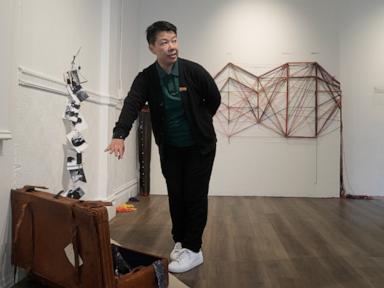
The media is currently swooning over San Francisco’s newest cultural addition: a "first of its kind" queer museum in Chinatown designed to amplify Chinese LGBTQ+ artists. The coverage reads like a textbook public relations campaign. It checks every box of modern progressive benevolence, celebrating the intersection of identity, geographic heritage, and creative expression.
It is a beautiful narrative. It is also entirely wrong about how cultural preservation actually works.
By isolating artists into highly specific, hyper-fractionalized identity silos—Chinese, queer, San Francisco-based—this initiative does not elevate these creators to the broader art world. It traps them in a gilded cage of niche representation. I have spent fifteen years tracking cultural funding, real estate development, and institutional art spaces, and I have watched this exact script play out in New York, London, and Vancouver. The result is always the same: temporary media applause followed by structural isolation and economic stagnation.
Chinatown does not need an identity-driven art boutique to save its cultural heritage. It needs a brutal lesson in real estate economics, generational wealth transfers, and class politics.
The False Promise of the Identity Silo
The core argument for specialized spaces is always built around "amplification." The theory goes that traditional galleries and mainstream institutions are structurally incapable of understanding or showcasing intersectional identities, so a dedicated haven must be built.
This ignores the fundamental mechanics of the fine art market. The high-end art world runs on validation from institutional collectors, global biennials, and critical recognition that transcends regional identity politics. When you label a space as a "Chinatown Queer Museum," you are unknowingly signaling to the broader art market that the work inside is only relevant to a highly localized, specialized audience.
Instead of forcing mainstream institutions to diversify their permanent collections, these boutique spaces act as a pressure valve for the elite. Major museums can point to the niche neighborhood space and say, "Look, they have their own home now," effectively letting themselves off the hook.
The artists lose. They are stripped of the opportunity to compete on a global stage based purely on the conceptual merit of their work. Instead, they are commodified for their background, forced to perform their identity to secure local grant funding.
The Real Crisis in Chinatown Has Nothing to Do with Art
To understand why this museum model is a distraction, look at the actual data driving the decline of historic Chinatowns across North America.
A comprehensive study by the Asian American Federation highlighted that the primary threats to historic ethnic enclaves are commercial displacement, skyrocketing commercial rents, and a lack of succession planning for legacy businesses. When a multi-generational grocery store, a traditional bakery, or an affordable housing complex closes because of gentrification, the community loses a piece of its foundational infrastructure.
A specialized art gallery does not solve this. In fact, urban sociology tells us it frequently accelerates the problem.
In her seminal work Loft Living, sociologist Sharon Zukin detailed the "artistic mode of production," a well-documented urban phenomenon where the introduction of arts institutions into working-class neighborhoods serves as the vanguard for gentrification. High-income buyers and developers use the cultural prestige of new art spaces to rebrand a neighborhood, driving up property values and pricing out the very immigrant families the project claims to protect.
Imagine a scenario where the funding used to secure high-rent gallery spaces was instead funneled into a community land trust designed to buy the underlying real estate of legacy Chinatown businesses. That is structural preservation. Opening a gallery while the surrounding mom-and-pop shops are evicted for trendy coffee houses is just aesthetic triage.
Dismantling the Premises: What the Public Gets Wrong
When people discuss cultural spaces in San Francisco, the public debate is warped by flawed premises. Let us break down the most common questions surrounding this issue with brutal honesty.
Don't marginalized groups need safe spaces to express their specific history?
Expressing history is vital; tying that expression to a physical, real estate-dependent identity silo is financial suicide. A physical space in one of the most expensive zip codes in America requires massive, continuous overhead. When an arts organization ties its survival to a physical building, it stops funding artists and starts funding landlords. Real safety for marginalized narratives comes from institutional permanence, digital archiving, and financial independence—not from a leased storefront.
Can't art be a tool for neighborhood revitalization?
Yes, but you must ask who is being revitalized. When a neighborhood becomes "hip" due to an influx of galleries, the working-class residents do not suddenly get richer. Their rent goes up. True revitalization means stabilizing the local economy through affordable retail zoning, language-accessible small business loans, and workforce development. Art is a luxury product of a stabilized community, not the tool used to stabilize it.
Why shouldn't we celebrate intersectional spaces?
Celebrate them all you want, but recognize the distinction between a hobbyist community center and an economic driver for professional artists. If the goal is a social club, call it a social club. If the goal is to elevate Chinese LGBTQ+ artists to the top tier of the art world, placing them in a hyper-localized venue is the worst possible strategy.
The Counter-Intuitive Blueprint for Real Cultural Longevity
If the goal is to actually support these artists and protect the geographic history of San Francisco Chinatown, the entire strategy must be inverted. The current model relies on philanthropic charity and municipal grants—funding sources that dry up the moment the political winds shift or a recession hits.
True cultural power requires a shift from dependency to ownership.
First, artists from marginalized backgrounds must be aggressively integrated into mainstream markets, not segregated into regional showcases. The focus should be on placing their work in major institutional collections like the SFMOMA or the De Young Museum, where the acquisition budgets are substantial and the exposure is global.
Second, the community must focus on the boring, unglamorous mechanics of commercial real estate. If wealthy donors want to protect Chinatown, they should stop funding temporary exhibitions. They should fund low-interest capital funds that allow local tenants to buy their buildings.
The downside to this contrarian approach is obvious: it lacks the immediate, feel-good PR of a ribbon-cutting ceremony for a new museum. It is slow. It involves lawyers, zoning boards, and dry financial spreadsheets instead of vibrant opening-night galas.
But it works.
When an community owns the dirt beneath its feet, it dictates its own cultural future. When it relies on leased spaces and trendy identity marketing, it is merely renting time until the next wave of development washes it away.
Stop buying into the lazy consensus that every subculture needs its own museum. Demand real estate ownership, demand mainstream institutional market share, and leave the identity-silo marketing behind.