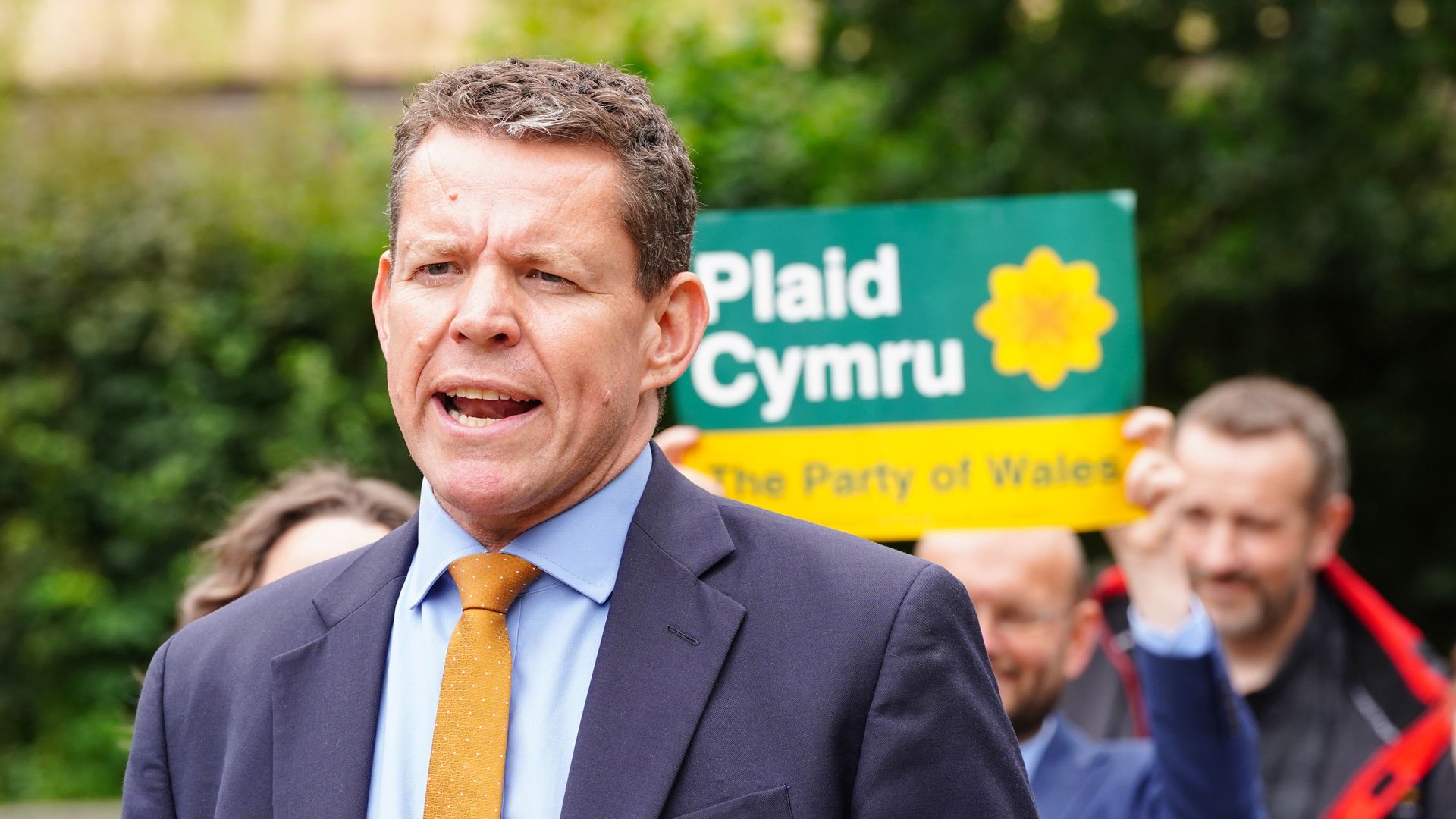
The political class in Wales is addicted to the smell of its own fear. When Rhun ap Iorwerth warns that a Reform government would set Wales back "decades," he isn't protecting the Welsh economy. He is protecting a comfortable, managed decline that has kept the nation at the bottom of the UK’s productivity rankings for half a century.
To be set back "decades" implies that we are currently moving forward. Let’s look at the data. Wales has the lowest GVA (Gross Value Added) per head in the UK. We have been stuck in a cycle of public sector dependency and "poverty porn" politics where the goal isn't to create wealth, but to efficiently manage the distribution of subsidies.
The "lazy consensus" shared by Plaid Cymru and Welsh Labour is that stability is the ultimate virtue. They view any radical shift in fiscal policy or governance as a threat to the fragile ecosystem of grants and NGOs they’ve built. They are wrong. Stability in a burning building is just a slow way to suffocate.
The High-Tax Trap and the "Stability" Lie
The argument that a radical right-leaning or Reform-style fiscal policy would "set Wales back" ignores the fact that Wales is already being strangled by its own tax-and-spend obsession. We are currently suffering under the highest tax burden in 70 years, and for what?
For a Welsh NHS that is perpetually in crisis.
For an education system that is falling behind the rest of the UK in PISA rankings.
For a transport policy that thinks 20mph limits and "no more roads" is the height of innovation.
When a political leader says a change in government would be a "step back," they are really saying they are terrified of competition. They are scared of a system that favors private enterprise over public sector bureaucracy. They are scared that if the tax burden were slashed and the state were shrunk, the people of Wales might actually realize they don’t need the Senedd to tell them how to breathe.
The Managed Decline of the Welsh Economy
I have watched companies walk away from South Wales not because they lacked a workforce or a market, but because they were drowning in red tape. The planning system in Wales is a graveyard for ambition. Whether it’s energy projects, housing developments, or manufacturing hubs, the default answer from the Welsh establishment is "No, until we’ve studied the environmental, linguistic, and social impact for five years."
By the time the study is finished, the investment has moved to Poland or even North-East England.
Reform, whatever you think of their rhetoric, represents a "shock to the system." And a shock is exactly what a flatlining patient needs. The establishment calls it "chaos." I call it a market correction. We have spent 25 years in a comfortable room with no oxygen, and now the people in charge are warning us that opening the window might let in a draft.
The Misconception of "Protective" Governance
The core of Rhun ap Iorwerth’s argument is that Wales needs "protection" from Westminster’s radicalism. This is a patronizing, outdated view of the Welsh people. It assumes we are too fragile to survive in a high-growth, low-regulation environment.
The data tells a different story. Look at the areas of Wales that have actually seen growth. They are almost always the result of individual entrepreneurship and private investment that managed to bypass the Senedd’s meddling.
When you prioritize "protection" over "opportunity," you get what we have now: a brain drain. Our brightest minds leave for London, Bristol, or the US because Wales has become a museum where the exhibits aren’t allowed to change.
The False Choice Between "Social Justice" and Growth
The Senedd’s current leadership thinks you can have a Scandinavian-style welfare state without a German-style industrial engine. It is a mathematical impossibility.
You cannot fund a world-class health service on the taxes of a population where a massive percentage is either employed by the state or supported by it.
Imagine a scenario where Wales actually competed on the global stage.
- A flat tax for small businesses.
- Special Economic Zones (SEZs) with zero planning restrictions for green energy.
- The immediate scrapping of the "anti-car" transport strategy.
The Plaid leader calls this a "setback." Why? Because it would dismantle the power of the Cardiff Bay bubble. It would move the center of power from the committee rooms to the shop floors.
Dismantling the "Poverty Trap"
The most brutal truth that the Welsh establishment won't admit is that they need poverty to justify their existence.
If the Valleys were suddenly thriving with high-tech manufacturing and well-paid private sector jobs, what would all those "regeneration" consultants do? What would the career politicians talk about at the next Eisteddfod?
The status quo is a parasite. It feeds on the very problems it claims to solve.
When people ask, "How can Wales survive without more funding from Westminster?" they are asking the wrong question. The right question is: "Why has Wales been made so dependent that it can’t survive without it?"
The answer is 25 years of devolutionary failure. We have spent billions on "upskilling" and "redevelopment," yet the needle hasn't moved. We are still the poor relation.
The Risk of Radicalism vs. The Certainty of Failure
Is there a downside to a radical Reform-style shift? Of course.
Market shocks are painful. There would be losers in a deregulated economy. Old industries that are currently propped up by state handouts might finally collapse. The transition would be messy, loud, and uncomfortable.
But compare that to the alternative. The alternative is the "certainty" of the current path.
- Certainty that your children will have to move away to find a decent job.
- Certainty that your local high street will continue its slow death.
- Certainty that your tax bill will go up while your services get worse.
The Plaid leader is right about one thing: a Reform government would be a departure. But it wouldn't be a step back. It would be an exit from a cul-de-sac.
We have been driving toward a wall for two decades. The people telling you to "keep steady" are the ones with their feet on the accelerator. They aren't warning you about a cliff; they are trying to stop you from grabbing the steering wheel.
Wales doesn't need "stability" or "protection." It needs a bonfire of the regulations and a government that treats its citizens like adults rather than dependents. The "decades" Rhun ap Iorwerth is so worried about losing were decades of underperformance and excuses.
Stop fearing the shock. Start fearing the silence of a country that has forgotten how to build anything other than a new committee.
Get out of the way and let the Welsh people build.