The concept of a "forever war" used to be Donald Trump’s favorite punching bag. He spent years railroading the "globalists" and "warmongers" for bleeding the country dry in the Middle East. But fast-forward to March 2026, and the rhetoric has shifted in a way that should make every taxpayer and military strategist lean in. On Monday, following the launch of Operation Epic Fury against Iran, Trump took to Truth Social to claim the U.S. has a "virtually unlimited supply" of munitions. He didn't just say we're ready; he said we can wage war "forever" and win big.
It's a jarring pivot. One day you're the guy bringing the troops home, and the next, you're boasting about an inexhaustible bottomless pit of Tomahawk missiles. This isn't just a casual boast. It's a strategic signal—or a massive gamble—aimed at Tehran. But if you look at the actual state of American stockpiles, the "forever" part of that claim starts to look a bit shaky.
The Reality of the Empty Cupboard
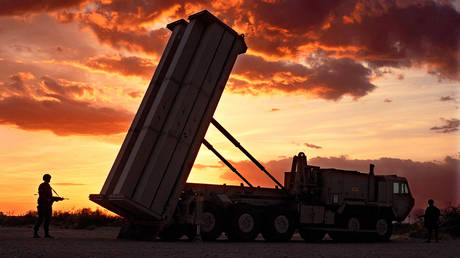
You can’t talk about fighting forever without looking at what’s actually in the warehouse. For the last several years, the U.S. has been the world’s primary weapons locker. We’ve sent billions in high-end hardware to Ukraine. We’ve dumped interceptors into the sky to protect Israel. We’ve spent millions of dollars on missiles to swat down cheap Houthi drones in the Red Sea.
Trump's own Chairman of the Joint Chiefs, Gen. Dan Caine, reportedly warned him in a private White House meeting that the munitions stockpile is actually running low. This is the "Mother Hubbard" scenario. You can't keep giving away the cookies and still expect the jar to be full when you decide to throw a party.
- The High-End Gap: Trump actually admitted this, albeit subtly. He noted that while "medium-grade" supplies are high, the highest-end tech—the stuff that actually wins modern wars—isn't "where we want to be."
- The Cost of Defense: We're using missiles that cost $2 million to take out targets that cost $20,000. That’s bad math.
- Production Lags: Our defense industrial base is built for peacetime. We don't have a "on/off" switch for high-tech manufacturing. It takes years, not weeks, to replace sophisticated interceptors.
Operation Epic Fury and the Four Week Promise
Trump told the public this campaign against Iran would last maybe four or five weeks. He says we're "ahead of schedule." But the objectives he’s laid out are anything but "limited." You don't just "annihilate" a navy, dismantle a nuclear program, and achieve "regime change" in a month without a massive, sustained effort.
The disconnect here is fascinating. On one hand, the administration—specifically Secretary of War Pete Hegseth—is telling the "left-wing media" to stop crying about endless wars. They’re framing this as a surgical strike. On the other hand, Trump is posturing as if he has a cheat code for infinite ammo.
If the goal is truly to topple the Iranian government, history shows us that "four weeks" usually turns into a decade. Regime change is messy. It's violent. It requires people on the ground. Trump says he doesn't want ground troops, but he also says he won't rule them out "if necessary." That "if" is doing a lot of heavy lifting right now.
The Economic Ghost in the Room
While the President talks about winning big, the American consumer is looking at a different set of numbers. The daily operations for the naval and aircraft deployments in the Gulf are costing roughly $60 million a day. That doesn't even count the actual missiles being fired.
There’s a domestic cost to this "forever" capability. Lawmakers are already pointing out that the money being vaporized in the skies over Tehran could have funded expired healthcare subsidies or addressed the cost-of-living crisis at home. Trump is asking for a record-shattering $1.5 trillion defense budget for 2027. That’s a lot of zeros for a president who campaigned on "America First" and fixing the economy.
Why the Forever Rhetoric Matters Now
So why say it? Why claim we can fight forever if the generals are saying the cupboards are getting bare? It’s classic deterrent posturing. If Iran believes the U.S. is willing to bleed its stockpiles dry to win, they might blink. It’s a psychological game.
But it’s also a signal to the domestic "warrior ethos" Trump is trying to rebuild. By framing the military as an unstoppable, infinitely-supplied force, he’s trying to move past the "fatigued" image of the post-9/11 era. He’s trying to make war look like a winning investment again, rather than a quagmire.
The danger, of course, is that "forever" is a long time. If this conflict doesn't wrap up in the promised five weeks, and the "unlimited" supplies start to show their limits, the political fallout will be swift. You can’t tell people you’re the peace president while signing checks for a $1.5 trillion war machine.
Keep an eye on the Strait of Hormuz. If it stays shut and oil prices spike, the "forever" war won't just be fought with missiles—it'll be fought at the gas station. That’s where the "America First" base usually loses its patience.
Check your local news for updates on energy prices and watch for the 2027 budget hearings. That’s where the real cost of "forever" will be laid bare.