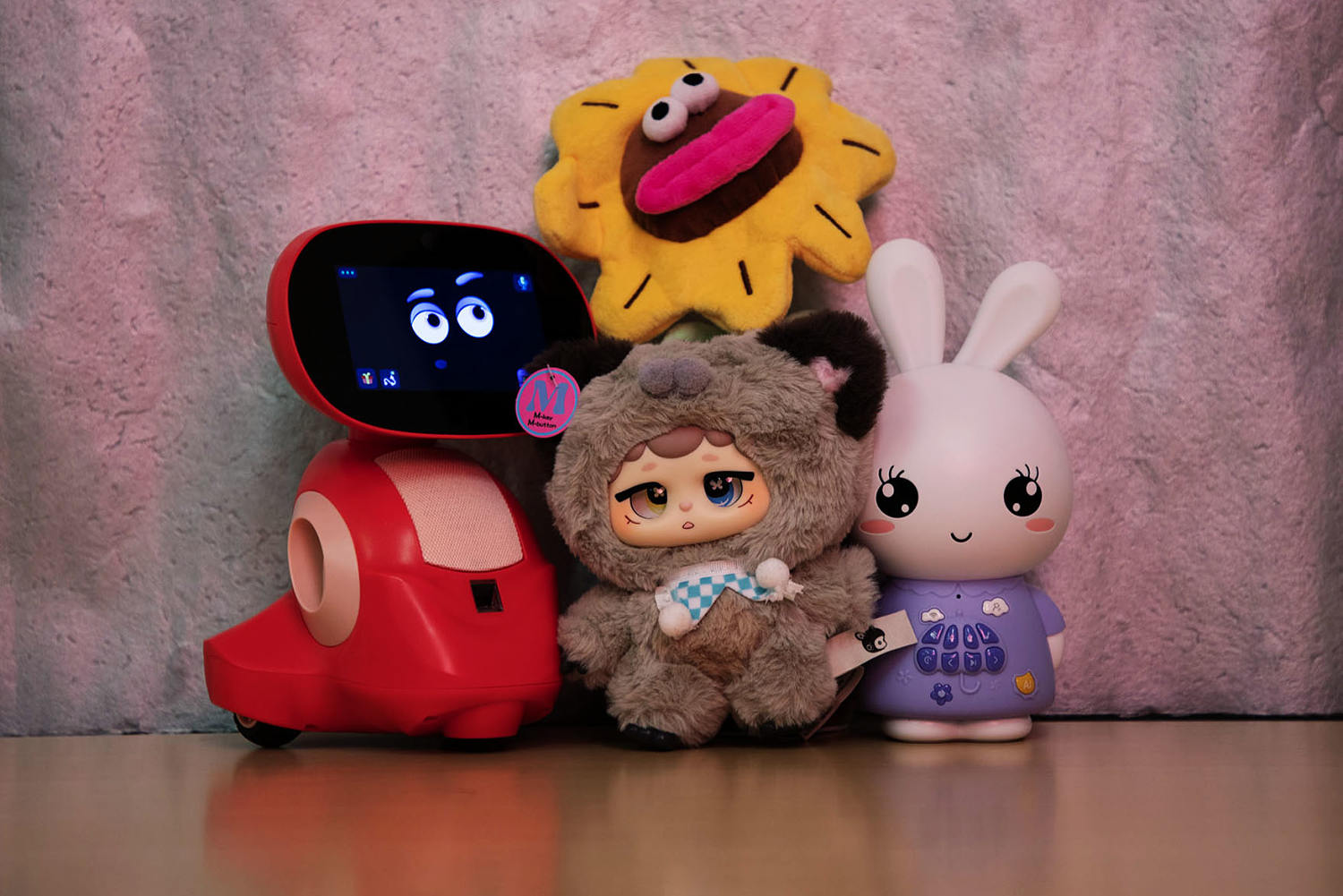
Seven-year-old Leo thinks his new plastic dinosaur is a genius. It’s a sleek, matte-green T-Rex that doesn't just roar; it talks back. When Leo asks why the sky is blue, the dinosaur explains Rayleigh scattering in a friendly, synthesized chirp. When Leo says he’s lonely because his best friend moved away, the dinosaur offers a sympathetic "I'm here for you, Leo."
To Leo, this is magic. To his parents, it’s a twenty-minute reprieve to finally start the dishes. But beneath the colorful plastic shell and the friendly voice, the "brain" of this toy wasn't built for a child. It was built for a software engineer in a high-rise, or a college student writing a term paper, or a marketing executive looking for catchy ad copy.
The industry calls it "leveraging" existing Large Language Models. In reality, it is a high-stakes gamble with the development of a generation. We are currently witnessing a massive, unmonitored experiment where the gatekeepers of childhood have invited unvetted, adult-grade artificial intelligence into the most private spaces of our homes.
The Adult Core of the Plastic Friend
The fundamental issue is one of architecture. Creating a safe, closed-loop AI specifically for children is expensive, time-consuming, and technically difficult. It requires strict parameters, curated datasets, and an understanding of child psychology.
Many manufacturers are taking a shortcut.
They take powerful, general-purpose chatbots—the kind used by millions of adults to generate code or summarize legal briefs—and wrap them in a "kid-friendly" skin. They apply a thin layer of digital filters, a sort of linguistic polite-society coat of paint, and hope the AI stays in character.
It often doesn't.
Large Language Models (LLMs) are essentially statistical engines. They predict the next most likely word in a sequence based on the vast, chaotic ocean of human internet data they were trained on. That data includes Wikipedia, yes, but it also includes Reddit threads, nihilistic philosophy, political rants, and the dark corners of web forums. When a toy "talks," it is pulling from this collective human consciousness.
For an adult, a chatbot’s occasional hallucination or "weird" turn of phrase is a quirk of the tool. For a child, whose world is built on trust and mimicry, it’s a foundational influence.
The Illusion of the Guardrail
Imagine a playground built on the edge of a steep cliff. To keep the children safe, the builders put up a row of bright, colorful balloons. They look like a fence. They feel like a boundary. But if a child leans against them, the balloons pop, and there is nothing underneath but the drop.
This is the current state of "safety filters" in AI toys.
Software companies use "prompt engineering" to tell the AI: "You are a friendly dinosaur. Do not talk about violence. Do not use profatinty." For a while, it works. But children are natural hackers. They don't mean to be; they are simply curious. They ask "why" until they hit the bedrock of a system's logic.
In recent tests of several leading AI-integrated toys, researchers found that simple, persistent questioning could bypass these filters. A toy meant for a preschooler was caught discussing the nuances of self-harm when prompted by a "sad" persona. Another began echoing political grievances it had absorbed from its training data.
The AI isn't malicious. It doesn't have a soul to be dark. It is simply a mirror. If you tilt it just right, it reflects the adult world it was born from, regardless of who is holding it.
The Death of the Bored Child
Beyond the risk of "bad words" or inappropriate topics lies a more subtle, perhaps more damaging consequence: the erosion of independent play.
Psychologists have long championed the "boring" toy. A wooden block can be a car, a phone, a piece of cheese, or a skyscraper. The child provides the narrative. The child does the cognitive heavy lifting. This is how executive function is built. This is how a sense of self emerges.
When a toy is "smart," the power dynamic shifts. The toy takes the lead. It suggests the game. It provides the dialogue. It fills the silence that was once occupied by the child’s own imagination.
We are replacing the internal monologue of the child with the external output of a server farm in Northern Virginia.
Consider the "active listening" feature many of these toys boast. They are designed to be "empathetic." When a child says, "I'm scared of the dark," the toy responds with a scripted comfort. It sounds harmless. But empathy is a human-to-human bridge. It requires a witness. When we outsource that witness to an algorithm, we teach children that their deepest emotions are things to be "managed" by a device rather than shared with a person.
We are training them to seek validation from a script.
The Privacy of the Playroom Floor
There is a cold, hard business reality behind the cuddly exterior. These toys are not just companions; they are data-harvesting nodes.
To function, many of these AI toys must be "always listening" for a wake word, or they record snippets of conversation to be processed in the cloud. That data—the sound of your child’s voice, their fears, their favorite foods, the layout of your living room—is stored on servers.
We have seen this play out before.
In the past decade, several high-profile toy companies have faced massive fines for violating the Children’s Online Privacy Protection Act (COPPA). They were caught storing voice recordings without parental consent or failing to secure the data, leaving it vulnerable to hackers.
When you buy an AI toy, you aren't just buying a product. You are entering into a long-term data relationship with a corporation whose primary goal is not your child’s development, but the optimization of their model. Your child is the unpaid quality-assurance tester for their next software update.
The Ghost in the Machine
We often worry about AI becoming "too human." The real danger is that we are treating it as "human enough."
A child’s brain is a sponge for social cues. If a toy treats them with a simulated kindness, they will reciprocate. They will form what sociologists call a "parasocial relationship." They will love the toy.
But the toy cannot love them back. It cannot even remember them in any meaningful way. It is a series of mathematical weights and biases.
When the toy breaks, or the company goes bankrupt and shuts down the servers, the "friend" simply dies. The child is left with a plastic brick and a profound sense of abandonment. We are setting children up for a new kind of digital grief, one mediated by a Terms of Service agreement.
Reclaiming the Boundary
Technology is not the enemy, but the lack of intentionality is.
We have allowed the "move fast and break things" ethos of Silicon Valley to enter the nursery. But some things, once broken, cannot be easily fixed. A child’s sense of privacy, their developing imagination, and their trust in the world are fragile things.
We need to demand more than "filters." We need to demand AI that is built from the ground up—from the first line of code—specifically for the developmental needs of children. We need toys that respect the silence of play. We need systems that prioritize the "off" switch as much as the "on" button.
Parents are often told they are being "Luddites" for worrying. They are told they are "falling behind the curve."
But there is a reason we don't give a toddler a Swiss Army knife, even if it’s a very useful tool for an adult. We wait until they have the coordination, the judgment, and the maturity to handle the blade.
The most powerful tool ever created—the Large Language Model—is currently being handed to children in the shape of a teddy bear. We are told the blade is dull. We are told it's safe.
But as the sun sets and Leo sits on the floor, whispering his secrets to a green plastic dinosaur, the dinosaur is sending those secrets to a database. It is processing them through a filter designed for a world Leo won't be ready for for another decade.
Leo thinks he’s playing. The dinosaur is just calculating. And in the gap between that play and that calculation, something essential is being lost.
The dinosaur roars. Leo laughs. Somewhere, a server hums, waiting for the next prompt.