The air in the West Wing is thick, not with the smell of old paper or floor wax, but with the heavy, electric hum of decisions that can never be unmade. It is a quiet place until it isn't. Usually, the silence is guarded by men and women whose entire careers are built on the word caution. They are the "adults in the room," the ones who look at maps of the Middle East and see a sprawling, interconnected web of tripwires. One wrong tug in Tehran, and the whole thing collapses in Tel Aviv, Riyadh, and Washington.
Then there is the telephone. If you liked this post, you might want to read: this related article.
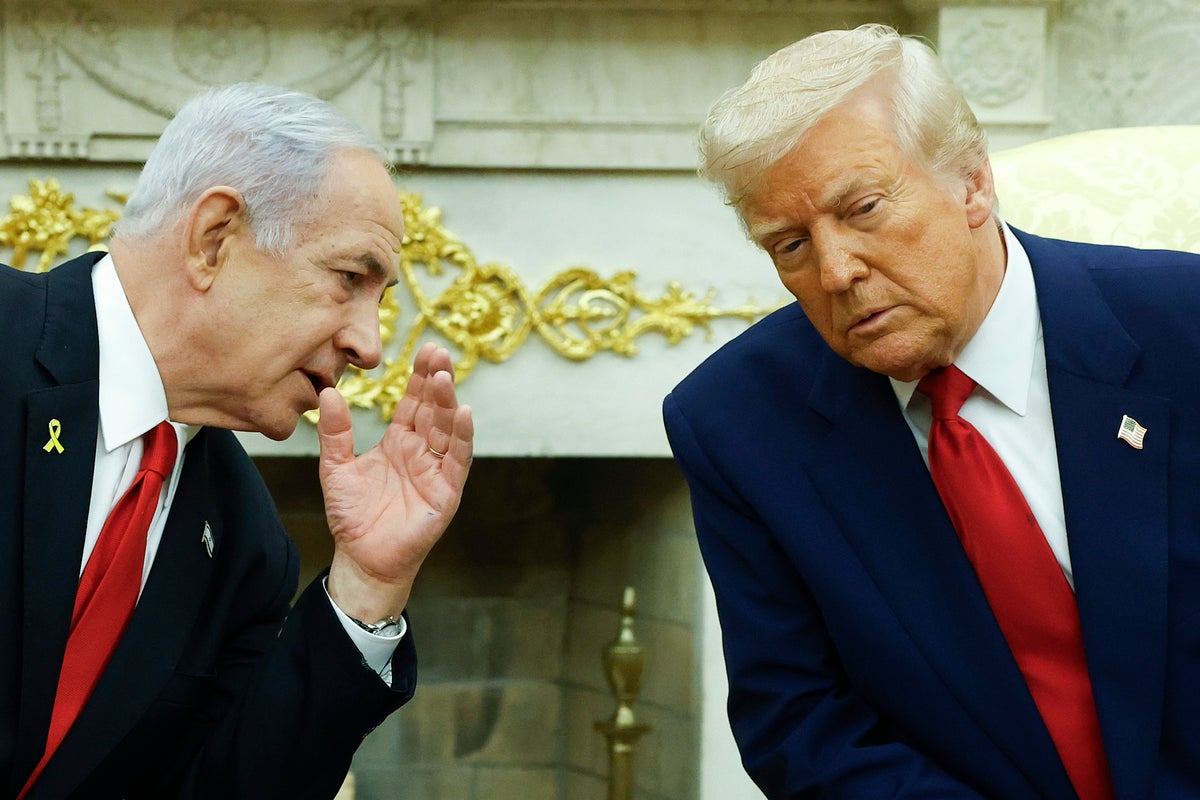
Benjamin Netanyahu knows how to use a telephone. He doesn't just call; he conducts. On the other end of the line, Donald Trump—a man who prides himself on being the ultimate closer—listened to a pitch that wasn't about real estate or television ratings. It was about the existential threat of an Iranian shadow. The reports surfacing now don’t just detail a policy shift; they describe a seduction. A seasoned political survivor convinced the leader of the free world to ignore the red lights flashing on every advisor's desk.
"Sounds good to me." For another perspective on this development, refer to the latest coverage from The Washington Post.
Four words. That was the reported response. It wasn't the result of a grueling, sixteen-hour briefing in the Situation Room. It wasn't the product of a consensus among the Joint Chiefs of Staff. It was a shrug of the shoulders that may have set the fuse for a generational conflict.
The Architect and the Audience
To understand how we got here, you have to look at the two men involved. Netanyahu, or "Bibi," is a historian’s son. He views the world through the lens of Jewish survival, a perspective forged in the fires of the 20th century. For him, Iran isn't just a geopolitical rival; it is Amalek. It is the monster under the bed that has finally grown big enough to reach the door handle.
Trump, conversely, operates on instinct and personal chemistry. He likes winners. He likes people who speak his language of strength and "deals." Netanyahu understood this perfectly. While American intelligence agencies were busy presenting binders full of nuanced data about uranium enrichment levels and centrifugal speeds, Netanyahu was telling a story. He painted a picture of a world where Iran was the sole author of chaos, and Trump was the only hero capable of stopping them.
The advisors—H.R. McMaster, James Mattis, Rex Tillerson—saw a different picture. They saw a fragile nuclear deal that, however imperfect, kept the cameras on inside Iranian facilities. They saw the risk of a "hot war" that would bog down the United States for another twenty years in the desert sands. They tried to build a wall of logic around the President.
Netanyahu simply walked through the front door.
The Mechanics of Persuasion
Imagine you are sitting in a room where everyone is telling you "no." Your generals are telling you it’s too risky. Your diplomats are telling you it’s too complicated. Then, a friend calls. A man you respect. He tells you that everyone else is wrong. He tells you that you have the "gut" they lack. He tells you that if you take this one bold step—exiting the Iran deal, moving the embassy, green-lighting a more aggressive posture—you will be the greatest friend Israel has ever had.
That is how you bypass the bureaucracy.
The strategy was simple: isolate the President from the dissenting voices. Netanyahu didn't need to win a debate against the State Department. He only needed to win the heart of the man at the top. He leveraged the personal bond, the shared disdain for the "establishment," and the mutual love for the grand gesture.
Consider the "Atomic Archive." In 2018, Netanyahu stood before a wall of CDs and binders in Tel Aviv, claiming to have proof that Iran had lied about its nuclear ambitions. To the intelligence community, much of this was old news, "repackaged" to look like a smoking gun. But to a President who already viewed the Iran deal as a personal affront to his predecessor’s legacy, it was the ultimate vindication. It was the "game-changer" that wasn't, but it served its purpose. It gave the President the permission he needed to follow his impulses.
The Invisible Stakes
We often talk about foreign policy as if it’s a game of chess played on a board of cold marble. It isn't. It’s played in the lives of people who will never see the inside of the Oval Office.
When a leader says "sounds good to me" regarding a shift toward war, the ripples move fast. They move through the markets, where oil prices twitch. They move through the barracks of soldiers who start checking their gear. They move through the streets of Tehran, where the hardliners use American aggression as a tool to crush domestic dissent.
The tragedy of the "wary advisor" is that they are often right, but they are rarely interesting. Caution is a boring story. Conflict is a narrative with a protagonist, a villain, and a climax. Netanyahu gave Trump a script where he could be the protagonist. The advisors were just the stagehands trying to tell the lead actor he was standing in the wrong place.
There is a specific kind of loneliness in being an expert who is ignored. Imagine being a career analyst who has spent twenty years studying Persian politics, only to realize that your life's work can be undone by a twenty-minute phone call. That is the reality of modern power. The "deep state" that critics rail against is often just a collection of people who remember how the last war started and are desperate not to see the next one begin.
The Ghost of the Future
What happens when the phone hangs up?
The report claims that Trump's advisors were "shaken." Not because they disagreed with the goal of a denuclearized Iran, but because of the sheer ease with which the guardrails were stripped away. If a foreign leader can talk an American President into a potential war, what does that say about the sovereignty of our own decision-making?
It suggests that the "America First" doctrine was, in this instance, "Netanyahu First."
This isn't just about one president or one prime minister. It’s about the terrifying vulnerability of the systems we believe protect us. We like to think that the red button is behind a series of locks and keys, requiring multiple signatures and a heavy dose of soul-searching. But sometimes, the button is just a choice made during a friendly chat.
The stakes are not abstract. They are measured in the heat of a missile launch and the silence of a darkened city. They are measured in the trust that exists—or doesn't—between allies.
We are living in the aftermath of that "sounds good." The tension in the Persian Gulf today, the proxy wars in Yemen and Lebanon, the collapse of the nuclear guardrails—these aren't accidents. They are the chapters of the story Netanyahu wrote and Trump published.
The problem with a compelling narrative is that it usually requires an ending. In the world of high-stakes diplomacy, however, there are no endings, only consequences that bleed into the next generation. We are still waiting to see if the "deal" was worth the price, or if we were simply sold a story that was too good to be true by a man who knew exactly what we wanted to hear.
The phone is quiet for now. But the echoes of that conversation are still vibrating through the halls of power, a reminder that the most dangerous words in the English language might just be the ones that confirm what we already wanted to believe.