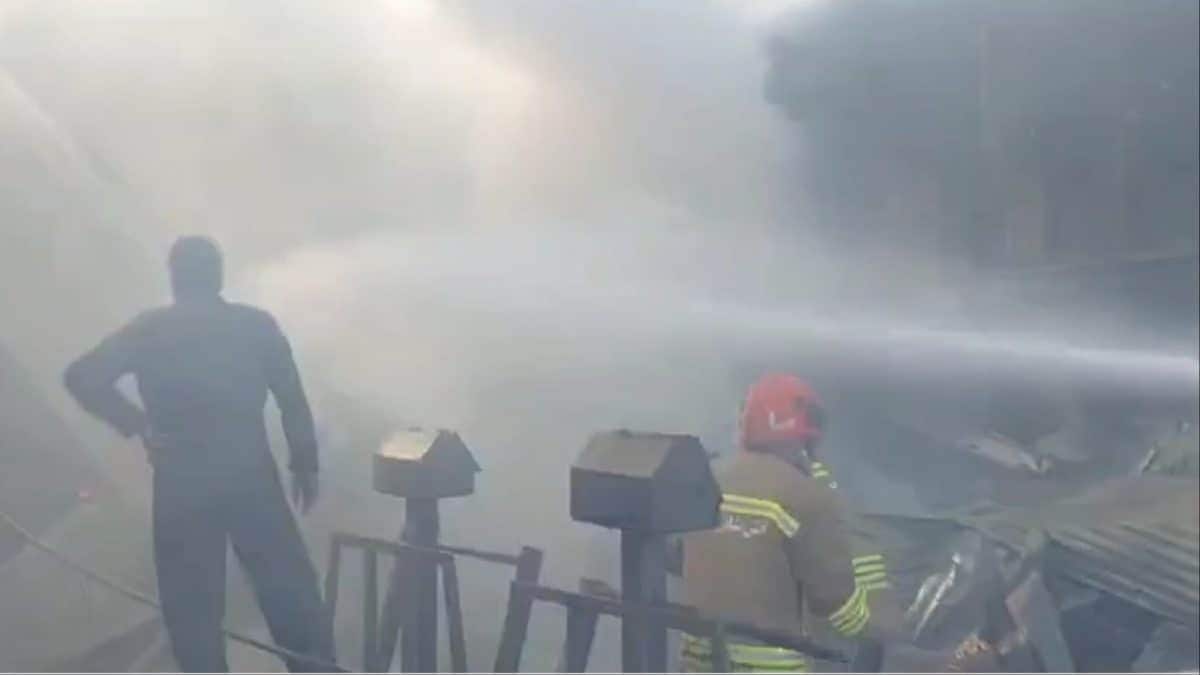
The fourth year of the Russo-Ukrainian War marks a transition from a conflict of maneuver and rapid territorial shifts to a pure war of industrial and demographic attrition. NATO’s current strategic posture rests on a fragile assumption: that sporadic, high-value infusions of Western hardware can offset a systemic Russian advantage in mass and vertical integration. This assumption fails to account for the Decay Rate of Military Capital, where the utility of donated systems diminishes as Russia adapts its electronic warfare (EW) suites and kinetic interception layers. To prevent a collapse of the Ukrainian front, the Western alliance must pivot from a "procurement-based" model to a "production-centric" integration of the Ukrainian defense industrial base.
The Three Pillars of Sustained Kinetic Viability
The survival of the Ukrainian state depends on the simultaneous optimization of three distinct variables. If any one of these pillars falls below a critical threshold, the other two become irrelevant.
- Ammunition Parity and the 5:1 Ratio: Russia’s current artillery advantage fluctuates between 5:1 and 10:1 in key sectors. While Western precision-guided munitions (PGMs) like Excalibur or HIMARS were initially designed to bridge this gap through accuracy, Russian GPS jamming has significantly reduced their Circular Error Probable (CEP). Consequently, quantity has regained its status as a primary quality.
- Air Defense Interception Economics: The cost-exchange ratio currently favors the aggressor. Russia utilizes low-cost Shahed-type OWA (One-Way Attack) drones to force the expenditure of multimillion-dollar Patriot or IRIS-T interceptors. This creates a "depletion trap" where Ukraine’s high-end interceptor stocks are exhausted before major cruise missile salvos arrive.
- Technological Iteration Cycles: In modern electronic warfare, the half-life of a specific drone frequency or jamming algorithm is roughly six to eight weeks. Success is no longer defined by the sophistication of the initial kit, but by the speed of the feedback loop between the front line and the software engineer.
The Cost Function of Incrementalism
The "escalation management" strategy employed by Western allies has created a specific type of strategic friction. By providing advanced capabilities—such as F-16s, ATACMS, and Leopard tanks—in small batches and with significant delays, the West allowed Russia the luxury of incremental adaptation.
The Adaptation Gap
When a new capability is introduced slowly, the adversary undergoes a process of "combat immunization." Russia’s decentralized command structure initially struggled with HIMARS in 2022. However, because the volume of strikes was limited by supply constraints, the Russian military had time to relocate logistics hubs beyond the 80km range and harden its signal processing. This delayed deployment effectively "spent" the psychological and operational shock value of the weapon system without achieving a decisive strategic shift.
The Logistics of Heterogeneity
The Ukrainian Armed Forces (AFU) are currently managing what logisticians call a "Museum of NATO." Operating six different types of Main Battle Tanks and over a dozen varieties of 155mm self-propelled howitzers creates a nightmare for spare parts procurement and field maintenance. Each system requires unique diagnostic tools, specialized lubricants, and distinct training pipelines. This heterogeneity imposes a "Maintenance Tax" on Ukrainian units, reducing the operational readiness rate of Western-donated equipment compared to standardized Russian fleets.
The Strategic Shift to Domestic Industrial Integration
NATO’s primary objective in Year Four must be the "In-Sourcing" of the Ukrainian defense effort. Shipping finished goods from deep within the continental United States or Western Europe is a logistical bottleneck that Russia can exploit through long-range strikes on transit hubs.
Transitioning to Joint Ventures
The next phase of support requires Western defense primes (e.g., Rheinmetall, BAE Systems, Northrop Grumman) to establish co-production facilities within Ukraine or in "safe zones" immediately bordering it. This serves two functions:
- Reduced Lead Times: Repairing damaged Bradley Fighting Vehicles in Poland takes weeks; repairing them in Lviv or Kyiv takes days.
- Localized Innovation: By moving production closer to the front, Western engineers can integrate real-time electronic warfare data directly into the manufacturing process, bypassing the bureaucratic delays of Western procurement offices.
The Drone-Electronic Warfare Nexus
The war has become a contest of the electromagnetic spectrum. Russia’s "Pole-21" and "Borisoglebsk-2" systems have created bubbles where standard Western drones lose GPS lock and command-and-control links. The response cannot be more expensive drones; it must be mass-produced, "attritable" systems using machine vision for terminal guidance. This removes the need for a continuous radio link, rendering traditional jamming ineffective.
Resource Allocation and the "Fatigue" Variable
Political discourse often frames "Ukraine fatigue" as a purely psychological phenomenon. In reality, it is a resource competition problem. Western stocks of 155mm shells and Javelin missiles were not sized for a high-intensity peer-to-peer conflict. They were sized for counter-insurgency operations.
The Inventory Depletion Reality
The United States and Europe are currently in a race to expand "warm" production lines. However, the bottleneck is not just money; it is the supply of precursors, such as nitrocellulose for propellants and specialized casting for shell casings.
- Capital Expenditure vs. Operational Expenditure: Allies must move from donating existing stocks (OpEx) to funding the expansion of the industrial base (CapEx).
- Multi-Year Procurement Contracts: Defense contractors will not invest in new factories based on month-to-month aid packages. They require five-to-ten-year guaranteed purchase agreements to de-risk the massive capital investment required for high-rate production.
Quantifying the Threshold of Failure
There is a measurable point where defensive operations become unsustainable. This threshold is reached when the "Loss-to-Replacement Ratio" for armored vehicles exceeds 1.2 for a sustained period of 90 days. Currently, Ukraine is maintaining a precarious balance, but the increasing prevalence of Russian FPV (First-Person View) drones is driving up the attrition rate of light-skinned vehicles and logistics trucks.
Without a significant surge in Western-funded mobile short-range air defense (SHORAD) systems—such as the Gepard or C-UAS (Counter-Unmanned Aerial Systems) laser platforms—Ukraine’s internal lines of communication will remain under constant threat. The objective is not to shoot down every drone, but to make the cost of the drone's mission higher than the value of the drone itself.
The strategic play for the 2026-2027 period is the transformation of Ukraine into an "Arsenal of the Border." This involves the deployment of modular, containerized production units for ammunition and drones, the standardization of the artillery fleet to two or three primary systems to simplify logistics, and the lifting of all geographic restrictions on the use of Western PGMs to disrupt Russian staging areas. Success is no longer measured in kilometers of territory regained, but in the degradation of Russia's ability to sustain its own "Burn Rate" of men and materiel. NATO must stop viewing Ukraine as a recipient of aid and start viewing it as the forward-deployed hub of a modernized, high-velocity defense industry. This requires a shift from political signaling to raw industrial output.
Would you like me to conduct a deep-dive analysis into the specific logistics of establishing modular ammunition production facilities within active conflict zones?