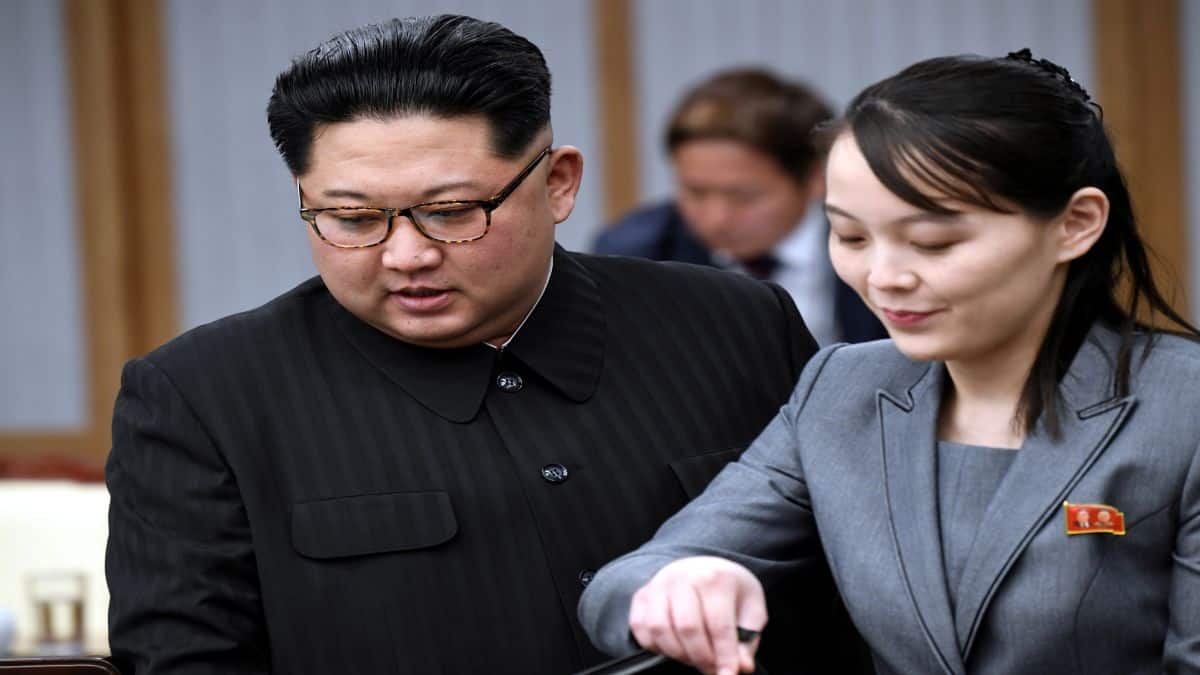
Kim Jong Un has shifted the stakes of North Korean survival. During the latest Workers' Party Congress, the Chairman pivoted from his signature nuclear-first rhetoric to a desperate, hyper-focused economic overhaul, admitting that the previous five-year plan failed on nearly every front. This admission of failure is not a sign of weakness but a tactical reset. Simultaneously, the formal promotion of his sister, Kim Yo Jong, into the highest echelons of the party hierarchy signals a solidification of the "Paektu Bloodline" as a corporate board of directors rather than a one-man show.
This is a move born of necessity. Faced with a stagnant economy, the lingering effects of global sanctions, and the fallout of total border closures, the regime is tightening internal control while promising the populace a standard of living that has remained out of reach for decades. The strategy is clear: fix the broken domestic supply chain or face an internal stability crisis that no amount of long-range missiles can deter.
The Admission of Economic Defeat
It is rare for a North Korean leader to stand before thousands of delegates and acknowledge a systemic breakdown. Yet, that is exactly what happened. Kim Jong Un characterized the recent economic cycle as a period of "unprecedented trials." By admitting that goals were not met, he shifted the blame from the leadership’s vision to the execution by mid-level bureaucrats. This creates a pretext for the massive purges and reshuffling that always follow such gatherings.
The new economic plan focuses on "self-reliance," a term that has been used since the 1950s but currently carries a much more urgent weight. The state is doubling down on metal and chemical industries. These are the twin pillars of a self-sustaining economy. Without steel and fertilizer, the nation cannot build or eat. The regime is effectively trying to build a closed-loop system that can withstand indefinite isolation.
They are moving away from the semi-private market experiments that defined the early 2010s. For a few years, it looked like North Korea might follow a modified Chinese model, allowing "jangmadang" (informal markets) to provide the goods the state could not. That era is over. The state is reasserting its monopoly over distribution. Control is now more important than growth.
The Architecture of the Sister's Power
While the economic numbers were grim, the political theater was precise. Kim Yo Jong’s ascent is the most significant development in Pyongyang’s internal dynamics since Kim Jong Un took power in 2011. She is no longer just an aide or a "messenger" to the South. She has become the regime’s primary enforcer and its ideological lightning rod.
Her role is unique in the history of the dynasty. Traditionally, the Kim family hides its internal machinery. Kim Yo Jong, however, has been placed front and center, often issuing scathing diplomatic rebukes that her brother can later distance himself from if necessary. This "good cop, bad cop" routine is a sophisticated layer of diplomatic shielding. If she fails, she is expendable in a way the Chairman is not. If she succeeds, the family's grip on the military and the secret police becomes unbreakable.
Observers often mistake her gender for a barrier in the deeply patriarchal North Korean society. That is a Western projection. In the North, bloodline trumps gender every time. She is the backup drive for the Kim Jong Un operating system.
The Military Industrial Pivot
Despite the talk of "people-first" economics, the military remains the largest consumer of the nation's resources. The Congress made it clear that "self-defense" is the only guarantee of sovereignty. This means the development of tactical nuclear weapons and solid-fuel missiles will continue unabated, but with a new twist: the military is being told to produce its own food and consumer goods.
This is the "Dual Track" strategy on steroids. The army is being converted into a massive construction and agricultural workforce. By mobilizing the million-man army for civilian projects, the regime hides its labor costs and ensures that the most capable segment of the population is under constant surveillance while they work.
The Sanctions Blind Spot
The international community continues to rely on sanctions as the primary tool of influence. This strategy is reaching a point of diminishing returns. The North Korean elite have spent decades refining the art of the "ghost ship" and crypto-currency heists to bypass the global financial system.
Sanctions only work if the target wants to be part of the global community. Kim’s latest directives suggest he is preparing the country to live outside that community forever. He is not looking for a seat at the table; he is building a different room entirely.
The Ghost of the 1990s
The underlying fear for the leadership is a return to the "Arduous March," the famine of the 1990s that killed hundreds of thousands. The current rhetoric about "tightening belts" is a psychological preparation for the public. The regime knows that the youth of North Korea—the "Jangmadang Generation"—have a higher expectation for material comfort than their grandparents did. They have seen smuggled South Korean dramas; they know what the outside world looks like.
To counter this, the Party is ramping up "anti-socialist" crackdowns. New laws have been enacted to punish anyone caught with foreign media or practicing foreign speech patterns. The economic push is the carrot, but the cultural crackdown is a very heavy stick.
The success of this five-year plan hinges on whether the state can actually provide the basics—electricity, soap, and rice—through official channels. If the state fails to deliver, the people will return to the black markets, and the Party’s authority will continue to erode from the bottom up.
Intelligence Gaps and Reality Checks
We must be honest about what we don't know. Information coming out of a Party Congress is carefully curated propaganda. When Kim says the economy failed, he is choosing to say it. When he promotes his sister, he is choosing to show it. The real tension lies in the parts of the speech that weren't televised: the disputes between the military's old guard and the new technocrats who want to modernize the banking system.
The "investigative" reality is that North Korea is currently a black box with very little light getting in. Human intelligence (HUMINT) has dried up due to the border lockdowns. We are relying on satellite imagery and the official state media, which requires reading between the lines of every adjective.
What we see is a leader who is more confident in his family's internal security but deeply terrified of his country's systemic fragility. He is betting that he can trade nuclear relevance for economic stability without losing his head in the process. It is a gamble that no other world leader is currently forced to make.
The coming months will show if the provincial factories can actually meet the quotas set in Pyongyang. If the chimneys aren't smoking by winter, the "economic push" will be remembered as just another footnote in a long history of failed North Korean promises.
Check the price of rice in the border regions; that is the only metric that matters.