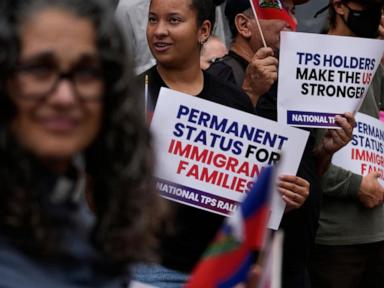
The media treats Temporary Protected Status like a ticking time bomb. Headlines hyperventilate over 300,000 Haitians facing expiring protections, framing the shift as an unmitigated humanitarian and logistical disaster. This narrative relies on a lazy consensus: that temporary paper classifications dictate actual societal integration, and that abruptly altering bureaucratic designations is a clean switch that governments can just flip.
Both sides of the mainstream debate are wrong. The doomsayers ignore how deeply embedded these workers are in local labor markets, while the defenders pretend that a program explicitly named "temporary" was ever legally designed to function as permanent residency.
I have watched companies blow millions scrambling to replace compliant, skilled workforces over regulatory shocks, treating human capital like interchangeable software modules. The truth about the expiration of TPS for Haiti is far more cynical and complex than a simple deportation panic. It exposes the profound structural addiction the domestic economy has built on legal limbo.
The Myth of the Clean Bureaucratic Reset
To understand why the standard commentary misses the mark, you have to look past the political posturing and examine how labor ecosystems actually function. The phrase "temporary protected status" is an administrative oxymoron invented by the Immigration Act of 1990. It was built for short-term crises like earthquakes or sudden civil wars.
When a designation stretches across decade-long cycles, renewals stop being emergency measures and turn into de facto immigration policy administered by executive whim rather than legislative design.
When analysts scream about 300,000 people suddenly vanishing from the workforce, they treat the labor market like a spreadsheet. Real businesses do not operate that way. Restaurants, healthcare facilities, manufacturing plants, and logistics hubs in places like Ohio and Florida have structured their entire operational capacity around these workers.
Imagine a scenario where a mid-sized Midwest logistics firm loses twenty percent of its warehouse staff overnight because a federal court ruling and executive action aligned to terminate employment authorization documents. The result is not a smooth transition back to domestic hiring. It is immediate wage inflation, sudden supply chain friction, and lowered productivity.
The mainstream coverage treats the expiration date as a legal finish line. On the ground, it is an administrative earthquake that triggers a massive gray market of underground labor or forces companies into compliance acrobatics they are ill-equipped to handle.
The Distortion of Legal Limbo
The lazy consensus argues that extending TPS indefinitely is the only compassionate choice. This argument completely misdiagnoses the cruelty of legal limbo.
Keeping hundreds of thousands of people in a permanent state of bureaucratic purgatory—where they can work and pay taxes but can never secure a pathway to permanent residency or citizenship—is not a favor. It is a system designed to extract labor without granting rights.
Critics of the termination point to the ongoing instability in Port-au-Prince, and they are right about the conditions on the ground. But keeping people trapped under a designation that can be wiped out by a change in presidential administrations or a Supreme Court decision is a terrible way to manage human migration.
The policy failure isn't just that protections are ending; it's that the system never provided a rational valve for people who have lived, worked, and built families in the United States for over a decade to transition out of emergency status.
When the Supreme Court cleared the path for termination, it exposed the fundamental fragility of relying on executive-branch discretion. Permanent problems require legislative solutions, yet Congress prefers the weaponization of temporary status because it provides perpetual fodder for cable news segments and campaign fundraising.
What Structural Adjustment Actually Looks Like
If you want to look at what happens next, stop listening to political pundits and start watching corporate compliance departments. Employers are not passively waiting for immigration enforcement sweeps. They are frantically auditing I-9 forms, consulting immigration counsel, and calculating the replacement cost of a destabilized workforce.
The market always finds a workaround, even if that workaround is messy, expensive, and legally perilous. Workers who lose formal authorization do not automatically pack their bags; many slip into the informal economy, driving down labor standards and exposing themselves to severe exploitation. Others scramble for alternative, long-shot legal avenues like asylum, clogging an already paralyzed immigration court backlog.
The panic over the expiration of Haitian TPS is a symptom of a broken immigration architecture that refuses to match legal categories with economic reality. Until lawmakers and commentators stop treating human beings as temporary administrative variables to be adjusted with the stroke of a pen, the cycle of panic, litigation, and disruption will only repeat itself with the next country on the list.